
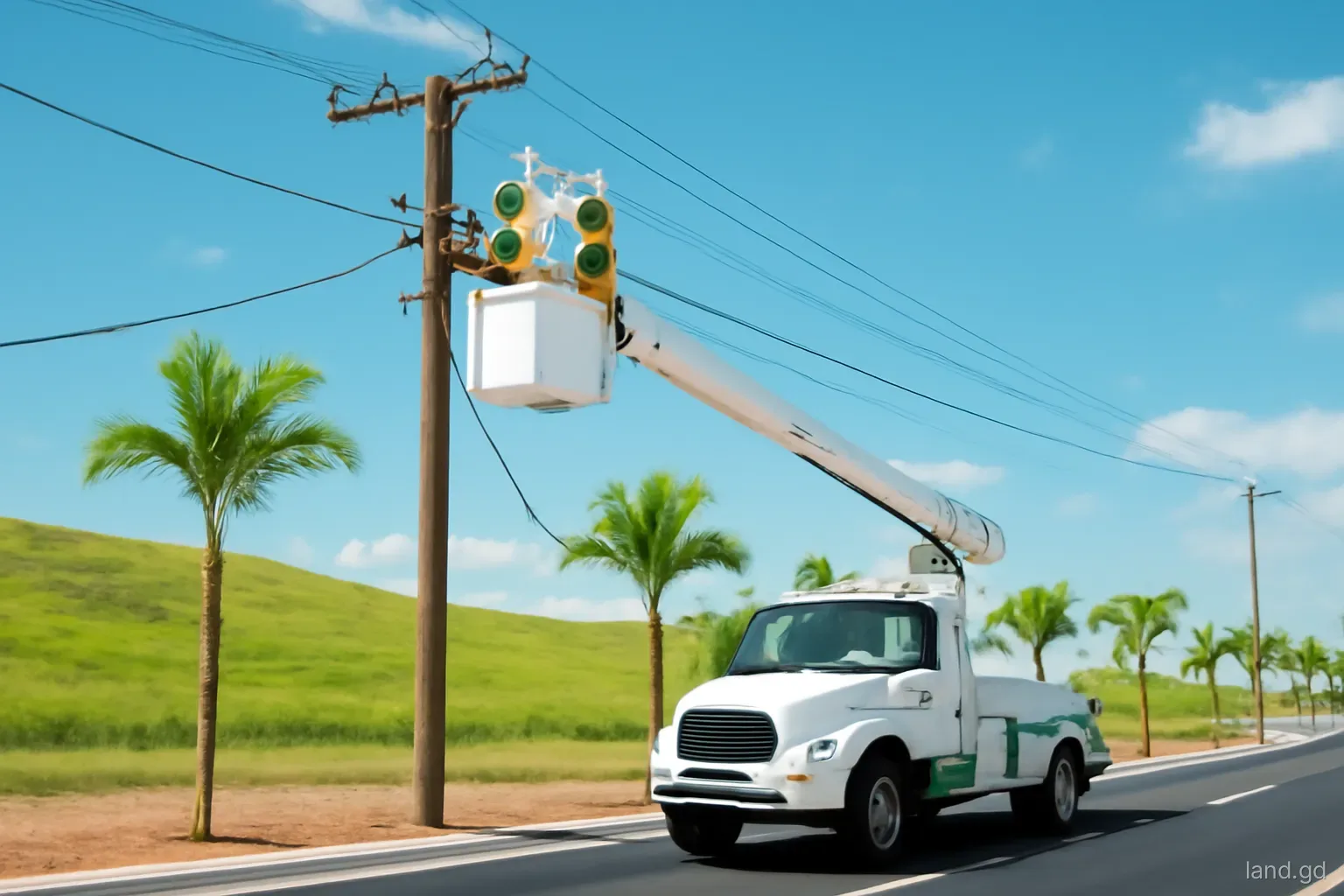
A lot with water and power at the boundary is worth considerably more than one without, and buyers know it. For anyone subdividing land, bringing services to every lot is both a planning requirement and a selling point. It is also an area where costs and timelines are frequently underestimated, because extending mains and lines depends on utility companies, their networks and their schedules.
In Grenada, water is supplied by NAWASA, the National Water and Sewerage Authority, and electricity by GRENLEC. Telecoms providers supply phone and internet, increasingly by fibre. Sewage in most areas is handled on each lot by septic systems rather than a public sewer, which affects lot sizes and layout.
This guide explains how each service is usually brought into a subdivision, what to ask each provider, how costs are typically shared and the mistakes that leave lots unserviced long after they have been sold. Policies and charges change, so confirm current terms directly with each provider.
Start the conversations early
Before fixing a layout, contact NAWASA and GRENLEC to ask whether their networks near the site have capacity for the number of lots planned. A water main that is adequate for a few houses may not supply forty. A power line may need upgrading or a new transformer. Learning this after approval can force redesign or add large, unexpected costs.
Ask each provider what they will need from you: a site plan, the number of lots, expected demand, and possibly an engineer's design for internal networks. Ask about timelines for their design review and construction, and whether they will build the extension themselves or allow an approved contractor.
Get key answers in writing. The Physical Planning Unit may want evidence that services can be provided, and buyers will want assurance that water and power will be available. Written confirmation from the utilities helps with both.
Remember that utility timelines are outside your control. Providers juggle many requests, and storm recovery work after a hurricane can push routine extensions down the queue for months. Build that uncertainty into the project schedule and into any completion dates promised to buyers.
Water supply
Mains extension. Where a NAWASA main runs along the public road, the subdivision may need an internal main to bring water to each lot. NAWASA will typically specify pipe sizes, materials and fittings, and may require its own staff or approved contractors to make connections.
Pressure and elevation. Higher lots may not receive adequate pressure from the public main. A storage tank and pump, or a design that uses gravity from a higher reservoir, may be needed. Ask NAWASA early about pressure at the highest lot.
Who pays. The developer usually pays for the internal network and any extension needed to reach the site. Individual connection fees and meters are then generally paid by each lot owner when building.
Cisterns as backup. Even with mains water, most Grenadian homes include rainwater cisterns. Lot sizes and covenants should allow space for them.
Electricity
GRENLEC will assess the expected load from the subdivision and design the extension of lines, poles and, where needed, transformers. The developer is normally asked to contribute to or pay for the cost of extending the network into the subdivision. Charges and policies vary, so ask GRENLEC for an estimate based on your layout.
Poles and lines need space within the road reserve, and the layout should allow for them without blocking drains or driveways. Some higher-end developments choose underground cabling for appearance and storm resilience; it costs more and must be agreed with GRENLEC.
Rooftop solar is increasingly common, and some buyers may want to install it on their houses. Covenants can encourage or regulate it, and the electrical design of the subdivision should allow for grid-connected systems where permitted under current rules.
Ask GRENLEC whether the developer or each lot owner will apply for individual service connections and meters, and what each lot will need on the ground, such as a meter position at the boundary. Clear answers let you tell buyers exactly what they will still have to arrange and pay for when they build.
Telecoms, lighting and other services
Beyond water and power, a well-serviced subdivision plans for several other services from the start:
- Telecoms and fibre: contact the main providers about extending fixed lines or fibre; laying ducts during road construction is far cheaper than digging later.
- Street lighting: decide whether lighting will be installed, who pays for the electricity and who maintains it, especially on private roads.
- Garbage collection: make sure collection trucks can enter and turn, and agree collection points if needed.
- Fire safety: ask whether hydrants or water storage for firefighting are required, particularly on larger schemes.
- Mail and addressing: lot numbering and road names help emergency services and deliveries find houses.
- Drainage maintenance: plan who will clear drains and culverts, as this affects every service buried nearby.
Sewage and septic systems
Most of Grenada is not served by a public sewer, so new houses usually rely on septic tanks with soakaways or other approved on-site systems. Their design is checked as part of building approval, with environmental health input. The ground must be able to absorb treated effluent, and systems must be kept a safe distance from wells, streams, the sea and property lines.
This has direct consequences for subdivision design. Lots must be large enough to accommodate a septic system and soakaway alongside the house, cistern and parking. On sloping or rocky land, or where soils drain poorly, larger lots or alternative treatment systems may be needed.
Larger developments sometimes install a shared treatment plant. That can allow smaller lots but creates ongoing responsibilities for operation, maintenance and monitoring, usually through an owners' association or management company. Make sure those responsibilities are clearly defined and funded before lots are sold.
Pitfalls that leave lots unserviced
The commonest problem is selling lots with promises of services that were never delivered. Buyers find water and power at the entrance but not at their lot, or a main that cannot supply adequate pressure. Developers should complete services before selling or have binding, funded arrangements to do so, and buyers should verify on site.
Another is installing services in the wrong place. Pipes and cables laid outside the road reserve, under future driveways or too close to drains create problems for years. Record the location of every service on as-built drawings.
Finally, developers sometimes forget ongoing costs. Pumps, street lights and treatment plants need electricity, maintenance and replacement. If nobody is responsible, they fail, and lot owners discover the problem only when the water stops.
A servicing timeline that works
Coordinating several providers is easier with a clear sequence. A practical order for most subdivisions is:
- Ask NAWASA, GRENLEC and telecoms providers about capacity before the layout is fixed, and record their answers.
- Commission an engineer to design internal water, drainage and ducting, and submit designs to the providers for review.
- Lay water pipes, ducts and any underground cables after roads are rough-graded but before final surfacing, so nothing has to be dug up later.
- Install drains and culverts alongside, keeping services clear of them and of future driveways.
- Arrange for GRENLEC to erect poles and lines and for NAWASA to test and commission mains.
- Prepare as-built drawings showing the exact location of every pipe, duct and cable, and give copies to the owners' association and each buyer.
- Agree in writing who will pay for and maintain pumps, street lights and any shared treatment plant from the first sale onward.
Frequently asked questions
Who supplies water and electricity to new subdivisions in Grenada?
Water is supplied by NAWASA, the National Water and Sewerage Authority, and electricity by GRENLEC. Developers normally fund internal networks and extensions, with each lot owner paying connection fees when building. Confirm current policies and costs directly with each provider.
Do lots in a Grenadian subdivision need septic systems?
Usually yes. Most areas have no public sewer, so houses rely on septic tanks and soakaways or other approved systems. Lots must be large enough to fit them safely, and designs are reviewed during building approval.
Is mains water enough without a cistern?
Many homeowners still install a cistern because supply can be interrupted and pressure can fall in dry periods or at higher elevations. Covenants and lot sizes in a subdivision should allow space for one, and most buyers expect it.
Who pays for extending power lines to a new subdivision?
Developers are usually asked to contribute to or pay for extending GRENLEC lines, poles and transformers into the subdivision. The amount depends on the design and current policy, so request an estimate from GRENLEC based on the approved layout.
Should fibre ducts be laid when roads are built?
It is sensible. Laying ducts during road construction costs far less than digging up finished roads later, and good internet is now a strong selling point. Talk to telecoms providers about their requirements before road works begin.