Grenada is a volcanic island, and it shows. Much of the mainland rises steeply from the coast, flat land is limited and prized for farming and roads, and the plots with the widest sea views tend to sit on slopes that test builders and budgets. Carriacou is lower and drier, with gentler hills, but brings its own trade-offs.
The terrain of a plot shapes almost everything that follows: how much the foundations cost, how water drains, how exposed the house will be to wind and surge, what the planning authorities will allow and how easy it is to get in and out in the rainy season.
This article compares the three broad types of land buyers usually consider, with the questions to ask of each.
Hillside land: views at a price
Hillside plots dominate listings in the south and south-east, around St George's, Grand Anse, Morne Jaloux, Westerhall and many St David bays. The appeal is obvious: height brings sea views, breezes and some protection from storm surge. Prices per square foot for good view lots reflect that.
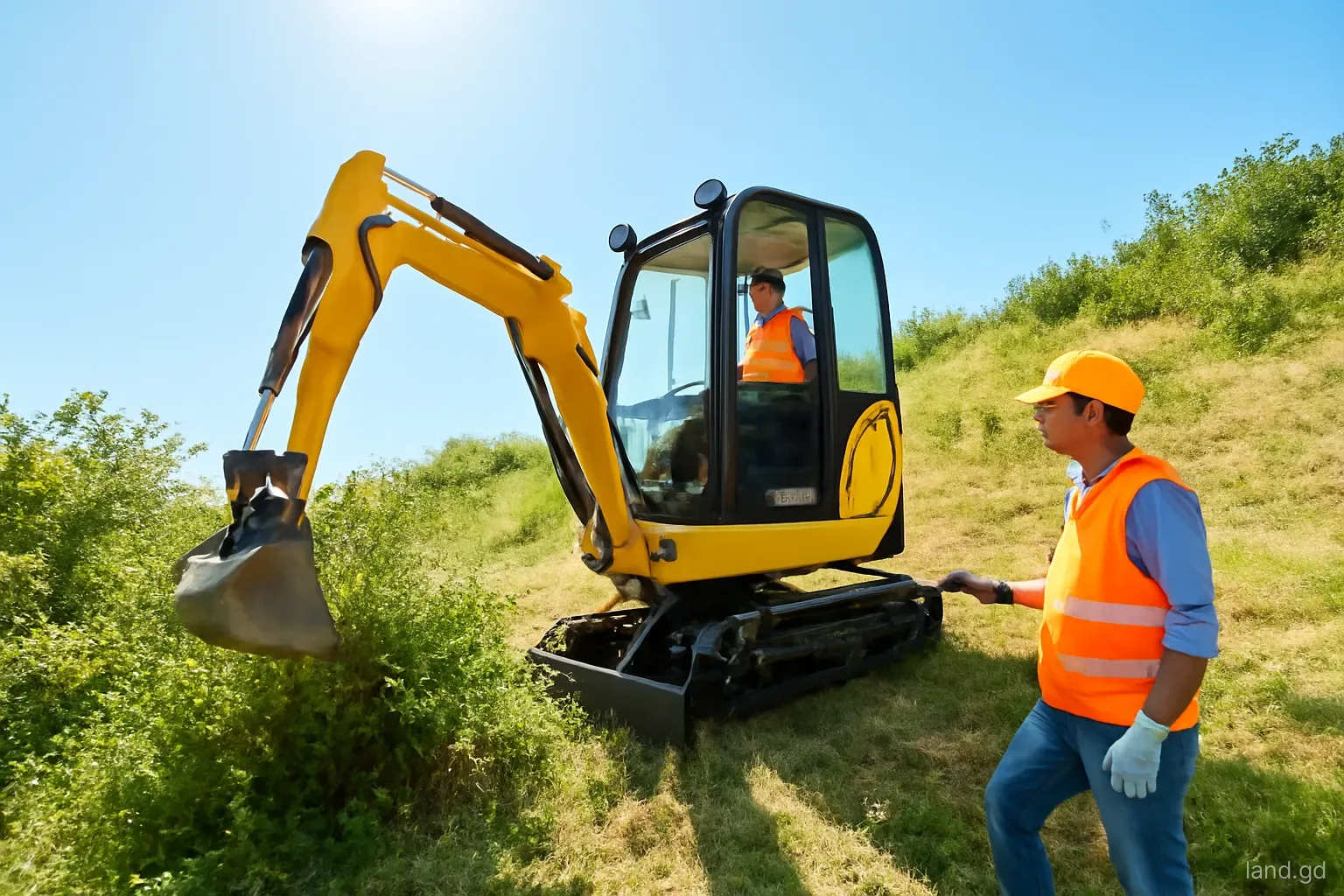
The cost comes in construction. Steep land usually needs stepped foundations, retaining walls, careful drainage and sometimes a long driveway with switchbacks. Excavation on volcanic soils can hit rock, or clay that becomes unstable when saturated. A structural engineer should look at the slope before you buy, not just before you build.
Access is the other concern. Hillside roads in Grenada can be narrow and steep, and heavy rain brings run-off and occasional slippage. Check how the road behaves in the wet season, roughly June to December, and whether delivery trucks can reach the plot. A slope that looks gentle on a survey plan can feel very different with a loaded lorry.
Flat land: easier to build, rarer to find
Flat or gently sloping land is cheaper to build on and easier to use: gardens, parking, outbuildings and future extensions all become simpler. On the mainland it is found mainly in valley floors, along parts of the coast and on former estate land, some of which remains in agricultural use. Carriacou has more low-lying, gentle terrain overall.
The trade-offs are drainage and, near the coast, flooding. Flat land at the foot of hills collects run-off, and low-lying areas near rivers can flood in heavy rain. Look for signs of standing water, check the soil and ask neighbours how the land behaves during storms. Flat land also rarely offers wide views, which matters if resale to foreign buyers is part of your plan.
Agricultural land is a special case. Some flat parcels are best used for farming, and converting them to residential use may need planning approval that is not guaranteed. If you are buying farmland intending to build, confirm with the Physical Planning Unit that a house is likely to be permitted.
Waterfront land: what buyers underestimate
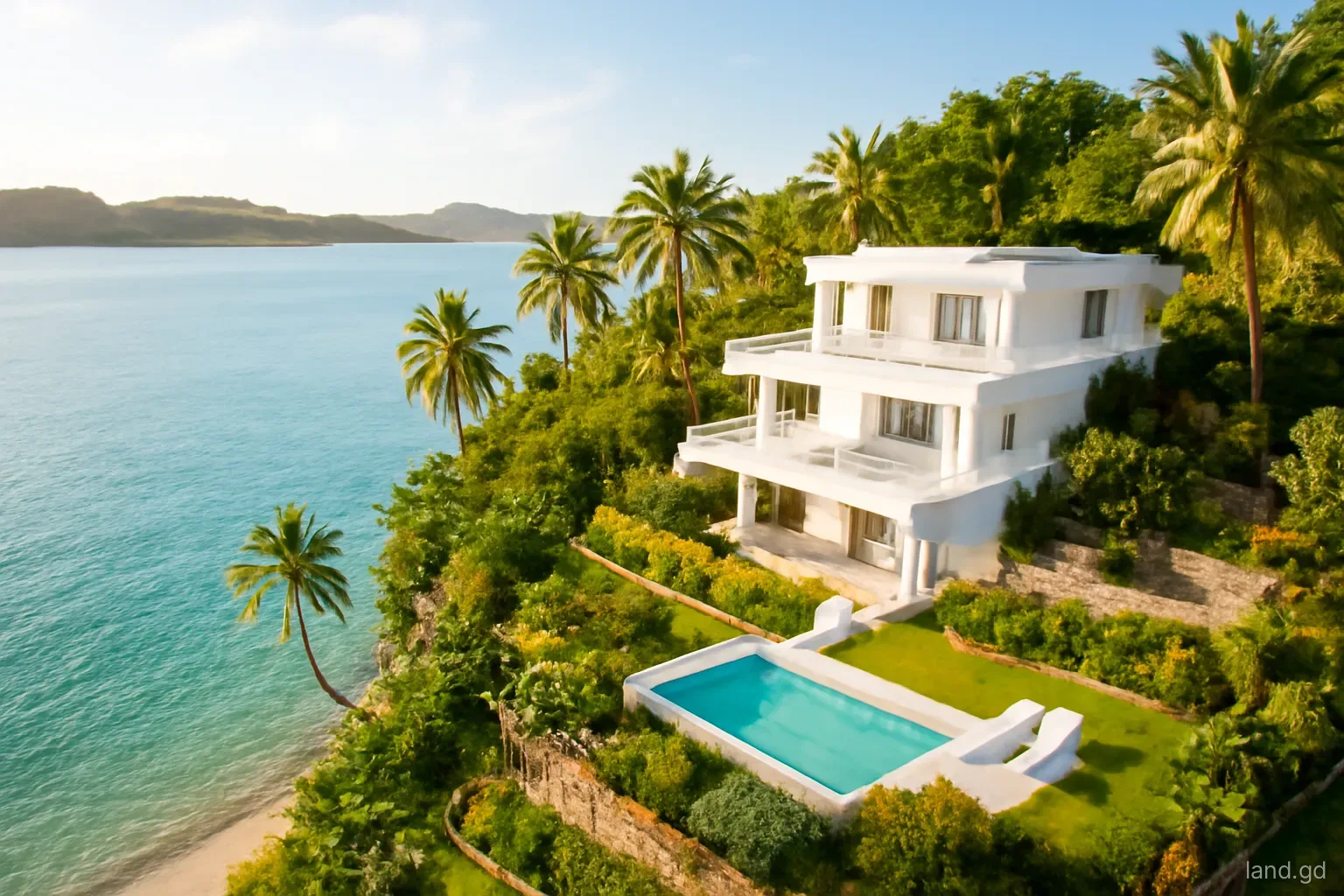
Coastal setbacks. Planning rules generally require buildings to sit back from the high-water mark, and the distance can be significant. A beachfront plot may have far less buildable area than its total size suggests. Ask the Physical Planning Unit what setback applies before you value the land.
Beaches are public. Beaches in Grenada are open to the public, so beachfront ownership does not bring a private beach. Expect people to walk, swim and fish in front of the property.
Storm surge and erosion. Low-lying coastal land is exposed to surge during hurricanes and to long-term erosion. Hurricane Beryl in 2024 caused severe coastal damage on Carriacou and Petite Martinique. Look at the height above sea level, the state of the shoreline and any history of damage.
Salt and maintenance. Sea spray accelerates corrosion of metal, fittings and air-conditioning units, adding to upkeep costs year after year.
Mangroves and protected areas. Some coastal land borders mangroves or protected marine areas, where development is restricted or prohibited. Check boundaries carefully.
Price premium. True waterfront land commands the highest prices on the island. Higher land a short walk from the shore often gives most of the benefit with fewer risks.
Matching terrain to your plans
The right terrain depends on what you intend to do with the land. A rough guide:
- Retirement home with easy access: gentle slopes or flat land near services, avoiding very steep drives that become harder to manage with age.
- Villa for holiday rental: view lots on hillsides near the south coast tend to rent and resell best, provided the build budget allows for the slope.
- Small farm or smallholding: flatter land with water access and good soil, often in St Andrew, St Patrick or the valleys of St John and St Mark.
- Low-maintenance holiday base: a moderate slope a little inland, out of the salt spray and surge zone, with breeze and a partial view.
- Long-term land bank: plots in growing areas with confirmed access and services, regardless of terrain, as long as title and planning prospects are clear.
Mistakes buyers make when judging terrain
The most common mistake is valuing a plot by its total area rather than its usable area. A 20,000-square-foot hillside lot with a gully and steep sections may have a building platform smaller than a 10,000-square-foot flat lot. Ask a surveyor or architect to sketch where a house could realistically go.
Another is visiting only in the dry season. Land that looks firm and dusty in March can turn into a stream bed in October. If you cannot visit in the rainy season, ask neighbours or a local builder directly about drainage.
Finally, buyers often ignore wind. Ridges and exposed headlands catch the trade winds, pleasant most of the year but punishing in a hurricane. Building design can compensate to a degree, but it costs money. Factor exposure into both your build budget and your insurance quotes before committing to a plot.
A fourth mistake is assuming that the view is permanent. Land below a hillside plot may be sold and built on, and trees grow. Look at who owns the land in front of the view, whether it is already subdivided, and what height of building the planning rules would allow there. A view protected by a steep drop or a road is more secure than one that depends on an empty neighbouring lot staying empty.
What lies beneath: soil, rock and drainage
The surface of a plot says little about what a foundation will meet. Grenada's volcanic origins mean soils range from deep, fertile clays in the wetter interior to thin soils over rock on ridges and in the drier south. Clay soils can shrink and swell and become unstable on slopes when saturated; rock is stable but costly to cut. Carriacou has its own mix, including limestone areas.
Before committing to a plot where foundations could be complicated, ask an engineer whether a simple soil investigation is worthwhile. On a steep or unusual site, the cost is small relative to the money it can save in redesign later. Builders who have worked in the immediate area are also a good source of practical knowledge about what they found when digging nearby.
Drainage deserves the same attention. Water on a Grenadian hillside has to go somewhere, and heavy tropical downpours move a great deal of it in a short time. Look for gullies, eroded channels and how neighbouring properties handle run-off. A plot that receives water from the land above will need drains and possibly channels to carry it safely past the house, and planning approval may require you to show how storm water will be managed.
Frequently asked questions
Is it more expensive to build on a slope in Grenada?
Generally yes. Steep sites usually need stepped foundations, retaining walls, more excavation and careful drainage, all of which add cost. How much depends on the gradient, soil and design. A structural engineer and local builder can estimate the difference before you buy.
How far back from the sea must a house be built?
Coastal setbacks are set by planning policy and can vary with location and circumstances. The Physical Planning Unit can tell you what applies to a particular plot. Always confirm this before buying waterfront land, because it determines how much of the plot can actually be built on.
Can you own a private beach in Grenada?
No. Beaches in Grenada are public, and owning land behind a beach does not give you the right to exclude people from the sand. Buyers who want privacy usually look at higher land above the shore rather than plots directly on the beach.
Is Carriacou land flatter than mainland Grenada?
Carriacou is generally lower and less rugged than the mainland, with rolling hills rather than steep volcanic slopes. It is also drier, so water storage matters more, and building materials are more expensive because they must be shipped across. Consider both factors when comparing.
Does terrain affect home insurance in Grenada?
Insurers consider location and exposure, so coastal and very exposed sites may face higher premiums or stricter conditions. Construction standards also matter. Ask insurers for indicative quotes on a specific plot and design before you buy, rather than assuming cover will be straightforward.