
Most land problems in Grenada are discovered after the money has been paid, and nearly all of them could have been found before. A boundary that runs through the spot where the house was meant to go, a right of way across the middle of the lot, an heir who never agreed to the sale: none of these are rare, and none of them are hidden from a buyer who checks.
Due diligence on land is different from buying a finished house. There is no building to inspect, so the risk sits almost entirely in paperwork, boundaries, access and what you will be allowed to do with the plot. That makes it cheaper to check, but easier to skip.
The twelve checks below are grouped by who usually does them. Your Grenadian attorney leads the legal side; a licensed land surveyor confirms the ground; and you, the buyer, handle the practical questions that neither of them will raise unless asked.
Legal checks your attorney should carry out
1. The chain of title. Grenada registers deeds rather than guaranteeing title through a central register, so the attorney traces ownership back through earlier conveyances at the Deeds and Land Registry in St George's. The aim is an unbroken chain showing the seller has the right to sell the whole plot. Gaps, often caused by deaths that were never dealt with through probate, must be fixed before completion.
2. Who exactly is selling. If the land is jointly owned or belongs to an estate, everyone with an interest must sign, or the person signing must have legal authority, such as a grant of probate or letters of administration. An informal family "go-ahead" is not enough.
3. Mortgages and charges. A search reveals whether the land is mortgaged. Any charge must be discharged at or before completion, normally out of the purchase money.
4. Leases, easements and rights of way. Registered rights for neighbours to cross the land, run pipes or use a path survive a sale. Unregistered but long-used paths can also cause friction, which is why a site visit matters as much as a search.
5. Pending disputes or court orders. Ask the attorney to check for any litigation or caveat affecting the land. Local knowledge helps here too.
Ground checks for the surveyor
6. Does the plan match the land? A licensed surveyor should locate the boundary markers and confirm that what the seller shows you is what the registered plan describes. Old plans, missing pegs and fences built in the wrong place are common.
7. Is the plan approved and recorded? Survey plans in Grenada are prepared by licensed surveyors and approved through the Lands and Surveys Division. An unapproved sketch is not a reliable description of land. If the plot is being cut from a larger parcel, a new subdivision survey and planning approval will be needed.
8. Encroachments. Check that no neighbour's wall, driveway, water tank or outbuilding sits on the plot, and that nothing on the plot crosses onto theirs. These are cheaper to resolve before you own the land.
Practical checks the buyer must not skip
These four checks fall between the professionals, which is exactly why they get missed. Do them yourself or ask specifically for them to be covered:
- 9. Legal access. A road you can drive on is not the same as a road you have a right to use. Confirm that the plot fronts a public road or has a registered right of way to one, and that the right of way is wide enough for construction vehicles.
- 10. Utilities. Ask NAWASA whether a water main serves the area and GRENLEC how far the nearest suitable pole is. Distant connections can add a surprising amount to a building budget, and some rural areas rely on rainwater storage.
- 11. What you can build. Speak to the Physical Planning Unit about the zoning, setbacks and any restrictions before signing. Coastal land, steep slopes, land near watercourses and anything near a protected area can carry limits that change what the plot is worth to you.
- 12. Natural hazards. Look at drainage, landslip signs on slopes, exposure to storm surge on low coastal land and wind exposure on ridges. Hurricane Ivan in 2004 and Hurricane Beryl in 2024 both showed how site choice affects damage.
Questions to ask the seller before instructing lawyers
A short conversation can save legal fees. Ask the seller how they came to own the land and whether anyone else in the family has a claim. Ask for the survey plan and the deed, and whether they have been to the Deeds and Land Registry recently. Ask whether property tax is up to date; arrears can follow the land and complicate completion.
Ask what the neighbours think of the sale and whether there has ever been a boundary disagreement. Ask whether anyone farms, grazes animals or keeps a garden on the plot. Informal users can feel they have a right to stay, and sorting that out after purchase is awkward.
Finally, ask why they are selling and how quickly they need the money. The answer tells you how much flexibility there is on timing, which matters when a foreign buyer has to wait for an Alien Landholding Licence before completing.
Keep notes of the answers and pass them to your attorney. Inconsistencies between what the seller says and what the registry shows are among the most useful early warnings a buyer can get, and they cost nothing to collect. A seller who is open, has documents to hand and is happy for you to talk to neighbours is usually selling land that will pass the formal checks without drama.
Pitfalls specific to bare land
Vacant land attracts certain problems more than built property. Squatting, informal cultivation and dumping are more likely when nobody lives on a plot. Boundary pegs disappear under bush. Paths that neighbours have used for decades can become contested once a new owner starts fencing.
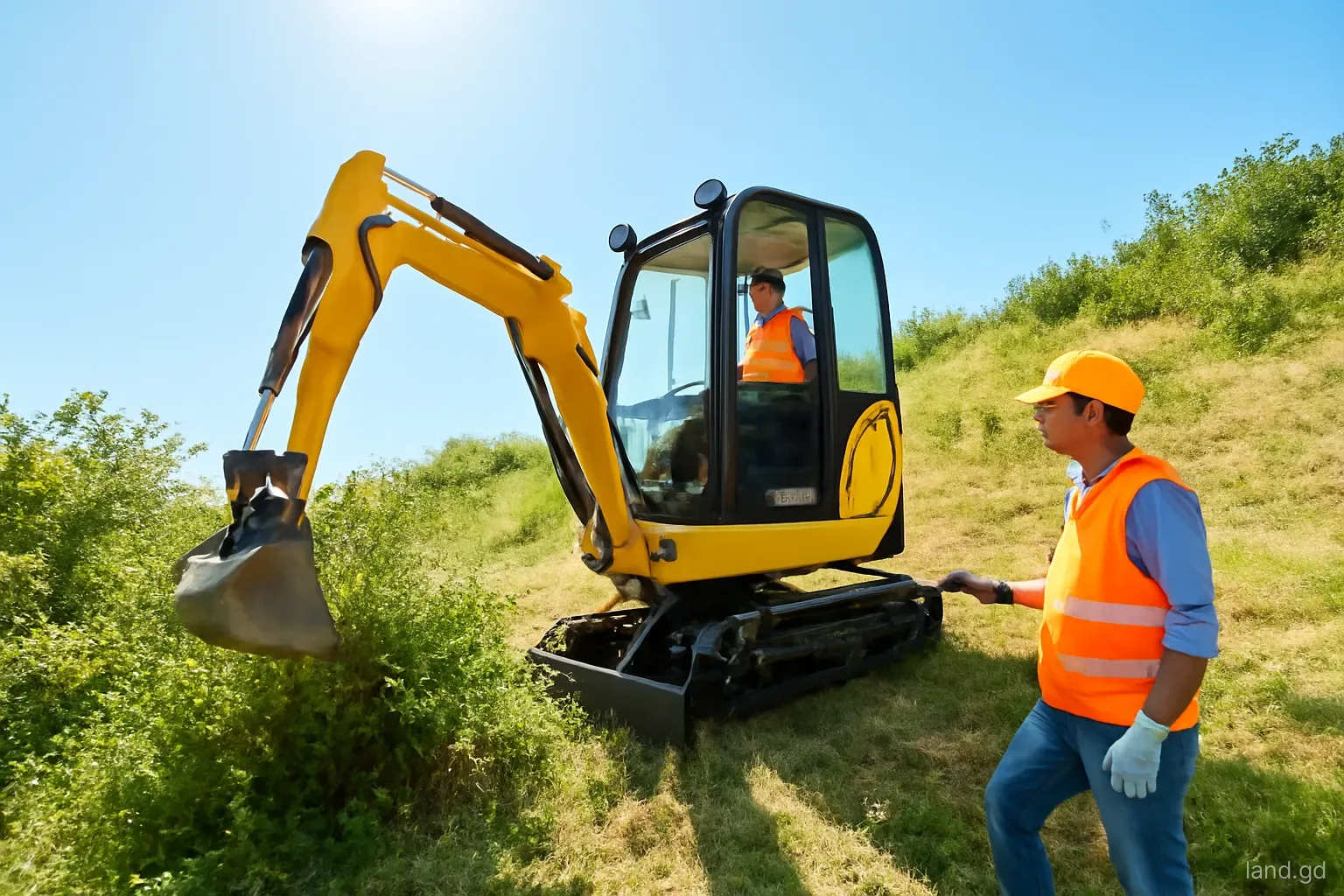
Buyers also underestimate how much the plot itself will cost to make buildable. Clearing, levelling, retaining walls on slopes, access driveways and drainage can add significantly to a budget, especially on hillsides in St George and St David where many view lots sit. Ask a local builder or engineer to look at the land before you sign, not after.
Lastly, remember that a sale agreement for a foreign buyer should be conditional on the Alien Landholding Licence being granted, with a clear date by which the deal falls away and the deposit is returned. Your attorney will draft that clause, but you should check it is there.
If the land has sat vacant for years, ask when property tax was last paid and whether any notices have been served on it. Overgrown, neglected plots occasionally attract enforcement action for clearing, and long-unpaid tax becomes a problem the seller must settle before you take over.
When each check happens in the timeline
Due diligence is not one event but a sequence. Before any agreement, you carry out the practical checks yourself and ask the seller for documents. Once you have agreed a price in principle, your attorney reviews the deed and survey plan and runs the registry search, while a surveyor confirms the pegs. Only when those come back satisfactorily should you sign a sale agreement and pay a deposit, normally held by an attorney rather than handed to the seller.
For a foreign buyer, the Alien Landholding Licence application follows the signed agreement and takes time. Use that waiting period for the slower checks: a meeting with the Physical Planning Unit, quotes from NAWASA and GRENLEC, an engineer's look at the slope and early conversations with builders. Anything that turns up can still be raised before completion.
A final search shortly before completion confirms that nothing new, such as a mortgage or caveat, has been registered against the land since the first search. After completion, your attorney registers the new deed at the Deeds and Land Registry. Until registration, your ownership is not fully protected against third parties, so ask for confirmation that it has been done and keep certified copies of the registered deed and plan.
Frequently asked questions
Does Grenada have title insurance?
Title insurance is not a standard part of Grenadian conveyancing in the way it is in the United States. Protection comes mainly from your attorney's search of the title at the Deeds and Land Registry and from a proper survey. Ask your attorney whether any insurance product is available and worth having for your purchase.
How long does a title search take?
Simple searches can be done fairly quickly, but land with a long or broken chain of ownership, or a history of family inheritance without probate, can take much longer to clear. Your attorney can give an estimate once they have seen the seller's documents.
Is a new survey needed if the seller already has one?
Not always, but it is wise to have a licensed surveyor confirm the boundary markers on the ground. Older plans can be accurate on paper while the pegs have moved or vanished. If the plot is being subdivided from a larger parcel, a new survey is required.
Who pays for due diligence?
The buyer normally pays their own attorney and any surveyor or engineer they instruct. The seller pays to fix defects in their own title, such as obtaining probate. These costs are modest compared with the cost of buying land with a problem.
Can buyers check the registry themselves?
Searches at the Deeds and Land Registry are best carried out by an attorney or a clerk experienced in reading old conveyances. Records span many decades, older deeds can be hard to interpret, and the legal significance of what is found needs professional judgement.
What if a problem turns up during checks?
Many defects can be fixed by the seller before completion, for example by obtaining probate or a corrected survey. Your agreement should allow time for this and let you withdraw with your deposit if the problem cannot be solved. Do not complete on a promise to fix it later.