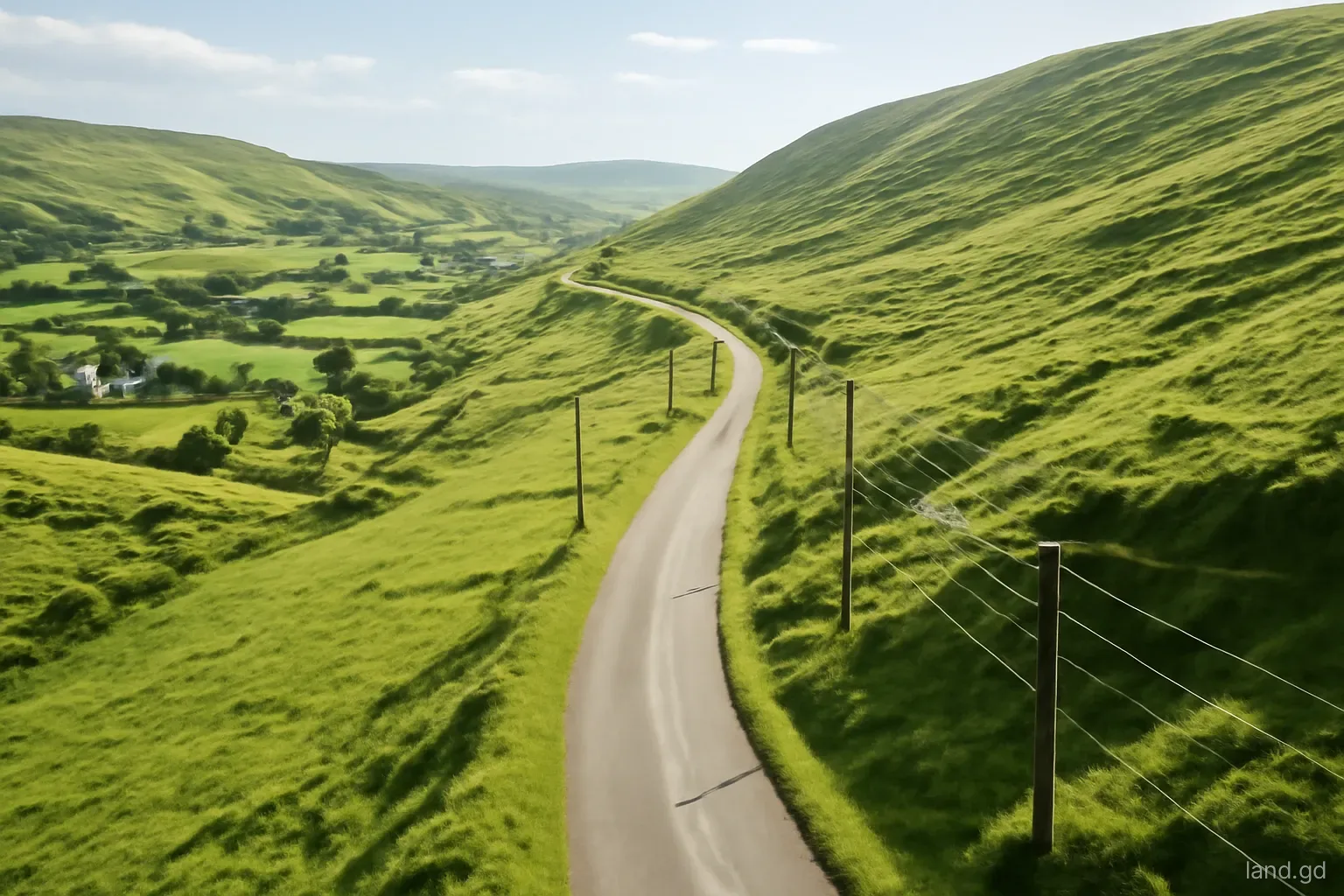
A plot with a view and a fair price can still be a poor buy if it has no lawful access, no water and no electricity nearby. In Grenada, where much land sits on hillsides reached by narrow roads, the cost of getting services to a site can rival a meaningful share of the land price itself.
The questions are simple: can you legally get to the land, can a truck carrying concrete get there, and how will water and power reach the house? The answers are not always simple, and sellers rarely volunteer the awkward ones.
This article sets out how access and utilities work in practice, how to check each one before you commit, and what alternatives exist when the mains are out of reach.
Legal access versus physical access
A plot can look accessible because a dirt track leads to it, yet have no legal right of access at all. The track might cross a neighbour's land with their informal permission, which can be withdrawn by them or by whoever buys their land next. Lack of legal access can also complicate planning approval and financing.
What you want is one of two things: the plot directly fronts a public road, or there is a registered right of way, described in the deeds, connecting it to a public road. Your attorney should confirm which applies, and the surveyor should show the right of way on the plan. Its width matters. A footpath right of way does not help when you need to bring in a cement truck, a water tank or a builder's lorry.
In subdivisions, ask whether the internal roads have been handed over to the government or remain private. Private roads need maintenance arrangements, and in some older subdivisions nobody has formally taken responsibility, which leads to potholes, washouts and disputes over who pays.
Where access depends on a right of way over a neighbour\'s land that is not yet registered, the time to fix it is before you buy. Your attorney can negotiate a formal grant of easement with the neighbour, recorded by deed and shown on a survey plan, as a condition of the purchase. Neighbours who are happy to let a seller pass informally are sometimes less relaxed about a new owner with builders, so a written, registered right protects everyone.
Water: mains, cisterns and what to ask NAWASA
Mains supply. The National Water and Sewerage Authority, NAWASA, supplies piped water across much of mainland Grenada, Carriacou and Petite Martinique. Ask whether a main runs along your road and what a new connection involves; connection charges depend on distance and circumstances, so get them confirmed rather than assumed.
Supply reliability. Some areas, particularly at higher elevations or in drier parts of the south and Carriacou, experience interruptions during the dry season, roughly January to May. Neighbours will tell you how often the taps run dry.
Rainwater storage. Many Grenadian homes collect roof water in a concrete cistern or plastic tanks, either as the main supply or as back-up. On Carriacou and Petite Martinique, where rainfall is lower, storage is especially important. Allow space and budget for it in your plans.
Wastewater. Most rural and many suburban properties use septic systems rather than a sewer. Soil type, slope and distance from wells or watercourses affect septic design, and the planning authorities will want to see a suitable arrangement.
Ask early, in writing. Utility estimates can take time to arrive, so request them as soon as a plot becomes a serious candidate. A written estimate also helps your negotiation with the seller and gives your builder firm figures to plan around, instead of guesses that later prove optimistic.
Electricity: distance to the grid and alternatives
Grid connection. GRENLEC supplies electricity in Grenada, Carriacou and Petite Martinique. A connection near an existing line is routine; a plot several poles away from the nearest suitable line may need new poles and cable, with the cost often falling on the customer. Ask for an estimate early.
Solar as a supplement. Rooftop solar is increasingly common, and many owners use it to cut bills or add resilience. Rules on connecting solar systems to the grid have evolved over time, so check the current position with GRENLEC and a qualified installer before designing around it.
Fully off-grid. Off-grid solar with batteries is technically possible, but costly to size properly for air-conditioning or heavy use. It suits small, efficient homes and remote sites better than large villas.
Hurricane resilience. After Hurricane Ivan in 2004, and again on Carriacou and Petite Martinique after Hurricane Beryl in 2024, power took time to restore in some places. Many owners now plan for back-up power and water storage as a matter of course.
How to check services in one site visit
A single, organised visit answers most of these questions. Take a notebook and work through the list:
- Drive the route from the nearest main road and note the width, surface and gradient of each section.
- Ask the seller to point out the boundary and where the plot meets the road or right of way.
- Look along the road for water valves, meter boxes and electricity poles, and estimate the distance to your boundary.
- Talk to the nearest neighbours about water supply, outages and how the road behaves in heavy rain.
- Check for drains along the road and signs of water flowing across the plot.
- Note mobile signal strength and ask about fixed internet availability if you plan to work from home.
- Photograph everything and pass the details to your attorney, surveyor and builder so they can price the work.
Red flags that should change the price or the decision
None of these automatically rules out a plot, but each one should either reduce what you pay or make you think again:
- No registered right of way, only an informal arrangement with a neighbour.
- A right of way too narrow for construction traffic, or one that crosses several different owners.
- A steep final section that only four-wheel-drive vehicles can manage in the wet season.
- No water main within reasonable distance and no space for a large cistern.
- Power lines that would need several new poles crossing other people's land.
- A watercourse or ravine along the boundary, which may limit where you can build and increase drainage costs.
- A seller who discourages you from speaking to neighbours or from visiting after rain.
Pricing services into your offer
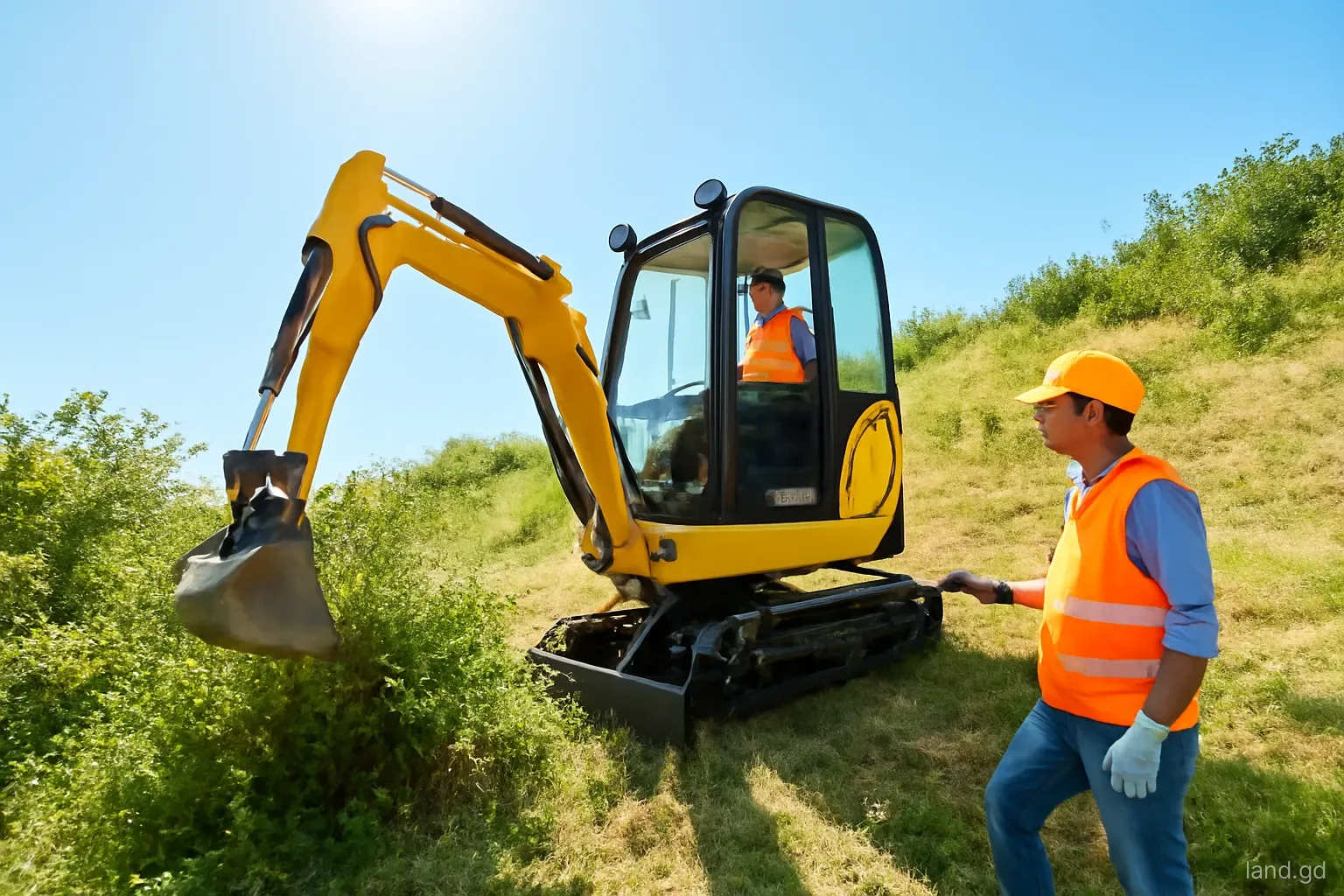
Once you know what access and utilities a plot needs, turn that knowledge into money. Ask a local builder to estimate the cost of a driveway from the road to a sensible house position, any retaining walls along it, the trenching for water and power, and a cistern sized for your household. Add GRENLEC's estimate for any line extension and NAWASA's for the connection. Prices for materials and labour change, so treat estimates as current guides rather than fixed figures.
Compare the result with a similar plot that already has services at the boundary. If the serviced plot costs more but the difference is smaller than your estimated cost of bringing services in, the serviced plot is the better buy. If the gap is larger, the unserviced plot may be good value, provided legal access is secure.
This calculation also gives you a reasoned basis for negotiation. Sellers in Grenada respond better to a specific, explained offer than to a bare low number. Showing that the plot needs a long driveway and several new poles before it can be used is a fair argument for a lower price, and an attorney or agent can present it on your behalf without souring the conversation.
Frequently asked questions
Who pays to bring electricity to a new plot?
Where new poles or line extensions are needed, much of the cost commonly falls on the customer requesting the connection. GRENLEC can provide an estimate based on the specific location. Get that estimate before buying, because it can change the true cost of an otherwise attractive plot.
Is rainwater safe to drink in Grenada?
Many households use rainwater, but whether it is safe to drink depends on how it is collected, stored and treated. Clean roofs, first-flush diverters, covered tanks and filtration all matter. Plenty of owners use cistern water for washing and buy or filter water for drinking.
Can a house be built on land that only has a footpath to it?
Construction becomes difficult and expensive if materials must be carried in, and planning approval may raise questions about access. A footpath right of way rarely supports a full house build. Ask your attorney whether a wider vehicular right of way can be negotiated before purchase.
Does a septic tank need planning approval?
Septic arrangements form part of the building plans submitted to the planning authorities, which will expect a design suited to the soil, slope and location. A local engineer or architect familiar with the requirements should prepare it with the rest of the plans.
Is mobile and internet coverage good in rural Grenada?
Mobile coverage reaches most populated areas, though signal can drop in valleys and on the far side of ridges. Fixed broadband is widely available along main roads and in towns, less so in remote spots. Test signal on the plot itself and ask providers about the specific address.