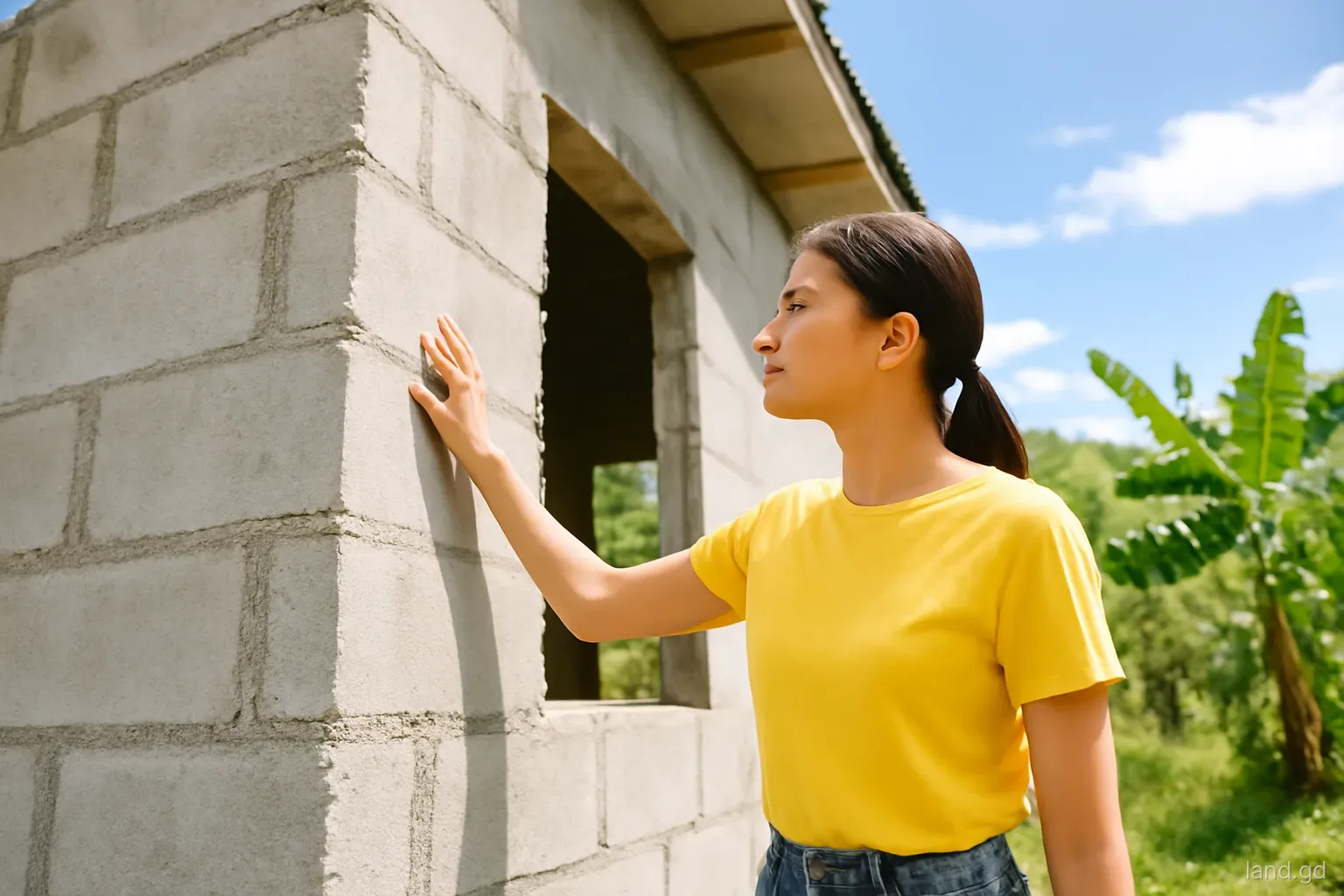
It is one of the most common stories in Grenada. A grandmother tells a grandson to build on the family land. He clears a spot on the hill, saves for years, puts up a house block by block and raises a family there. Then the grandmother dies, the land turns out to belong to a dozen heirs, and an aunt abroad wants it sold. The grandson owns the house he built, he assumes, but the law may see things differently.
Building on land you do not solely own is a serious risk to your savings and your home. This page explains why, what protection you can put in place before building, how to get planning permission and finance on family land, and what can be done if a house is already standing. The law in this area is fact-specific, so take advice from a Grenadian attorney before you start, not after a dispute begins.
Why the house may not be yours
Under the general principle of land law inherited from England, a building becomes part of the land it stands on. If you build on land owned by others, or co-owned by many relatives, the house is legally part of that land. Your money and labour may have created it, but ownership follows the land.
On co-owned family land, every co-owner has an undivided share of the whole parcel, including the part your house stands on. If the land is later sold or divided, the house may be counted as part of the common property, or you may have to argue for credit for what you spent.
Courts in common law systems can protect people who built in reliance on a clear promise by the owner, through doctrines such as proprietary estoppel. But such claims are uncertain, expensive and slow, and depend on evidence of what was promised, often by someone who has since died. Relying on them is a last resort, not a plan.
This is not a criticism of families who have built this way for generations; it is simply how the law treats land and buildings. Knowing it in advance turns a family promise into something that will hold up when circumstances change.
Protection to put in place before building
Your own title. The strongest protection is a deed putting the house spot in your name, by gift or sale from the owner or co-owners, after a survey defines the lot.
Written consent from all co-owners. If a transfer is not yet possible, a written, signed agreement from every co-owner that you may build and that the house spot will be yours on division is far better than nothing.
A lease. A long registered lease of the house spot from the owners can give security where an outright transfer is not achievable.
A survey. Whatever the arrangement, have a surveyor define the spot, with access, so there is no doubt where your area begins and ends.
Records of spending. Keep receipts, contracts and photographs of the construction. If a dispute ever arises, evidence of what you spent matters.
Planning permission and finance on family land
The Physical Planning Unit will expect an application to show the applicant's interest in the land. If the land is in a deceased relative's name or held by many co-owners, you may need to show consent from the owners or the personal representative. Building without approval because the paperwork is difficult creates a second problem on top of the first.
Banks and credit unions usually want security over land in the borrower's name. An undivided share in family land, or a verbal promise, is generally not acceptable security. That is why many people building on family land do so slowly with savings, and why sorting out the title first can open the way to a mortgage and a faster, cheaper build.
Where the land is in a deceased person's name, the estate may need to be administered first so that someone has authority to transfer the house spot. That can take time, but it is usually the step that makes everything else possible.
A sensible order of steps
For anyone being offered a house spot on family land, this order gives the best protection:
- Find out from the deeds who legally owns the land, and whether any estates need to be administered.
- Discuss the plan openly with all co-owners or heirs, including those abroad.
- Have a surveyor define the house spot and its access.
- Ask an attorney to prepare a deed of gift, sale or lease of the spot, or at least a signed consent agreement.
- Register the deed or lease at the Deeds and Land Registry.
- Apply for planning permission with evidence of your interest in the land.
- Arrange finance if needed, now that you can offer security.
- Build, keep records of costs and make a will covering your house.
If the house is already built
Many people read this after the house is up. It is not too late to improve the position. The first step is the same: establish who owns the land and what shares exist. Then approach the co-owners with a proposal to transfer the house spot to you, perhaps with a payment for their share of the land value, excluding the house you built.
Families often accept this, since the alternative is a dispute nobody wants. A survey of the spot, a valuation of the land without the house and a deed of partition or transfer can regularise the position. Where some co-owners cannot be found or refuse, an attorney can advise on options, including court proceedings for partition in which your contribution may be argued.
If the original promise came from an owner who is still alive, ask them to confirm it in a deed now. A gift while they are alive is far easier than a claim against their estate later.
Returning nationals and relatives abroad
Grenadians returning home after years in Britain, North America or elsewhere often plan to build on family land, sometimes on a spot promised to them long ago. The same rules apply, with extra complications. While they were away, others may have occupied or farmed the land, family relationships may have shifted, and the elders who made the promise may have died.
Before shipping a container of building materials or transferring savings for construction, a returning national should commission a title search and a survey and talk frankly with relatives on the ground. Arriving with plans and money and expecting the land to be ready is a common source of conflict.
Relatives abroad who are building at a distance face particular risks: contractors working without supervision, building on the wrong spot and disputes going unnoticed until it is too late. A trusted local representative, a properly defined spot and documented consents protect both the investment and the family's goodwill. Returning nationals may also be eligible for certain duty concessions on personal effects and building materials; check current rules with the Customs and Excise Division.
Mistakes people make when building on family land
Trusting a verbal promise is the biggest. Promises are sincere when made, but owners die, families change and memories differ.
Building first and sorting the land out later is the next. Every block laid increases what you stand to lose and reduces your bargaining power, because co-owners know you cannot move the house.
Leaving relatives out of the discussion breeds resentment. A cousin who learns about your house only when a sale is proposed is less likely to agree to a fair arrangement.
Not making a will for your own house adds a further layer. If you die without one, your interest passes to your heirs, adding to the co-owners. Finally, ignoring planning permission because the title is messy only compounds the risk. Take advice from a Grenadian attorney and resolve the land question first.
Frequently asked questions
Who owns a house built on family land in Grenada?
Legally, a building generally forms part of the land it stands on. If the land is co-owned, the house may be treated as part of the shared property. A deed putting the house spot in your name is the best protection.
Is a written agreement from relatives enough to build safely?
It is much better than a verbal promise, especially if signed by every co-owner and prepared by an attorney. A registered deed or lease of the house spot gives stronger, more lasting protection.
Can you get a mortgage to build on family land?
Usually not unless the house spot is in your name. Banks and credit unions generally require security over land owned by the borrower. Sorting out the title first often makes finance available.
What can be done if relatives want to sell land where your house stands?
Seek legal advice immediately. You may be able to negotiate a transfer of your house spot, or argue for credit for your contribution in any division. Courts can protect people who built relying on a clear promise, but outcomes vary.
Do you need planning permission to build on family land?
Yes. The usual planning rules apply, and the application will need to show your interest in the land. Building without approval adds enforcement risk to the ownership problem.