Most land bought in Grenada comes with bush. A plot left alone for a few years fills with grass, vines, wild tamarind and young trees, and the first instinct of many new owners is to clear the lot and see what they have. On flat ground that is merely wasteful. On the island's steep slopes it can be destructive, stripping the topsoil that took decades to form and sending it into drains, roads and the sea at the first heavy rain.
Clearing well is not complicated. It means knowing what needs approval, avoiding the fires that every dry season brings, keeping the trees that hold a slope together, and protecting bare ground until something grows back. This page sets out how to do that on residential and farm plots, from St Patrick in the north to the dry south of St George and the hills of Carriacou.
Does clearing need permission?
Clearing for a building is part of development, so the area cleared should match the plans approved by the planning authority. Cutting a whole plot before applying can be treated as starting work without approval, and on sensitive land it may be enforced against. Ask the Physical Planning Unit what is acceptable before machines go in.
Separate controls can apply to trees and land near protected areas. Clearing next to forest reserves, mangroves, rivers or steep watershed land may need consent from the forestry or fisheries authorities, and forestry legislation addresses clearing on steep and erosion-prone ground. Large-scale clearing of agricultural land may also attract questions from the Ministry of Agriculture about the loss of farmland.
For routine maintenance, such as cutting back grass and bush on an existing lot or managing an orchard, owners generally act without formal permission. The grey area lies between tidying and clearing; when in doubt, a short enquiry costs nothing compared with an enforcement notice.
Neighbours matter as well. Clearing up to a boundary can expose a neighbour's house to wind, dust and runoff, and cutting trees that sit on or near the line without agreement is a common cause of disputes. A conversation before the work starts is cheap insurance.
Why burning is the worst way to clear
Fires escape. The dry season, roughly from January to May, brings regular bush fires across Grenada, many started by people burning cut vegetation or rubbish. On a windy day a pile can spread across a hillside in minutes.
Restrictions apply. During dry spells the authorities may warn against or restrict open burning, and causing a fire that spreads to someone else's land or a forest can lead to liability and prosecution.
Soil suffers. Burning destroys organic matter and leaves soil bare, hard and more likely to wash away when the rains come.
Smoke annoys neighbours. Smoke drifting into houses is a common source of complaints, particularly in built-up areas of St George and St David.
There are better options. Chipping, composting or stacking cut material along the contour of a slope returns nutrients to the soil and slows runoff instead of creating a hazard.
Trees worth keeping
Before anything is cut, walk the land with someone who knows Grenadian trees. Mature mango, breadfruit, nutmeg, cocoa, avocado, sapodilla and golden apple trees take years to reach bearing size and add real value to a property. White cedar, mahogany and other timber trees provide shade and stability. On dry coastal land, native species such as sea grape and the low dry-forest trees are adapted to drought and wind.
Trees on slopes and along gullies hold soil together with their roots. Removing them can trigger slips years later, once the old roots rot. Marking the trees to keep with tape or paint before the crew arrives prevents most accidental losses.
Some trees do need to go: those leaning over the building site, dead trunks that could fall in a storm, and fast-growing species planted too close to foundations or cisterns. Hurricanes Ivan and Beryl showed how much damage falling trees and branches cause to roofs and power lines, so careful selective removal near buildings is good sense rather than vandalism.
Clearing a sloping plot step by step
This sequence keeps soil in place while the land is prepared:
- Survey the plot and mark the boundaries, the building footprint and the trees to keep.
- Get planning approval, or at least clear guidance, for the area to be cleared.
- Cut by hand or with small machines where possible; heavy equipment on wet slopes compacts and churns soil.
- Clear only the footprint and working area first, leaving the rest of the plot vegetated until it is needed.
- Stack cut material along the contour to act as a barrier to runoff, or chip it for mulch.
- Install silt barriers on the downhill side and keep drains clear.
- Replant or cover bare areas quickly, using grass, ground cover or mulch.
- Inspect after every heavy rain and repair any rills or gullies before they grow.
Erosion control that works on Grenadian slopes
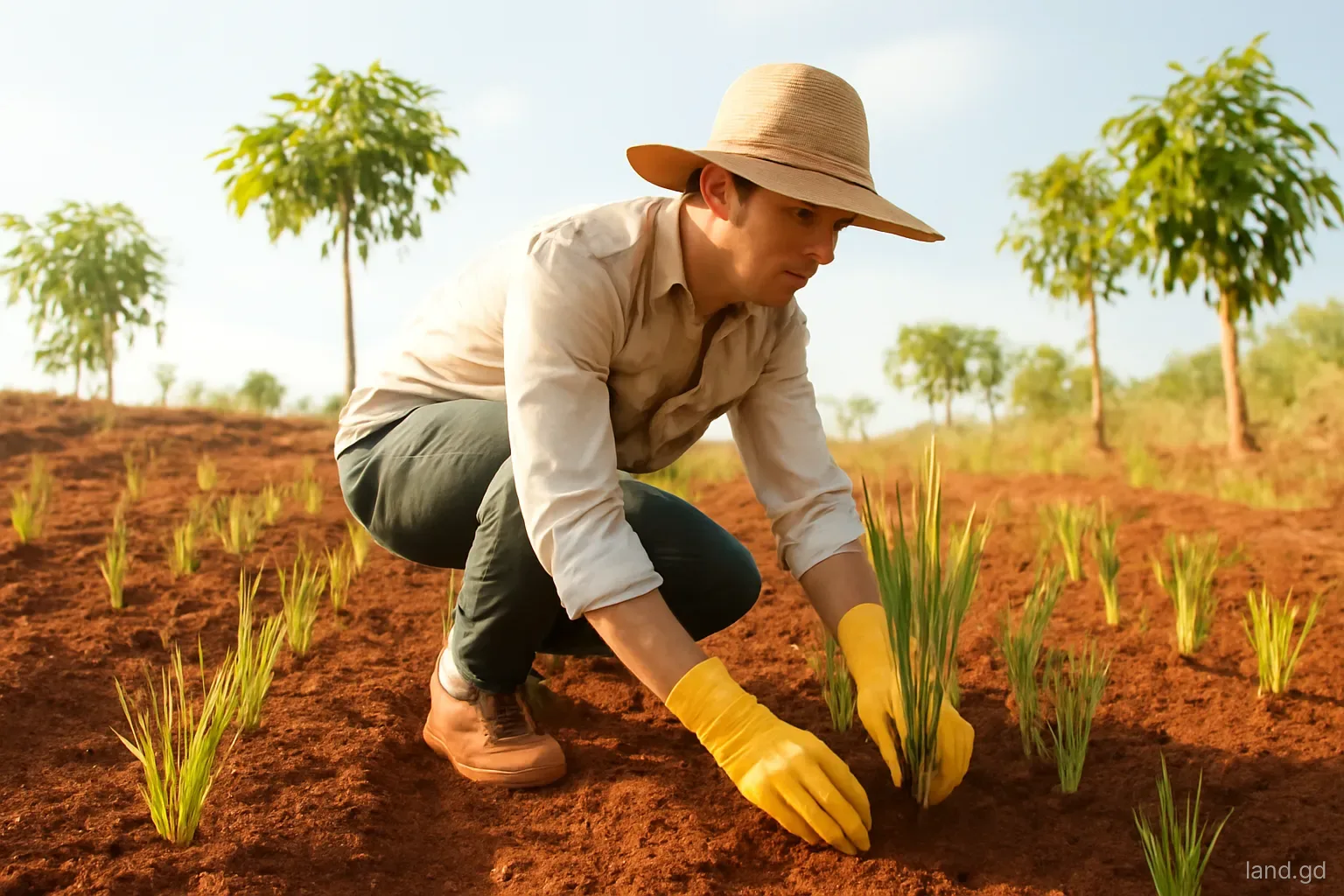
Vegetation is the cheapest protection. Vetiver grass, planted in rows across the slope, forms dense hedges with deep roots and is widely used in the Caribbean for soil conservation. Ground covers and grasses established early stop raindrops hitting bare earth, which is where erosion begins.
Terracing and retaining walls are sometimes needed, particularly for driveways and house platforms. Walls must be designed for the load they will carry and must drain properly; many failures in Grenada come from walls built without weep holes or adequate foundations, which then collapse after a wet spell. An engineer should design anything more than a low garden wall.
Drainage ties it together. Water running off a roof, driveway or road above the plot needs a planned route to a cistern, soakaway or stable channel. Letting it pour across a freshly cleared slope is the fastest way to lose soil and undermine foundations. The Ministry of Agriculture's extension officers can advise farmers on conservation practices suited to particular soils and slopes.
Clearing for farming versus clearing for building
Clearing land to farm it is a different exercise from clearing a house site, and the approach should differ. A farm plot can be opened up in stages, with tree crops such as nutmeg, cocoa, banana or fruit planted as the bush is cut, so that the soil is never bare for long. Many Grenadian smallholders have always farmed this way, mixing crops of different heights on the same slope.
On steeper land, contour planting and grass strips are worth the extra effort in the first year. Rows of short crops running straight downhill act as channels in heavy rain and carry soil away in a single season. Mulching with cut vegetation keeps moisture in during the dry months and protects the surface during the wet ones.
Large-scale clearing for monoculture is where trouble begins. Removing every tree across several acres to plant a single short crop on a slope invites erosion and, in some places, attention from forestry or agricultural officers. Talking to an extension officer before a major change of land use is sensible, especially if the land borders a river or a reserve.
Mistakes that cost owners money
Clearing years before building is common and expensive. Bare land grows back fast, so the bush has to be cut again, and the soil lost in the meantime does not return. Clear when the project is ready to start, not when the deed is signed.
Letting a contractor decide what to cut is another. Machine operators are paid to clear, and without instructions they will take the trees that matter along with the scrub. Agree in writing what stays.
Pushing spoil over the edge of the plot onto a neighbour's land, a gully or a road causes disputes, blocks drains and can bring complaints to the planning authority or the police. Finally, ignoring clearing near boundaries leads to arguments about who cut whose trees. Confirm the boundary first, and where a dispute arises, take advice from a Grenadian attorney before it escalates.
Frequently asked questions
Do you need permission to clear land in Grenada?
Clearing for a building should match the plans approved by the planning authority, and clearing near reserves, mangroves, rivers or steep land may need extra consent. Routine maintenance of an existing lot or orchard does not usually need formal permission.
Is it legal to burn bush on your own land?
Burning is common but risky, and during dry spells it may be discouraged or restricted. If a fire spreads to neighbouring land or forest, the person who lit it can be held responsible. Composting or chipping cut material is safer.
When is the best time to clear land in Grenada?
Clearing in the drier months reduces mud and erosion, but that is also fire season, so avoid burning. The key is to clear only when building is about to start and to cover bare soil before the rainy season.
What is vetiver grass and why is it used?
Vetiver is a clumping grass with very deep roots. Planted in rows across a slope, it forms hedges that trap soil and slow runoff. It is widely used in the Caribbean for erosion control on farms and building sites.
Who can advise on soil conservation for a farm plot?
The Ministry of Agriculture's extension officers and the Land Use Division can advise on contour planting, cover crops, grass strips and other conservation methods suited to Grenadian soils and slopes.