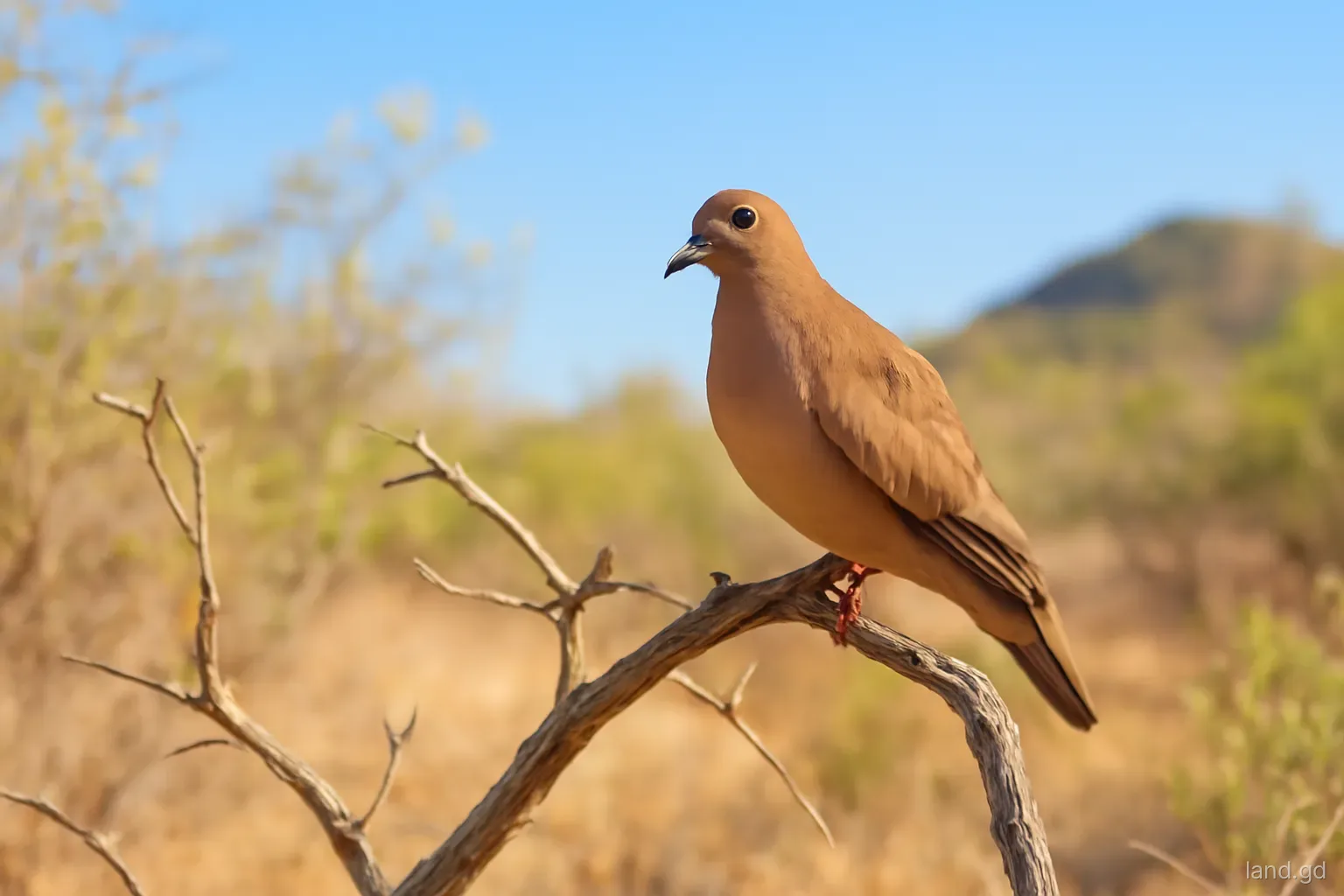
The low, scrubby woodland that covers parts of Grenada's south-west peninsula and the dry hills along the west coast does not look like much to the untrained eye. In the dry season it turns grey and leafless, and much of it is classed by buyers as "bush" waiting to be cleared. Yet this dry forest is the home of the Grenada dove, the national bird and one of the most threatened birds in the Caribbean, found nowhere else in the world.
That makes land in and near dry forest habitat a special case. Development is not ruled out, but it attracts questions from conservation bodies and government agencies that a plot in a built-up area would not. This page explains why, where the sensitive areas are, how other wildlife fits in, and how owners and buyers can plan accordingly.
The Grenada dove and where it lives
The Grenada dove is a quiet, ground-feeding bird with a pale face and a distinctive repeated call. It needs dry forest and scrub woodland at low elevation, and its numbers are small. Surveys over the years have recorded it mainly in two areas: the south-west, around Mount Hartman, and the west coast, around Perseverance and nearby valleys. It has been listed as critically endangered.
Mount Hartman was set aside as a protected area for the dove in the 1990s, and the area has been at the centre of debates over tourism development ever since. Proposals for resorts on adjoining land have raised concerns from conservation groups locally and internationally, and the outcome of those debates has shaped how the government and investors approach dry forest land in the south-west.
Because the dove depends on habitat that also suits villas and resorts, the bird's survival is closely tied to decisions about private and public land in some of the island's most valuable districts.
What this means for owners and buyers
Planning scrutiny. Applications on dry forest land in the south-west and west may be referred to forestry and environment officials. Larger schemes are likely to face an environmental assessment that includes surveys for the dove and other species.
Clearing limits. Expect conditions that restrict how much forest can be cleared, require buffers or ask for native vegetation to be retained or replanted.
Timing. Bird surveys may need to be done at particular times of year, which can add months to a project timetable.
Reputation. Development seen as damaging to the national bird can attract public criticism and opposition, which affects sales and financing as well as approval.
Value of the habitat. For some buyers, a plot that keeps its native forest and its birds is the point. Retaining habitat can become part of the appeal of a property rather than a constraint on it.
Where the habitat lies on private land, conservation depends on the choices of owners as much as on government. A single subdivision can remove a significant share of the remaining forest in a valley, while a thoughtful layout on the same land can keep corridors that birds continue to use.
Other wildlife on private land
Dry forest and scrub support more than the dove. Hummingbirds, the Grenada flycatcher and other small birds, lizards, the green iguana and the armadillo, known locally as tatou, all live on private land across the island. Opossums, called manicou, are common, and in wetter areas mona monkeys visit gardens.
Some of these animals are hunted. Grenada's wildlife and forestry legislation sets closed seasons for species such as the armadillo, iguana and manicou, and protects others entirely. Dates and rules have changed over time, so owners who want to know whether hunting is lawful on or near their land in a particular month should check with the Forestry and National Parks Department.
Owners can refuse permission for hunting on their land. Hunters crossing private property without consent is a common complaint in rural districts, and clear boundary fencing and communication with neighbours help.
Designing a property around dry forest
Sensitive design reduces conflict and keeps more of what makes the land distinctive:
- Commission a habitat survey early, before a layout is fixed, so the best forest can be kept intact.
- Cluster buildings, driveways and pools on already disturbed or cleared parts of the plot.
- Keep a continuous belt of native vegetation rather than leaving isolated trees.
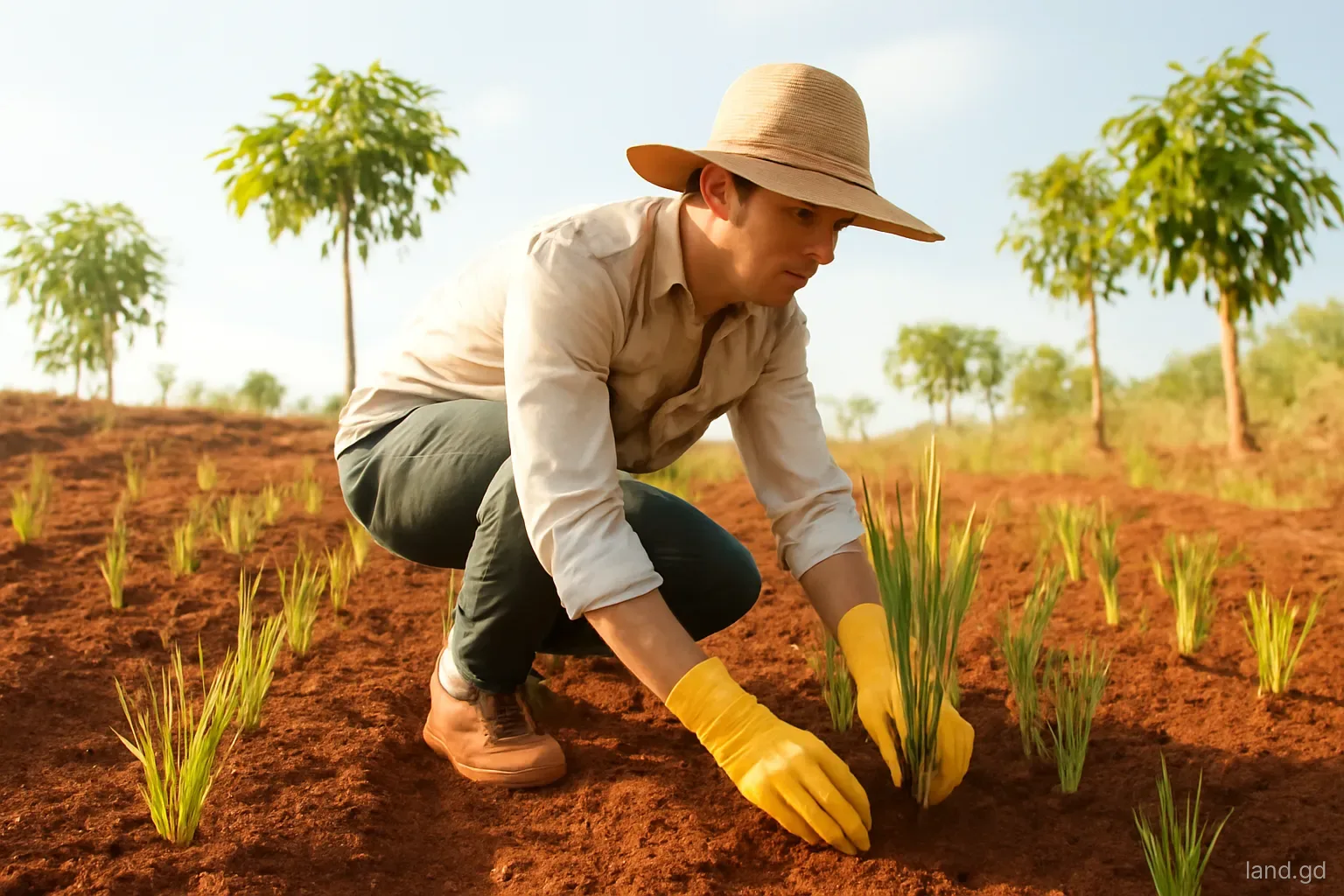
- Use native dry-forest species in landscaping; they need little irrigation once established.
- Control cats and dogs, which hunt ground-feeding birds and lizards.
- Avoid bright outdoor lighting that disturbs birds and other wildlife at night.
- Plan fire breaks: dry forest burns in the dry season, and fires spreading from neighbouring land are a real risk.
Water is the main constraint for gardens on dry forest land, because the south-west receives much less rain than the interior. Landscaping that relies on native species and rainwater stored in cisterns is both cheaper to run and better for wildlife than imported lawns and thirsty ornamentals.
Working with conservation groups and agencies
Several organisations have worked on Grenada dove conservation over the years, including government departments and local and international bird conservation groups. Contacting the Forestry and National Parks Department at an early stage is the most direct way to find out whether a plot lies within known dove habitat and what surveys might be expected.
Landowners who want to go further can explore voluntary measures: setting aside part of a property as habitat, allowing monitoring by researchers, or replanting native trees on degraded land. Such steps have no standard formula in Grenada, so any long-term arrangement should be discussed with the relevant agency and recorded properly, with advice from an attorney if it is meant to bind future owners.
For developers, early engagement tends to reduce delay. A project that arrives at the planning stage with survey data, a sensible layout and a habitat management plan is easier to approve than one that has to be redesigned after objections.
Information gathered during surveys also helps the project itself, revealing drainage lines, unstable ground and the best-shaded spots for buildings, all of which have value well beyond satisfying the planning authority.
Other dry forest areas beyond the south-west
Dry forest is not confined to Mount Hartman. Patches survive along the west coast hills, on headlands of the south coast and across much of Carriacou and Petite Martinique, where lower rainfall produces scrub woodland, cactus and drought-tolerant trees. Carriacou's High North area protects some of this habitat, and the sister islands' dry forest supports its own birds and reptiles.
Hurricane Beryl in 2024 stripped and broke much vegetation on Carriacou and Petite Martinique. Dry forest recovers slowly, and storm debris raises fire risk in the following dry seasons. Owners rebuilding on the sister islands should think about clearing dead wood around buildings while keeping living trees and allowing natural regrowth elsewhere.
Wherever dry forest occurs, the principles are the same: survey first, cluster development on disturbed land, keep continuous native cover where possible and treat fire as a real risk. Planning officers and forestry staff on both the mainland and Carriacou can advise on local conditions.
Pitfalls when buying dry forest land
Do not assume that scrubby land is low value or unconstrained. Price a plot on what can realistically be built after habitat requirements, not on the area of the deed.
Do not clear first. Removing forest before approval can destroy evidence needed for an assessment, attract enforcement and turn a manageable application into a contentious one.
Do not rely on a seller's statement that "there are no birds here". Doves are shy and easily missed; only proper surveys can say. And remember that dry forest is fire-prone, so insurance, access for fire tenders and cleared margins around buildings matter. Where the legal status of land or any conservation restriction is unclear, have a Grenadian attorney confirm it before you buy.
Frequently asked questions
Where does the Grenada dove live?
It lives in low-elevation dry forest and scrub, mainly in the south-west around Mount Hartman and on the west coast around Perseverance and nearby valleys. It is found only in Grenada and is considered critically endangered.
Can you build on land where Grenada doves live?
Building is not automatically ruled out, but it will face close scrutiny. Expect requests for surveys, limits on clearing and conditions to protect habitat. Larger projects may need an environmental impact assessment that addresses the dove specifically.
Is Mount Hartman a protected area?
Mount Hartman was set aside for the Grenada dove in the 1990s. Development proposals nearby have been debated over the years, so check the current status and boundaries with the Forestry and National Parks Department before assuming anything.
Is hunting allowed on private land in Grenada?
Hunting of certain species is permitted only during open seasons set by law, and some animals are fully protected. Landowners can refuse hunters permission to enter. Check current rules with the Forestry and National Parks Department.
How can landowners help protect the Grenada dove?
By keeping native dry forest intact, avoiding unnecessary clearing, controlling pets, using native plants and talking to forestry officials and conservation groups about surveys or voluntary habitat protection on their land.