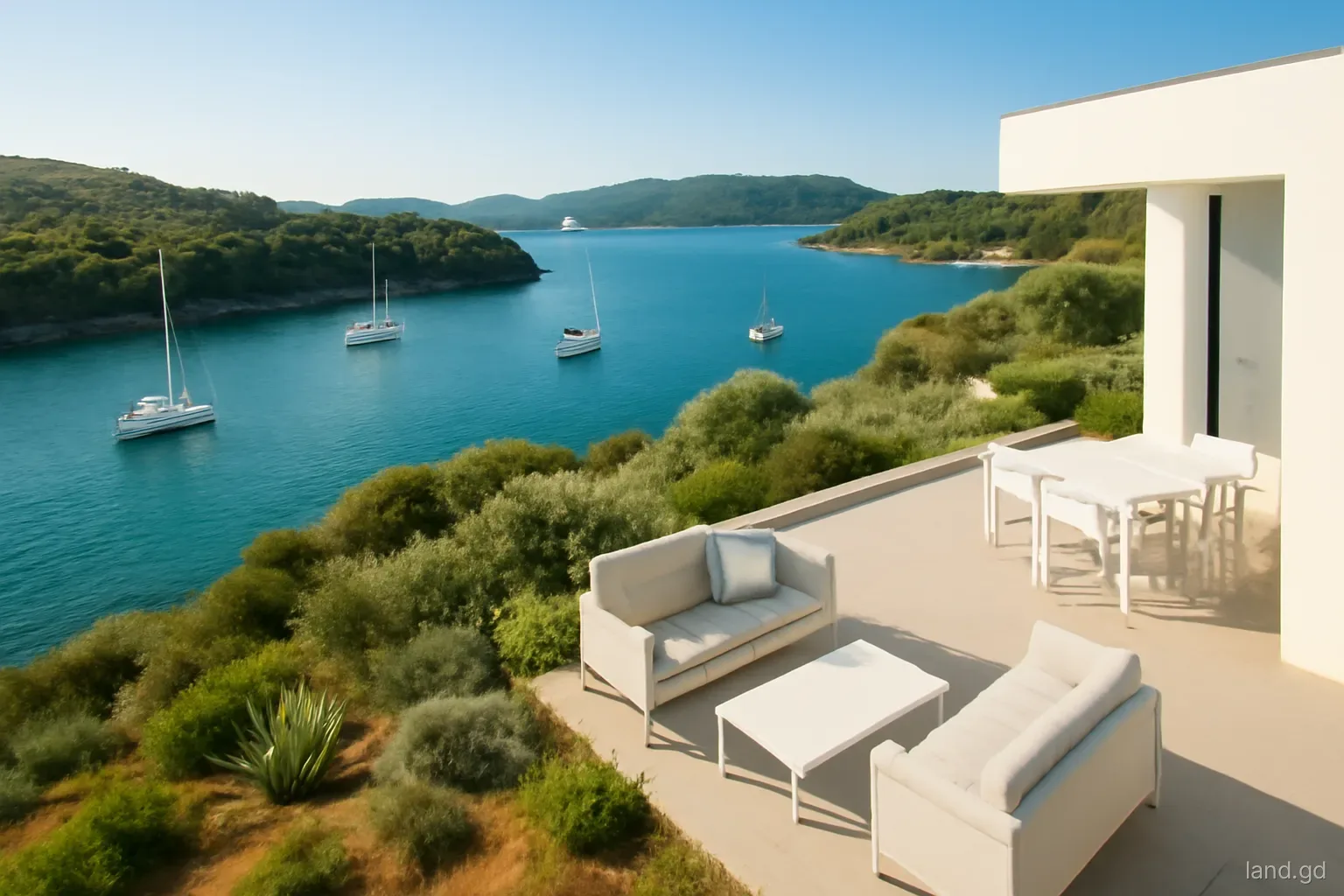
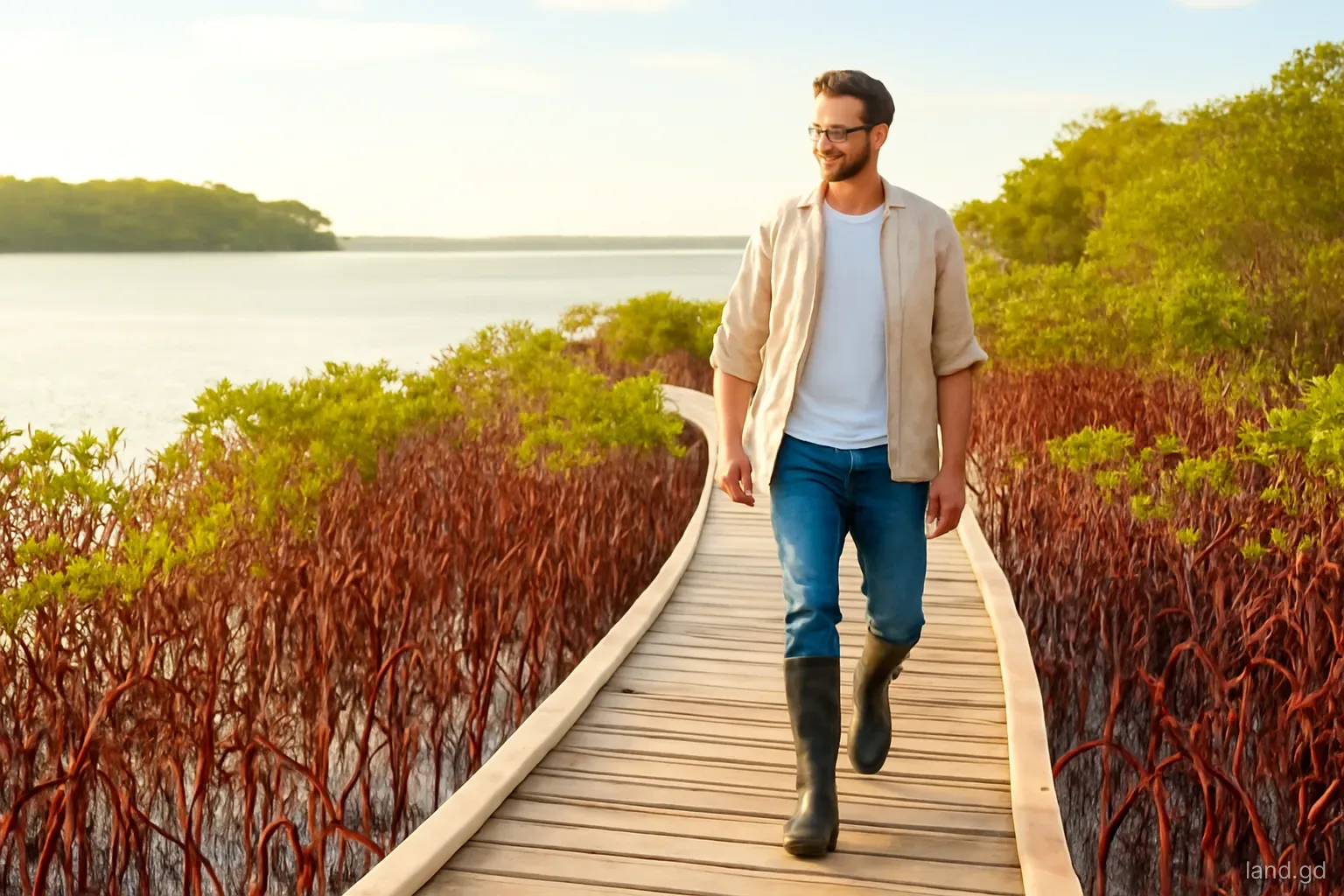
Some of the most attractive coastal parcels in Grenada sit behind a fringe of mangrove: the inlets of the south coast between Mount Hartman, Woburn and Westerhall, the lagoons near Levera in the north-east, and the swampy bays of Carriacou such as those around Petit Carenage and Lauriston. To a buyer the mangrove can look like an obstacle between the house and the water. To the law and to the island's fishers it is a nursery, a filter and a storm barrier.
This page explains what mangroves do for a property, why clearing or filling them is controlled, which public bodies take an interest, and how owners can work with the trees rather than against them. It is written for people who own or are thinking of buying land with mangrove on or beside it, and it points to where the formal answers come from.
Why mangroves are treated as more than bush
Mangroves trap sediment washing off the land, so the sea in front of them stays clearer and seagrass and reefs further out are not smothered. Their roots shelter juvenile fish, lobsters and conch, which is why fishers in Grenada and Carriacou take damage to them personally. They slow waves and storm surge, and a band of healthy mangrove in front of a property often does more than a concrete wall.
Hurricane Ivan in 2004 and Hurricane Beryl in 2024 both showed the value of that buffer. Beryl hit Carriacou and Petite Martinique hard, and mangrove stands in sheltered bays took a battering too. Replanting and recovery work has been part of the response, and coastal communities are more aware than ever of what is lost when mangrove is cut for a view or a jetty.
For these reasons mangrove areas are regarded as protected or sensitive habitat. Some sit within or next to designated marine protected areas and reserves, and even where they do not, cutting, filling and dredging are activities that need permission rather than something an owner can decide alone.
Mangroves also store large amounts of carbon in their mud, which is one reason they feature in climate adaptation planning for small island states such as Grenada. Projects funded by international partners have supported mangrove restoration, and owners of land beside restored stands should expect those areas to be watched closely.
What the rules generally mean in practice
Cutting needs permission. Removing or trimming mangroves is regulated, with fisheries and forestry legislation both relevant. Ask the Fisheries Division and the Forestry and National Parks Department before touching them, even for a small path.
Filling is a planning matter as well. Dumping fill to create a lawn or a building pad is development. It needs approval from the planning authority, and on wetland it is unlikely to be granted without a strong reason and an environmental assessment.
Docks and boardwalks are possible but scrutinised. A raised, piled walkway that lets water flow beneath is a different proposition from a solid causeway. Expect drawings, consultation and conditions about materials and construction methods.
The foreshore is not private. Land below the high-water mark generally belongs to the Crown, and beaches are public. Mangrove growing in tidal water may sit partly on land you do not own, which a survey will clarify.
Previous clearing is not a precedent. Seeing a neighbour's cleared frontage does not mean it was lawful or that you will be allowed to do the same.
Planning a project on a mangrove-fringed lot
Owners who want a house, a garden or water access on such land usually get further by following this order:
- Have a licensed surveyor map the plot, the high-water mark and the edge of the mangrove stand.
- Ask the Fisheries Division and the Forestry and National Parks Department how they view the stand and whether it lies in or near a protected area.
- Hold a pre-application discussion with the Physical Planning Unit before commissioning full drawings.
- Design the house on the firm, higher part of the plot, with a generous setback from the wetland edge.
- If water access is essential, propose a narrow, piled walkway rather than cutting a channel.
- Plan septic treatment and storm drainage so nothing discharges into the mangrove; this is where many approvals are won or lost.
- Keep a written record of every approval and condition before any machine arrives on site.
Working with mangroves rather than around them
A mangrove fringe can be a selling point. Birdlife is constant, including herons, egrets and kingfishers, and the water in front is often calm enough for a kayak. Designing a deck or terrace at the edge of the trees, with a view framed rather than cleared, usually gives a better result than a bare, eroding shoreline.
Mosquitoes and sandflies are a real consideration, especially in the wet season. Screened rooms, ceiling fans, avoiding standing water in containers around the house, and siting bedrooms on the breezier side of the building deal with most of it without harming the wetland.
Owners who want to restore a damaged stand can talk to the Fisheries Division and local environmental groups about replanting. Community mangrove projects have operated in Grenada and Carriacou, and advice on species and planting zones makes the difference between seedlings that thrive and seedlings that wash away.
Septic design deserves the same care as the house itself. Effluent from a poorly sited soakaway on low ground seeps into the wetland, feeds algae and can be smelt by neighbours on still evenings. Raised or packaged treatment systems cost more, but they are often what makes a planning approval possible on this kind of land.
Insurance, lending and resale with mangrove frontage
Lenders and insurers look at coastal risk more carefully than they did before recent hurricane seasons. A property behind a healthy mangrove fringe on higher ground may be viewed more favourably than one built on fill at the water's edge, but low-lying land beside a wetland can still be rated as flood-exposed. Ask an insurer for an indication before you buy, not after the house is designed.
For resale, clarity sells. A future buyer, or their attorney, will want to see the survey showing the high-water mark, the approvals for any walkway or clearing, and evidence that the septic system was approved for the site. Unauthorised cutting or filling discovered during a later sale can delay completion or knock money off the price, because the new owner inherits the problem.
Keep a simple file: the survey plan, planning approval and conditions, any letters from the Fisheries Division or forestry officials, and photographs of the mangrove before and after construction. That record answers most questions a buyer, bank or insurer will ask, and it shows that the property was developed lawfully.
Owners who let property to visitors can also make the mangrove part of the offer. Guests interested in birds, kayaking or quiet water often choose a place precisely because the shoreline has not been cleared, and a description that explains why the trees are there tends to set expectations well.
Pitfalls and what to check before buying
The biggest pitfall is paying for land that is partly water. Advertised acreage sometimes includes swamp or tidal mangrove, which may be Crown land, unbuildable or both. Ask the surveyor to state how much of the parcel is firm, dry ground above high water.
The second is assuming a view can be "opened up" later. Buyers who plan to cut a vista through the trees often find permission is refused, and unauthorised cutting can bring enforcement and penalties. Price the land as it is, not as it would be without the mangrove.
The third is drainage. Low land behind mangrove may flood in heavy rain or storm surge, and septic systems in waterlogged soil fail. Ask neighbours how the land behaved in past storms, and have an engineer look at levels. Ownership questions near the shoreline, and what activities need consent, are worth confirming with a Grenadian attorney alongside the technical advice.
Frequently asked questions
Can you cut mangroves on your own land in Grenada?
Not freely. Mangroves are protected habitat and cutting or trimming them requires permission from the relevant authorities, typically the Fisheries Division and forestry officials. Ask before any work, including small paths or trimming for a view.
Is land with mangroves a bad investment?
Not necessarily. It depends on how much firm ground there is for building and whether access and drainage work. Mangrove frontage brings storm protection, birdlife and calm water, but the price should reflect what can actually be used.
Who owns mangroves growing in the sea in front of your plot?
Land below the high-water mark is generally Crown land, so mangroves growing in tidal water may not be part of your parcel. A licensed surveyor and an attorney can establish exactly where your boundary ends.
Can you build a dock through mangroves?
Possibly, but it needs approval. A narrow piled walkway that allows water and wildlife to move freely is far more likely to be accepted than a solid causeway or a channel cut through the trees.
Where are the main mangrove areas in Grenada?
Notable stands occur along the south coast inlets, around Levera in the north-east and in several Carriacou bays. Many were damaged by hurricanes and some have been the focus of community replanting and protection efforts.
How do you deal with mosquitoes near mangroves?
Screens, fans, siting bedrooms to catch the breeze and removing standing water around the house handle most of it. Spraying or draining the wetland is not an acceptable solution and may require permission anyway.