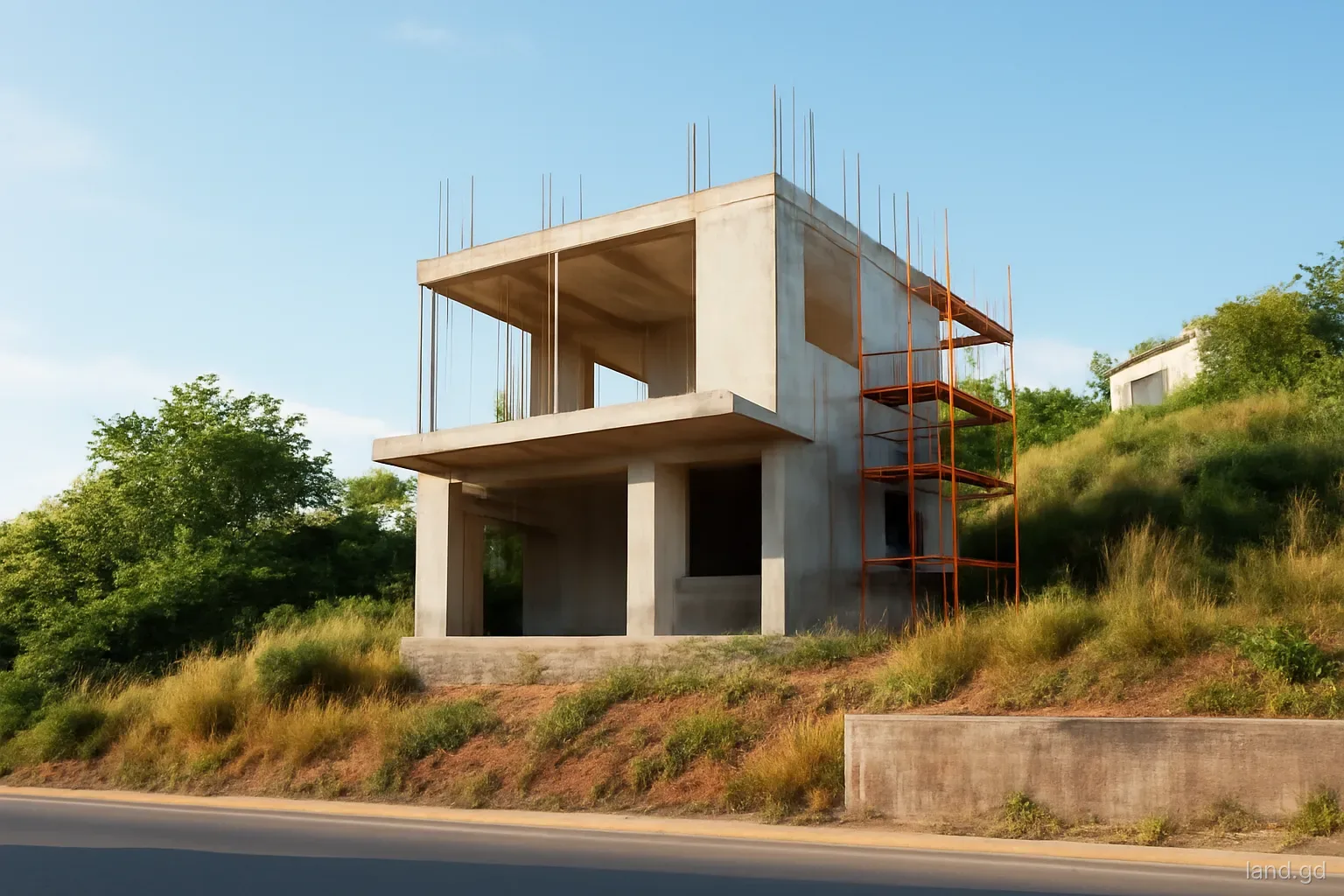
Many buyers in Grenada ask the wrong first question about a plot. Instead of asking what it costs, the more useful question is what the authorities will allow on it: a single house, several apartments, a guest house, a shop, a farm building, or nothing at all beyond agriculture. The answer depends on a mix of national planning policy, any local plan for the area, the character of the neighbourhood, infrastructure, environmental constraints and private covenants.
Grenada does not have the block-by-block zoning maps familiar in some North American cities. Decisions are made application by application, guided by development plans and policies. This page explains how that works, what influences the outcome in different kinds of area, and how to find out what is realistic for a particular plot before buying it. Policies evolve, so the Physical Planning Unit remains the source for current positions.
How land use is decided in Grenada
Grenada's planning law provides for development plans at national and local level, setting out policies on where housing, tourism, industry, agriculture and conservation should go. Work on national physical planning has been carried out over the years, and local area plans have been prepared for particular places. When an application comes in, the authority weighs it against the relevant plans and policies and against practical matters such as roads, water, sewage and the effect on neighbours.
This plan-led but discretionary system means two things for landowners. First, there is often no single document that will say a plot is zoned for a particular use. Second, the authority has room to consider each proposal on its merits, which can be an advantage for a well-designed project and a frustration for anyone wanting certainty.
The practical way to get certainty is to ask. A written enquiry to the Physical Planning Unit, or a pre-application discussion, can show whether a proposed use is likely to be acceptable before money changes hands.
Different kinds of area, different expectations
Town centres. St George's, Grenville, Gouyave, Sauteurs and Hillsborough have dense, mixed areas where shops, offices and homes sit together. Higher coverage may be accepted, but heritage, parking and traffic are concerns, particularly in the historic core of St George's.
Established residential areas. Suburbs such as those around Grand Anse, Morne Jaloux, Westerhall or Lance aux Epines are mainly residential. Homes and small apartment buildings fit; noisy commercial uses may meet resistance.
Tourism belts. The south-west coast from Grand Anse to the peninsulas is where hotels, villas and restaurants concentrate. Tourism projects can be encouraged there, subject to coastal and environmental rules.
Rural and agricultural land. Much of St Andrew, St Patrick, St Mark and St John is farmland and forest. Policy generally favours keeping productive land in agriculture, so scattering new houses across good farmland can be resisted.
Environmentally sensitive land. Forest reserves, watersheds, mangroves, steep slopes and coastal zones attract the strictest scrutiny.
Agricultural land and the pressure to build
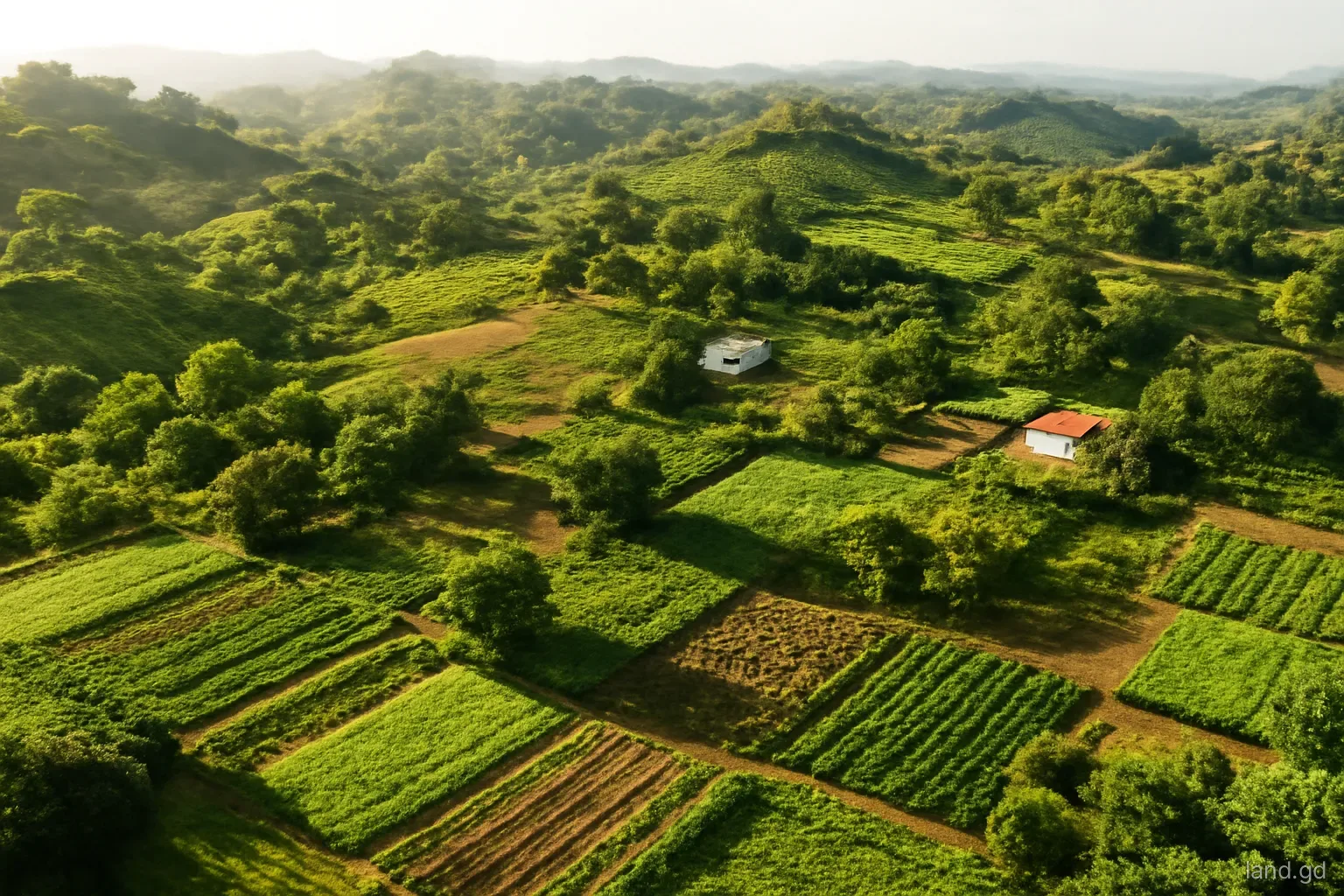
Agriculture shaped Grenada's landscape, and nutmeg, cocoa, bananas, fruit and vegetables still occupy much of the countryside. As demand for house lots grows, farmland is often the land offered for sale, sometimes subdivided into lots before anyone has asked whether houses will be allowed.
Converting agricultural land to residential or commercial use is a planning matter. The authority looks at the quality of the land, access, water and power, and whether development there fits policy. A single family home for a farming family on its own land is viewed differently from a speculative subdivision of a cocoa field.
Buyers of rural land who intend to build should ask before purchase whether residential development will be accepted, and on what scale. A price set for a building lot is a poor bargain if the land can only realistically be farmed. Conversely, land bought for farming carries its own obligations if it comes with a government lease that requires active cultivation.
Factors that tip a decision
Beyond policy, a set of practical factors repeatedly decides whether a proposed use is accepted. When assessing a plot, look at:
- Access: a proper road or recorded right of way wide enough for the use, with safe entry onto the main road.
- Water and power: whether mains water and electricity are available or can be provided.
- Sewage disposal: soil conditions and space for a septic system, or connection to a public sewer in the few areas that have one.
- Drainage: where storm water goes, and whether development would worsen flooding downhill.
- Slope and stability: steep or unstable land may limit the scale of building.
- Neighbours: compatibility with surrounding uses, noise, privacy and traffic.
- Environment: closeness to reserves, rivers, the coast and protected habitats.
- Heritage: historic buildings and sites, especially in older towns and on former estates.
Private covenants and estate rules
In many developed areas, what can be built is limited not only by planning but by private covenants written into the deeds. Managed developments and gated estates often have rules on minimum house size, height, roof style, colours, boundary walls, number of dwellings per lot, commercial use and short-term letting. Some require designs to be approved by the developer or an owners' association before submission to the planning authority.
Covenants are enforceable between owners and can bind future buyers if properly created and recorded. They sit alongside planning control rather than replacing it: an estate's consent does not equal planning permission, and planning permission does not cancel a covenant. Ask your attorney to find and explain any covenants as part of the title search, and read them before designing.
Covenants can also help. A buyer who wants a quiet residential setting may prefer an estate where covenants restrict commercial uses and building heights, because those rules protect the character and views that made the plot attractive. Read them as information about what the neighbours can do, not only about your own limits. The same covenants bind every lot in the scheme, so they shape the street as a whole.
Larger projects, tourism and investment
Hotels, villa developments, marinas and other large projects follow the same planning law, but in practice they move through a more involved process. They often need environmental assessment, consultation with several agencies and, where government land, incentives or citizenship by investment funding are involved, decisions at a higher level of government. Investment promotion bodies may help investors navigate the process, but they do not replace planning approval.
Developers sometimes announce projects before approvals are in place. Buyers of off-plan villas or lots in such schemes should ask their attorney to confirm what approvals actually exist, for which phases, and what conditions attach, rather than relying on marketing material. A scheme approved in outline may still change substantially in its detailed design.
For smaller investors, mixed schemes such as a home with two rental apartments, or a shop with flats above in a town, are common and workable, provided parking, sewage and access are designed for the full use from the start.
Finding out what is realistic for a plot
Before buying land with a specific use in mind, these steps give a reasonable picture:
- Describe the intended use clearly: number of dwellings, floor area, any business element, and expected visitors or traffic.
- Obtain the survey plan and walk the site, noting access, slopes, neighbours and any water features.
- Ask an architect or planning consultant familiar with the Physical Planning Unit for an informal view.
- Make a written enquiry or request a pre-application meeting with the Unit for anything beyond a single house.
- Where significant money is at stake, consider applying for outline approval in principle before completing the purchase, or make the purchase conditional on approval if the seller agrees.
- Ask your attorney to check covenants, leases and rights of way that affect use.
Frequently asked questions
Does Grenada have zoning maps?
Not in the detailed lot-by-lot form found in some countries. Development plans and policies guide decisions, and each application is assessed on its merits. A written enquiry to the Physical Planning Unit is the practical way to learn what is likely to be accepted.
Can a house be built on agricultural land in Grenada?
Sometimes, but it requires planning approval and is considered against policies that aim to keep good farmland productive. A modest home for a farming family differs from a speculative subdivision. Ask before buying farmland as a building plot.
What is outline approval?
An approval in principle for a type and scale of development, with detailed drawings to follow. Where available, it reduces risk before major spending. Ask the Physical Planning Unit whether outline applications suit your project.
Can a residential lot be used for a guest house?
That is likely a change of use requiring permission, and tourism licensing may also apply. Estate covenants may forbid it. Check both planning and the deeds before planning a business on a residential lot.
Who decides if a use fits the neighbourhood?
The Planning and Development Authority, advised by the Physical Planning Unit, considers policy, neighbours, infrastructure and environment. Neighbours may raise concerns, and conditions may be attached to make a use acceptable.