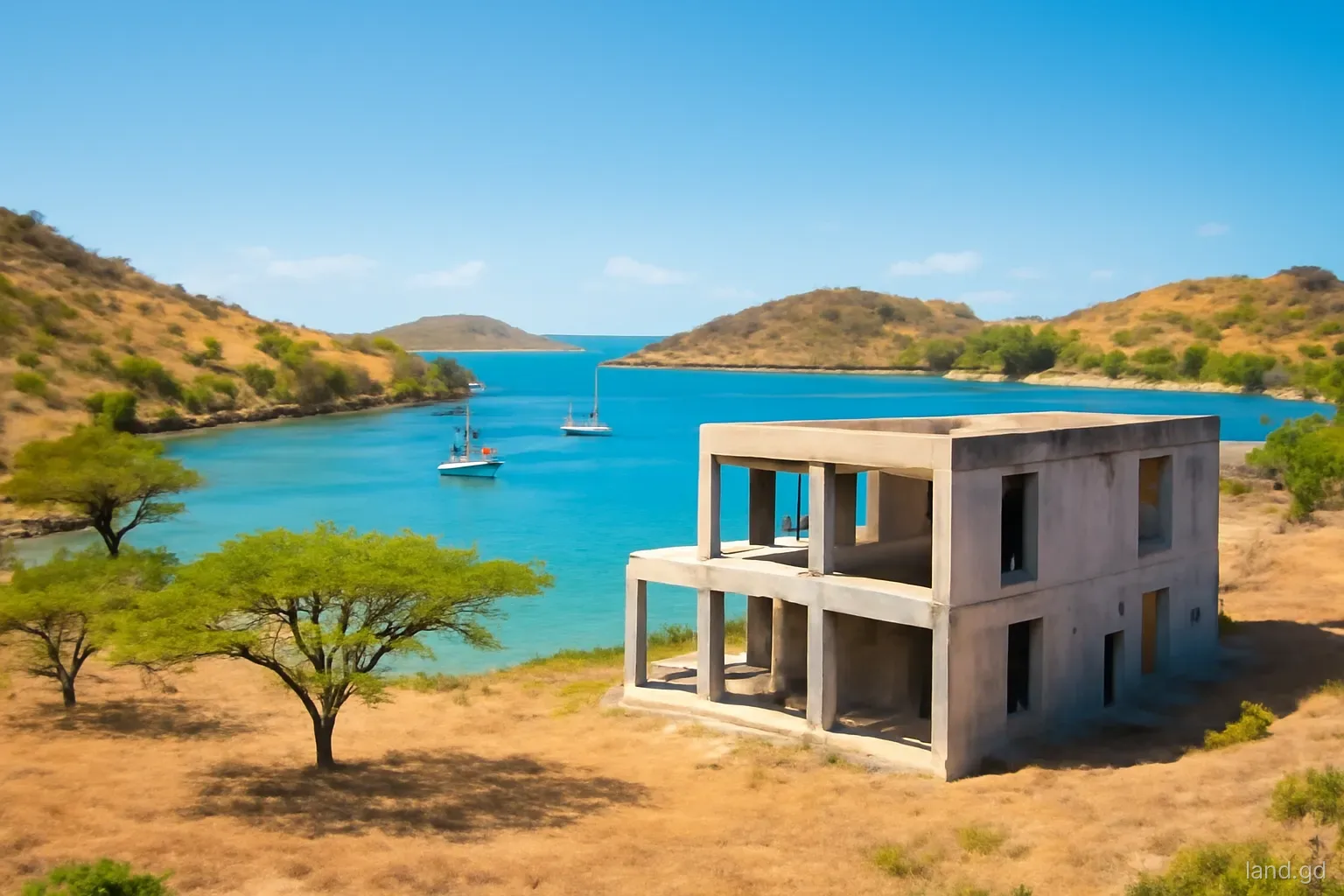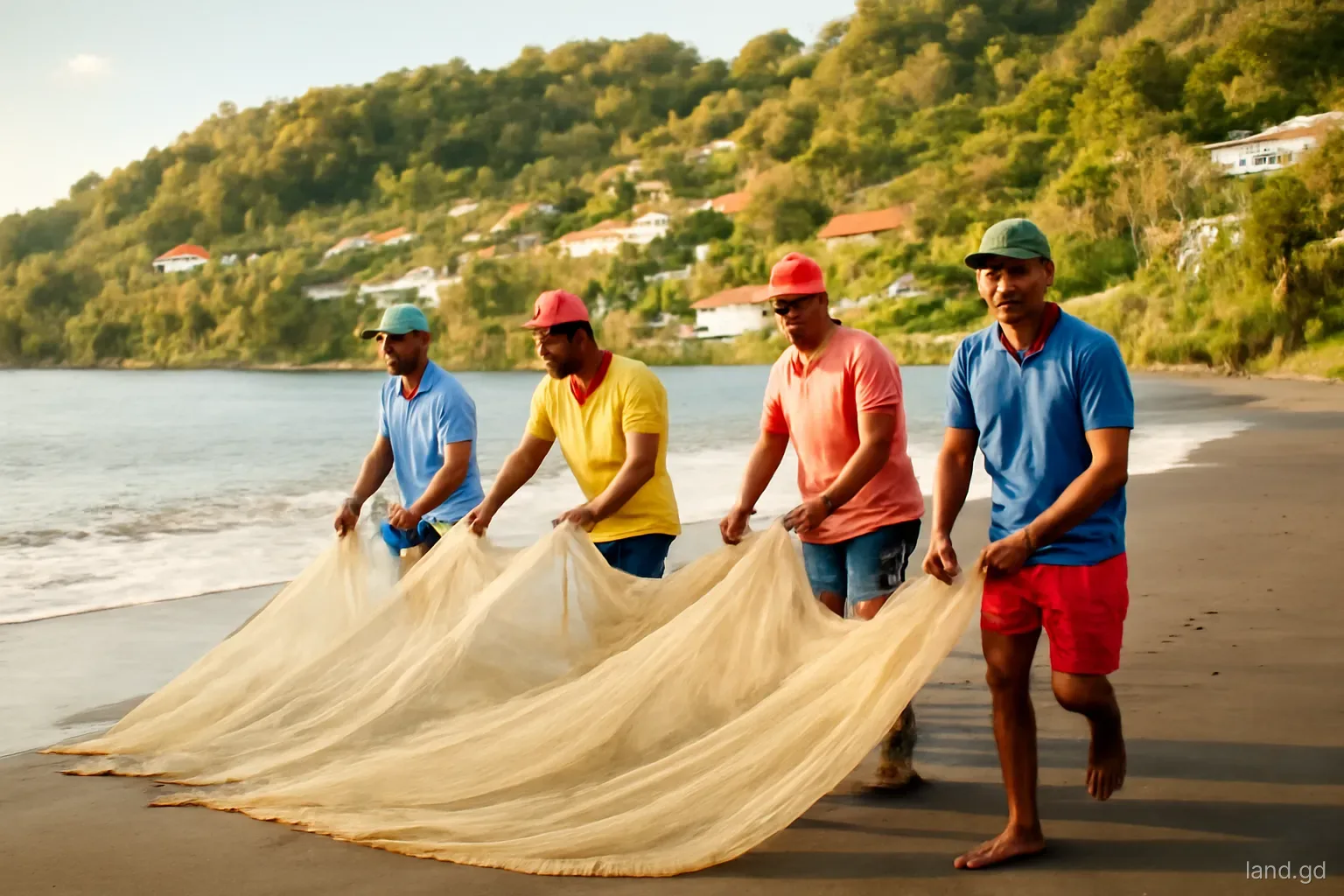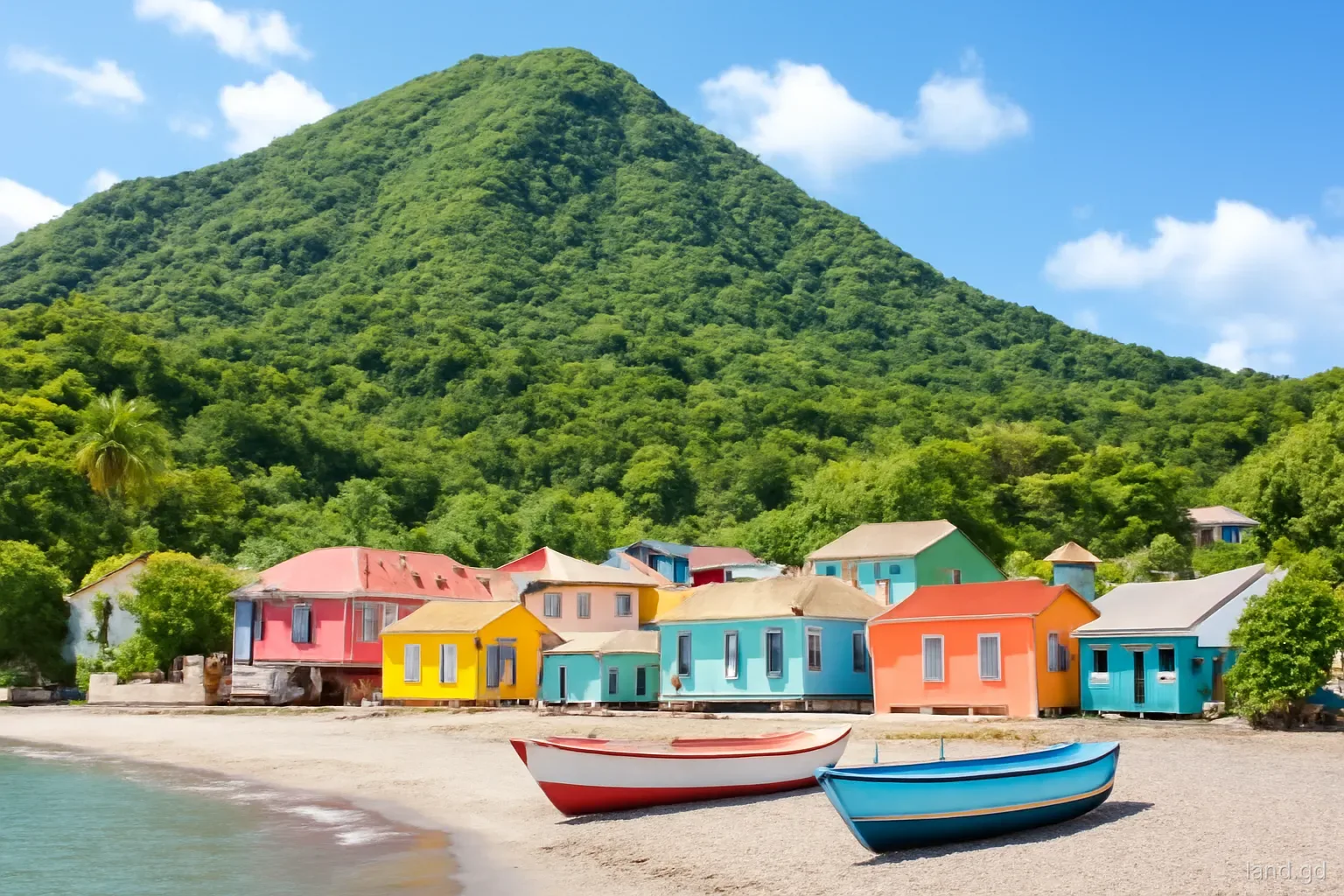
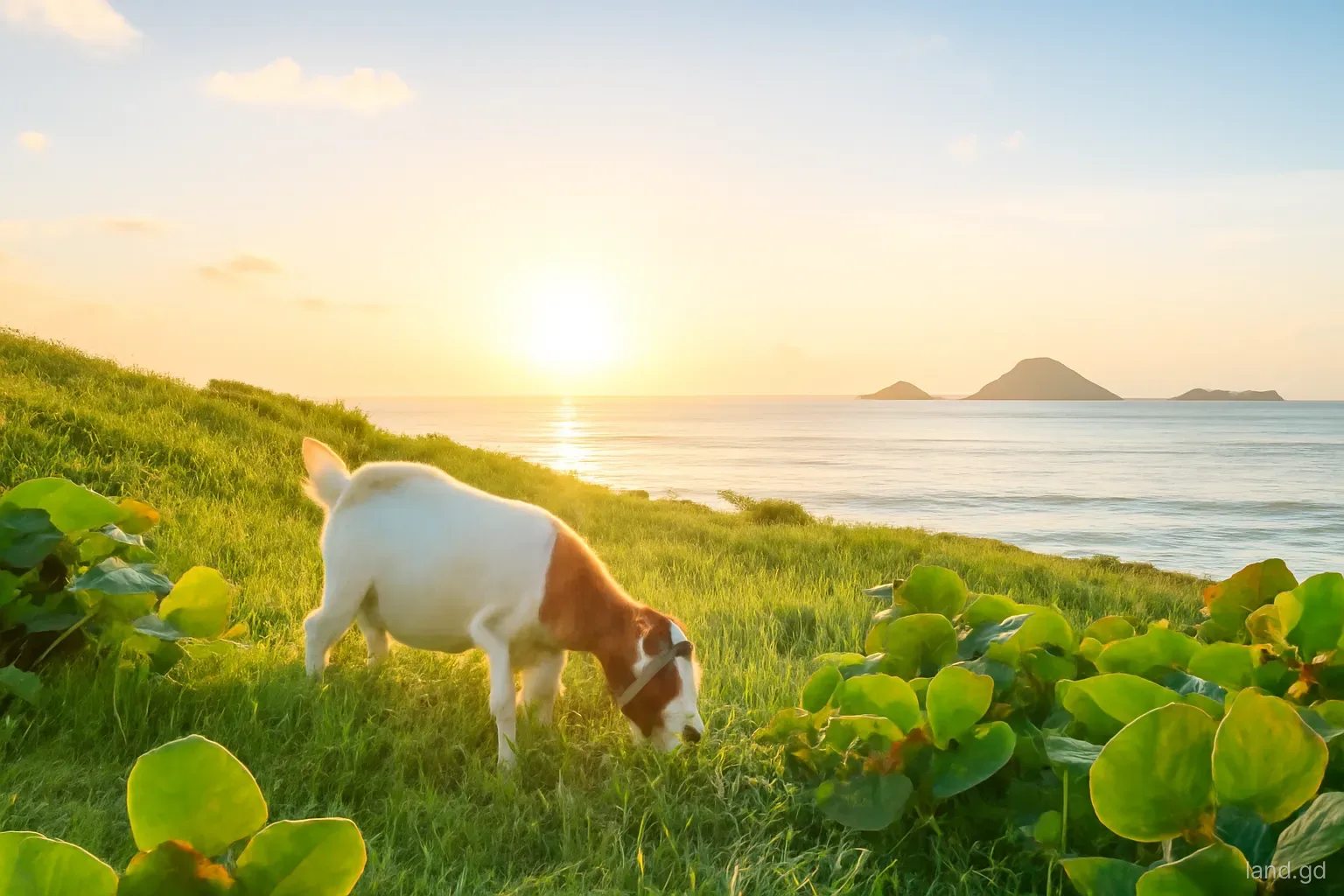
St Patrick sits at the northern tip of mainland Grenada, around the town of Sauteurs. It is a parish of contrasts: wet, fertile cocoa and nutmeg country on its inland slopes, dramatic cliffs at Sauteurs, and a drier, breezier north-eastern corner around Levera, where a national park protects beaches, a pond and coastal woodland facing the Grenadine islets.
It is also one of the furthest parishes from the airport and the capital, and that distance has kept land prices relatively low and development modest. Buyers here are mostly local families, returning nationals with roots in the north and a smaller number of foreigners drawn by the quiet, the views of Carriacou and the islets, and the agricultural and heritage landscape.
This page covers how land varies across the parish, what protected areas mean for nearby plots, and the practical points that come with buying a long way from town.
A parish in four parts
Sauteurs and its surroundings form the commercial and civic centre: a small town on the north coast beside Leapers' Hill, the cliff associated with the last stand of the Kalinago in the seventeenth century. Land in and near the town is used for shops, homes and services, with small lots and older title histories.
The inland farm belt runs south and south-east of Sauteurs through villages such as Hermitage and Mount Rich and on toward the estates around Belmont and Morne Fendue. This is cocoa and nutmeg country, with deep soils on rolling hills and some of Grenada's best-known estates, including Belmont Estate.
The north-east corner around River Sallee, Lake Antoine and Levera is drier and more open, with grassland, scrub and coastal woodland. Lake Antoine is a crater lake, and the River Antoine distillery nearby still produces rum by traditional methods.
The leeward stretch along the north-west coast, running back toward the St Mark boundary, is steeper and more broken, with fishing villages and small bays.
Protected areas and what they mean for nearby land
Levera National Park. The park covers a stretch of coast, the Levera Pond wetland and surrounding land in the north-east. Land next to it may face restrictions on clearing, drainage and building to protect the wetland and nesting beaches. Ask the Physical Planning Unit and the forestry and national parks authorities what applies before buying adjacent land.
Turtle nesting beaches. Beaches in the north-east are used by nesting sea turtles. Lighting, beach access and construction close to the shore are sensitive issues, and planning conditions may address them.
Lake Antoine and wetlands. Land around the crater lake and other wetlands has ecological and heritage value. Expect closer scrutiny of any development application, and check whether a parcel falls within a protected boundary.
Heritage sites. St Patrick has petroglyph sites, estate ruins and historic churches. A plot containing or bordering such features may need extra care and consultation before any work starts.
Climate, soil and water
The interior of St Patrick receives generous rainfall and holds rich volcanic soils, which is why cocoa and nutmeg did well here for generations and why chocolate makers have based themselves in the parish. Inland parcels are suited to tree crops, fruit and mixed farming, but are often steep and reached by narrow roads.
The north-east, by contrast, is noticeably drier, especially through the dry season from roughly January to May. Grass browns, water becomes a concern and rainfall collection must be supplemented. Buyers looking at Levera or River Sallee should plan for generous cistern capacity and confirm NAWASA supply at the plot.
Wind is constant on the north coast and the cliffs above Sauteurs. It keeps houses cool but drives salt spray inland and makes roof design and fixings especially important. Hurricanes approaching from the east or passing to the north, as Beryl did in 2024 when it devastated Carriacou and Petite Martinique, can bring strong winds to this end of the mainland as well.
Practical realities of buying in the north
Distance shapes almost every aspect of owning land in St Patrick. Before committing, weigh these honestly:
- The drive to the airport and St George's is long, typically well over an hour depending on route and traffic, and longer if roads are damaged after storms.
- Building materials and specialist trades mostly come from the south, which can add transport cost and scheduling delays.
- Supervising construction from abroad is harder when the site is far from where most contractors are based.
- Health facilities in the north are more limited than in the capital, which matters for older buyers.
- Fewer agents and fewer listings mean more land is sold privately, so legal and survey checks carry more of the load.
- Rental demand from visitors is lower than in the south, so do not plan on holiday-let income without testing the market.
- In exchange: lower prices, space, views across to the Grenadines and a strong sense of community.
What to check before signing
Title is the first priority. Northern estates were broken up over decades through sales, inheritance and land reform, and parcels may carry overlapping descriptions or missing plans. Your attorney should trace the chain at the Deeds and Land Registry, and a licensed surveyor should mark boundaries on the ground and compare them with the plans held by the Lands and Surveys Division.
Access is the second. Many inland parcels are reached across other land or along estate roads that were never formally dedicated. Make sure the deed grants a right of way, or that the road is public.
Use is the third. Agricultural land bought with the intention of building several houses may need subdivision approval and infrastructure. If the plan is to farm, assess the condition of existing trees and the realistic yield; many orchards were badly damaged by Hurricane Ivan in 2004 and not all were replanted.
Finally, talk to neighbours. In a small community, local knowledge about flooding, slips, disputes and family claims is often more revealing than anything in the file.
If you are buying from abroad, budget for at least one site visit with your surveyor present, and consider giving a trusted local attorney a limited power of attorney for signing. Remote purchases in the north go wrong most often when the buyer has never stood on the boundary marks and relied instead on photographs and a seller's description of where the land begins and ends.
Matching the plot to the plan
Buyers come to St Patrick with very different goals, and the right parcel depends on which one applies. For a retirement or holiday home, look first at plots with paved road frontage, existing water and power, and a view that cannot easily be built out. Those are often near Sauteurs, along the coast toward the north-east, or on ridges overlooking the islets, and they cost more than inland land for good reason.
For farming, prioritise soil, water and access over view. A gently sloping inland parcel near other working farms, with a reliable road for trucks at harvest, will outperform a scenic hillside that cannot be reached in the rainy season. Talk to neighbouring farmers about yields, theft of produce and labour availability, all of which shape whether a farm pays.
For a long-term family holding, the priorities are clean title, well-marked boundaries and an arrangement for someone trustworthy to keep the land cleared and occupied. Unattended rural land can attract informal use, dumping or encroachment, and in a remote parish it may be months before the owner notices. A simple written caretaking agreement and periodic visits protect the investment far better than a fence alone.
Frequently asked questions
Where is Levera National Park?
Levera National Park lies at the north-eastern tip of mainland Grenada in St Patrick parish. It protects a coastal area including beaches, the Levera Pond wetland and woodland, with views of offshore islets and the Grenadines. Land bordering the park may face development restrictions.
Is land in St Patrick cheap?
It is usually cheaper than the south of the island because it is far from the airport, the capital and the main tourist areas. Prices still vary with view, access and services. Sea-view plots near Sauteurs or the north-east can be priced well above inland agricultural parcels.
Is St Patrick good for cocoa farming?
The inland parts of the parish have rich soils and good rainfall, and cocoa has been grown there for generations, with several estates and chocolate makers based in the area. Success depends on the condition of trees, access, labour and the buyer's ability to manage a long-term crop.
How far is Sauteurs from the airport?
Sauteurs is at the opposite end of the mainland from Maurice Bishop International Airport. The drive usually takes well over an hour, depending on whether you go via the west coast or the east coast and on traffic. Allow extra time after heavy rain or storms.
Can you see Carriacou from St Patrick?
On clear days the northern coast looks out toward the Grenadines, with offshore islets in the foreground and Carriacou further away. These views are one reason buyers consider sea-facing plots in the north, though exposure to wind and salt comes with them.