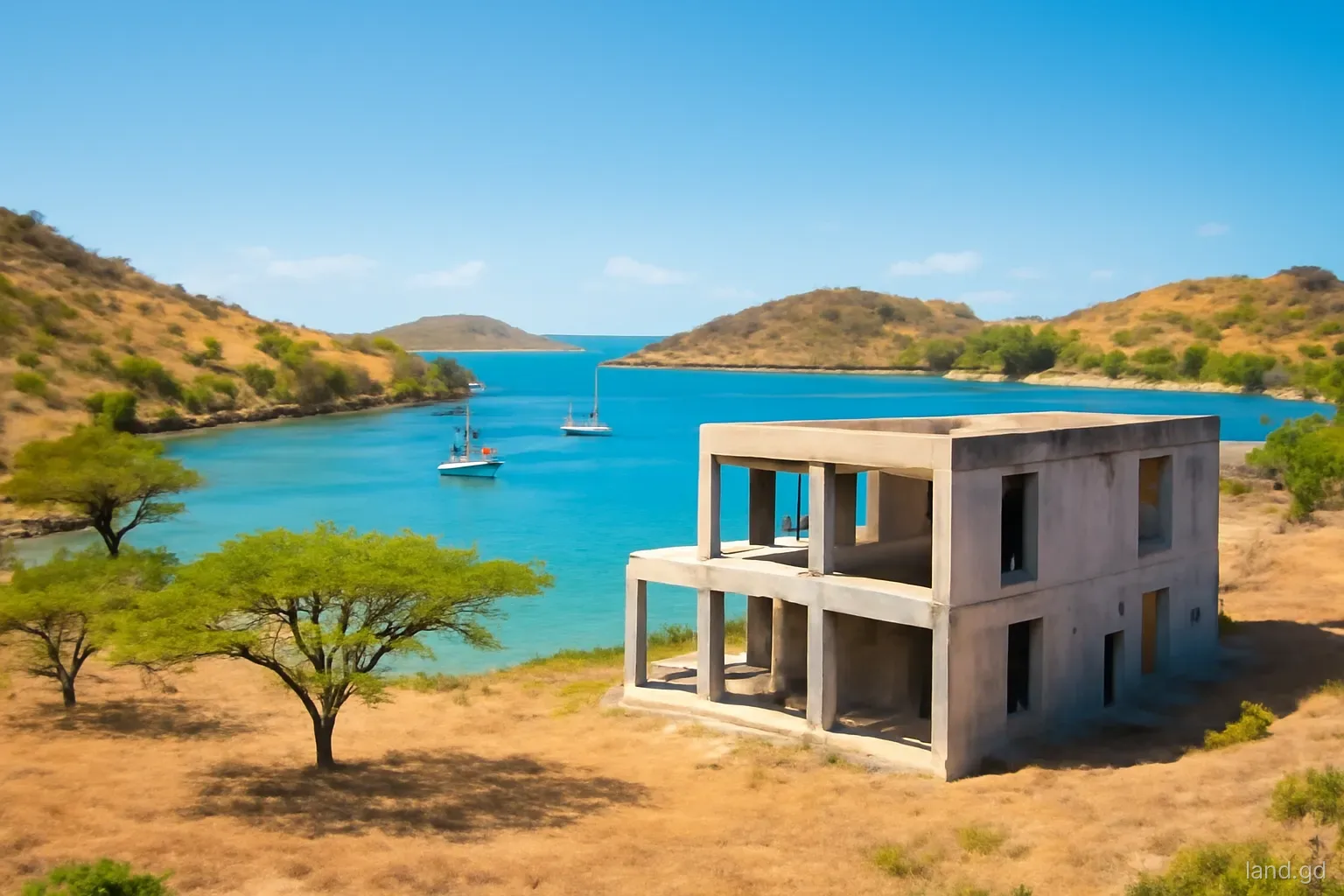

Most people who look for land in Grenada start with a picture, a sea view, a farm or a quiet retreat, rather than a parish. Yet the parish decides a great deal: how much it rains, how far you are from the airport and hospital, who your likely buyers would be if you sell, and what the land around you is used for. Choosing the right parish first saves months of viewing plots that never suited the plan.
Grenada's six mainland parishes are St George, St David, St Andrew, St Patrick, St Mark and St John, with Carriacou and Petite Martinique forming a separate dependency to the north. Each has its own mix of terrain, climate, economy and price.
This guide compares them against the questions buyers most often ask, then matches parishes to common purposes. Prices are described in relative terms because they move and vary sharply within each parish; confirm current values with agents and valuers.
Climate: dry south, wet interior, breezy windward
Driest areas. The southern peninsulas of St George, the north-eastern corner of St Patrick around Levera, and Carriacou and Petite Martinique are the driest. Expect brown dry seasons, a greater need for cisterns and gardens that need watering.
Wettest areas. The central mountains around Grand Etang and Mount St Catherine, and the inland valleys of St Andrew, St John, St Mark and St Patrick, receive the most rain. Good for tree crops and rainwater, harder on buildings and roads.
Windward versus leeward. The east-facing Atlantic coast of St Andrew, St David and parts of St Patrick catches the trade winds and rougher seas. The west-facing leeward coast of St John and St Mark is calmer and drier at the shore but sits under steep slopes.
Microclimates. Elevation changes everything. A plot a few hundred metres up a hill can be cooler, cloudier and much wetter than one by the sea in the same village.
Access and distance
Almost everything centres on the south-west: Maurice Bishop International Airport, the capital, the main hospital, most banks, supermarkets and government offices. Proximity to this corner is the single largest driver of land value.
St George and the western end of St David are the most convenient, typically a short drive from the airport. Southern St John and the rest of St David are reachable within roughly an hour. Grenville and much of St Andrew are further, and St Patrick and St Mark, at the northern end of the mainland, are the most distant, often well over an hour by road depending on route and traffic.
Carriacou and Petite Martinique are a separate matter: access is by ferry and small aircraft, and the time and cost of travel affect every aspect of owning and building there. Road quality also matters: main roads are paved, but side roads in rural parishes can be steep, narrow and vulnerable in heavy rain.
Price tiers, from highest to lowest
Land prices vary more within a parish than between some parishes, but a broad pattern holds. As a rough guide to relative cost per square foot:
- Highest: south-coast St George around Grand Anse, Lance aux Epines and near the university and airport; planned headland developments in St David.
- High to moderate: the hills above St George's, the rest of coastal St David, and commercial land in Grenville and Gouyave.
- Moderate: village lots across St Andrew and St John, and sea-view plots in St Patrick.
- Lower: inland agricultural land in St Andrew, St Patrick, St Mark and St John; steep or poorly accessed plots anywhere.
- Variable: Carriacou, where scarcity and a small market can push some prices up while building costs are higher.
- Remember that a cheaper plot can cost more overall once site works, utility extensions and transport are counted.
Matching parishes to purposes
A retirement or second home with services nearby points to St George or western St David, where hospitals, shops and the airport are close. Hills above the town offer cooler air; the south coast offers beaches and walkability at a higher price.
A farm or agricultural holding points to St Andrew, St Patrick, St John or St Mark, where soils and rainfall support nutmeg, cocoa, fruit and vegetables. Prioritise access, water and the condition of existing trees over view.
A rental investment points mostly to St George, where student, staff and visitor demand is concentrated. Rural rentals can work as distinctive niche offerings but need cautious projections.
A quiet retreat with views and lower cost points to St Patrick, St Mark, northern St John or the windward coast, accepting longer drives. Carriacou suits buyers who want island life and are prepared for higher building costs and limited services.
A long-term family holding can work anywhere, but clean title and someone trustworthy nearby to look after the land matter more than location.
Mistakes when choosing a parish
One is choosing on a single dry-season visit. A parish that seems sunny and easy in March can be wet, muddy and slow in October, and a dry south-coast plot that looks green after rain may be parched for months. Visit in different seasons if possible.
Another is equating cheap land with a cheap project. Remote or steep plots can need costly roads, retaining walls, utility extensions and transport of materials. Compare total cost to a habitable house, not just the land price.
A third is ignoring who would buy from you. In rural parishes, buyers are mostly local and the market is thin; resale can be slow. On the south coast, the market is deeper but more exposed to foreign demand.
Finally, do not forget the legal picture, which is the same everywhere: title search, survey, planning check and, for foreign buyers, the Alien Landholding Licence unless an exemption applies.
A simple way to shortlist
If you are undecided, work through these steps before viewing any plots:
- Write down the main purpose of the land, and the second purpose if there is one.
- Decide the longest drive to the airport and hospital you would accept on a regular basis.
- Decide whether you need calm swimming nearby, farmland, rental demand or simply quiet.
- Rule out parishes that fail those tests, then visit the remaining ones in both dry and wet months if you can.
- Talk to residents, an attorney and a surveyor in your shortlisted areas about typical title, access and hazard issues.
- Only then start viewing individual plots, comparing them on total cost rather than asking price alone, including site works, utility connections, legal fees and, for foreign buyers, the licence.
- Keep notes and photographs for every plot you see, with the date and weather, so that comparisons later are based on facts rather than memory.
Services, community and the practical day-to-day
Land is not just soil and a view; it comes with a neighbourhood. In St George, services are dense: several supermarkets, private clinics, schools and the main general hospital are within reach, and internet and mobile coverage are strongest. Grenville and Gouyave provide a smaller set of everyday services for the east and west respectively, and Sauteurs and Victoria smaller still. Village life in rural parishes revolves around churches, schools, rum shops and community events, and newcomers who join in tend to settle far more easily.
Consider who will look after the land when you are away. A plot in a remote parish without a trusted neighbour or caretaker can be overgrown in a single rainy season, and unattended land attracts dumping or informal use. In busier areas, the risk is the opposite: rapid construction around you can change the character of a street within a few years. Ask what has been approved nearby and what the local land-use pattern is likely to become.
Frequently asked questions
Which parish in Grenada has the most expensive land?
St George generally has the most expensive land, especially along the south coast near Grand Anse, Lance aux Epines, the airport and St George's University. Planned developments on St David's headlands can also be expensive. Rural interior parishes tend to be cheaper.
Which parish is best for farming in Grenada?
St Andrew has the largest farming area, while St Patrick, St John and St Mark also have productive valleys suited to nutmeg, cocoa, fruit and vegetables. The best parcel depends more on soil, water, access and tree condition than on the parish alone.
Which part of Grenada is driest?
The southern peninsulas of St George, the north-east of St Patrick around Levera, and Carriacou and Petite Martinique are the driest areas. Homes there rely heavily on cisterns, and gardens need watering through the long dry season.
Is it better to buy on the windward or leeward side?
It depends on priorities. The leeward side offers calmer seas, sunsets and drier shores but steeper land; the windward side offers breeze, lower prices and dramatic views but rougher seas and more exposure. Visit both before deciding.
Do the same legal rules apply in every parish?
Yes. Land law, planning, registration at the Deeds and Land Registry and the Alien Landholding Licence apply across Grenada, Carriacou and Petite Martinique. Practical issues such as access, hazards and the state of title vary by area, so local advice matters.