St Mark is the smallest parish on mainland Grenada, a wedge of land on the leeward coast between St John and St Patrick, centred on the town of Victoria. What it lacks in area it makes up in height: the parish runs from the shore straight up the flanks of Mount St Catherine, the highest peak in the country at roughly 840 metres. Very little of St Mark is flat.
That geography explains almost everything about land here. Settlement hugs the coast and the lower valleys, farms climb wherever a slope will hold a tree, and the upper slopes are forest. The parish is quiet, close-knit and agricultural, with fishing on the shore and cocoa and nutmeg inland. Land changes hands rarely, mostly between local families, and prices are among the lowest on the mainland.
For the right buyer, that is the attraction. For anyone expecting easy building plots or a lively rental market, it is a warning. This page explains what St Mark land is like, who it suits and what to check.
The shape of the parish
Picture a series of ridges running down from the summit of Mount St Catherine to the Caribbean Sea, with short, fast rivers between them. The coastal road links Victoria with Gouyave to the south and the villages toward Sauteurs to the north, crossing river mouths and squeezing between cliffs and the sea. Small grey-sand beaches sit at the mouths of some valleys, used by fishing boats more than bathers.
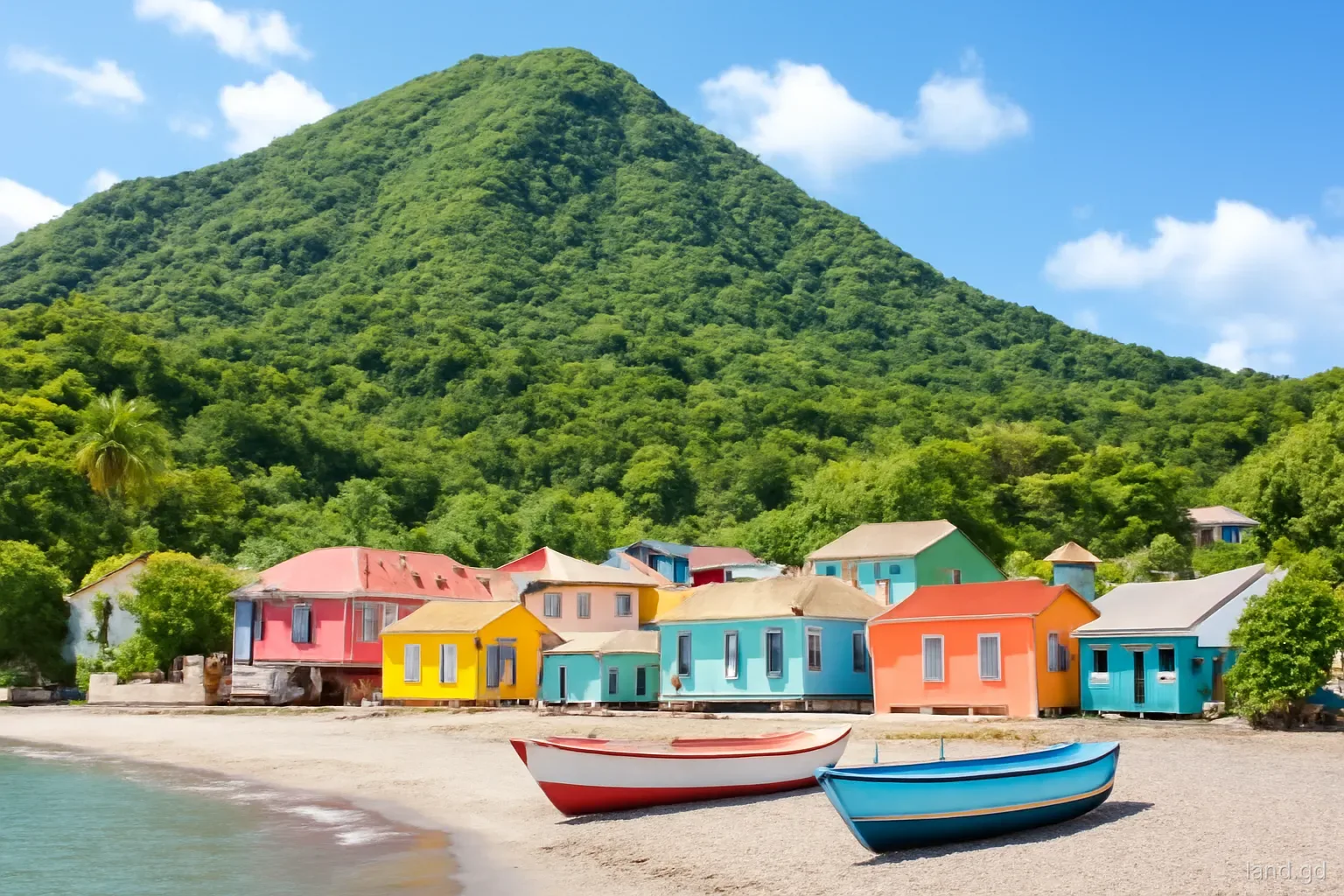
Victoria itself is a small town with a church, police station, health centre, a few shops and a fishing community. Around it, and up the valleys, villages are strung along narrow roads that switch back up the slopes. Some upland communities are reached by a single road that becomes difficult in heavy rain.
Inland, the slopes were once worked as cocoa and nutmeg estates. Diamond Estate near Victoria, now associated with chocolate making, is one example of how old estate buildings have found new uses. Higher up, the land gives way to forest on the mountain, much of it protected, with waterfalls such as those around Tufton Hall drawing hikers.
What the terrain means for buyers
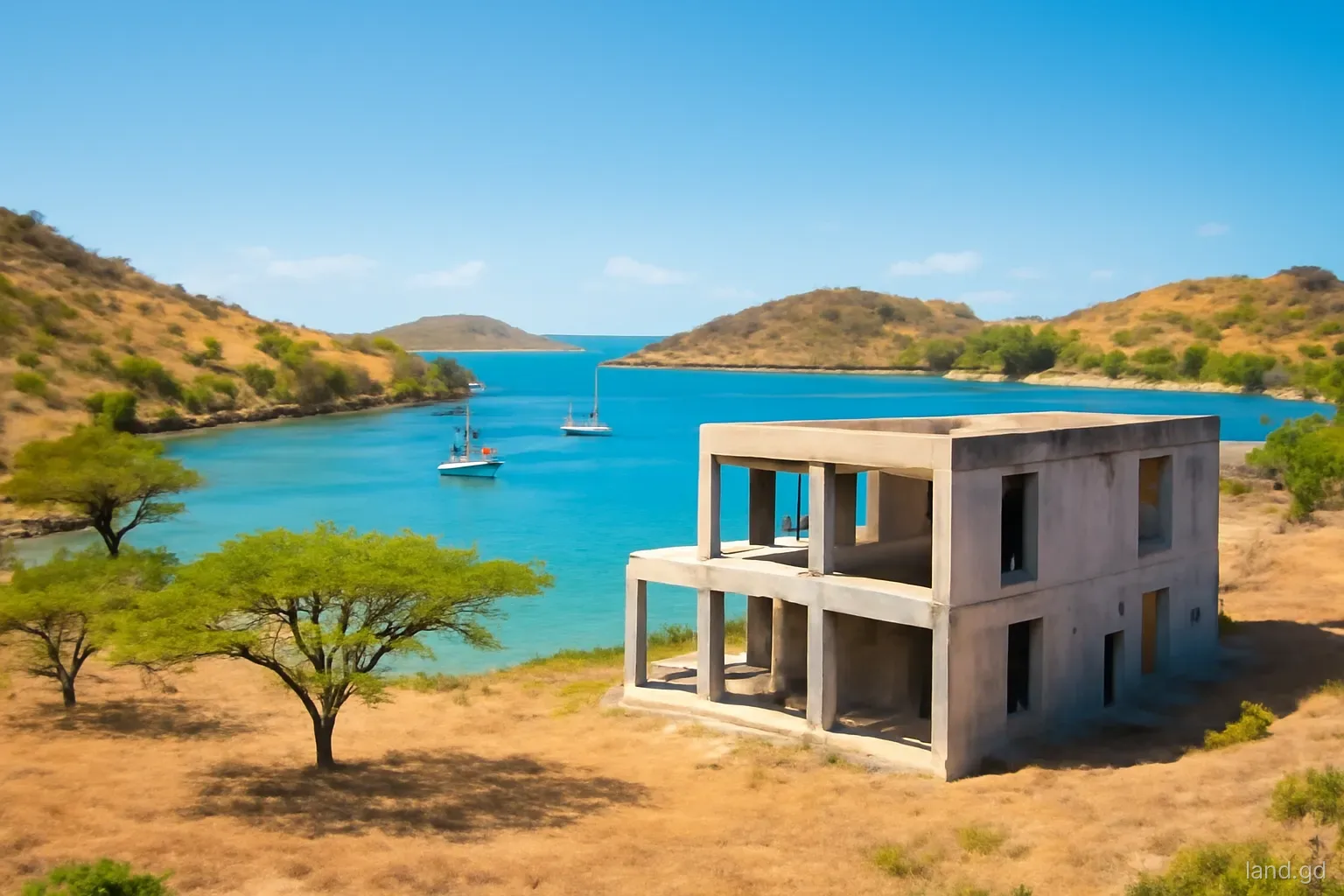
Flat land is rare and precious. Most level ground lies along the coast, at river mouths and on a few ridge tops. Plots with gentle gradients command a premium over steep ones, even in a low-priced parish, because they cost far less to build on.
Slopes add serious cost. Building on a steep lot means excavation, retaining walls, stepped foundations and engineered drainage. On some parcels, these works can cost as much as the house itself. Get a builder or engineer to look before agreeing a price.
River valleys flood quickly. Short, steep rivers rise fast in heavy rain and can carry boulders and debris. Low land near riverbanks and mouths is vulnerable, as are bridges and road crossings. Never assume a dry riverbed stays dry.
Rain varies sharply with height. The coast is relatively dry by comparison with the mountain, which is among the wettest places in Grenada. A plot only a short distance uphill may get far more rain, more mist and more damp than one by the shore.
Views are almost guaranteed. The same slopes that make building hard give most plots a view of the sea and the sunset. That is a genuine asset for a home, if not always for resale value.
Who buys land in St Mark
The main buyers are local people: families building homes near relatives, farmers adding to holdings, and Grenadians abroad buying a plot in their home parish to build on later or retire to. Sales often happen between people who know each other, and many plots never reach an agent.
Foreign buyers are relatively few. Those who come are usually looking for quiet, a sea view and a lower entry price, and are prepared to accept distance from the airport and services. Some are interested in agriculture or agro-tourism, given the parish's cocoa heritage and the activity of chocolate makers on the island.
The thin market cuts both ways. Prices are lower, and patient buyers can find good parcels. But valuations are harder to establish because there are few comparable sales, banks may be cautious about lending on remote rural land, and selling later can take a long time. Treat land in St Mark as a place to live or farm rather than a quick investment.
A practical checklist for a St Mark plot
Alongside the usual legal work, these steps deal with the parish's particular risks:
- Visit in the rainy season, usually from June to December, to see how the access road, drainage and slopes behave in wet weather.
- Ask the attorney to check title at the Deeds and Land Registry with special care on parcels carved from old estates.
- Have a licensed surveyor mark the boundaries and, for steep land, prepare a topographic survey showing levels for the designer.
- Ask an engineer or experienced builder to estimate the cost of site works before you agree a price.
- Check with the Physical Planning Unit whether the land is near a forest reserve, river reserve or other protected area.
- Confirm where NAWASA water and GRENLEC power are available, and what any extension up a slope would cost.
- Ask neighbours about landslips, flooding and how the area fared in past hurricanes.
Common mistakes in St Mark
The first mistake is falling for the view and ignoring the gradient. A plot that looks spectacular from the road can be almost impossible to build on economically. Measure the slope, or ask a surveyor to, before getting attached.
The second is underestimating road access. A road that is fine for a car may be impossible for a concrete truck or delivery lorry, and some upland roads are very narrow. Ask whether construction vehicles can actually reach the site.
The third is treating informal paths as rights of way. Many plots are reached on footpaths or tracks across family land. Unless the deed or a formal agreement grants access, a future owner of the neighbouring land could close it.
The fourth is assuming that a sale between relatives or neighbours does not need full legal formality. Land in small communities is often subject to unspoken family claims. A properly searched title, a survey and a registered deed protect everyone, including the seller.
The fifth is forgetting the long-term upkeep of a steep site. Drains, retaining walls and slope planting need regular attention after every rainy season. Budget time and money for that maintenance, or the land slowly works against the house built on it.
Farming and agro-tourism on the slopes
For buyers interested in agriculture, St Mark offers fertile volcanic soils and plenty of rain on the middle slopes, which suit cocoa, nutmeg, bananas, citrus and other fruit. The challenge is working the land: steep gradients limit machinery, paths must be maintained by hand, and getting produce down to the road in the rainy season takes effort. Terracing, contour planting and keeping tree cover on the steepest parts reduce erosion and protect the soil that makes the land valuable in the first place.
The growth of bean-to-bar chocolate in Grenada has given cocoa growers in the north and west a reason to focus on quality, since some makers buy fermented beans directly and value consistency. Agro-tourism, such as small farm stays, cocoa walks or hiking accommodation near the mountain trails, is another route some owners explore. Both need patience and realistic expectations. Speak to the Ministry of Agriculture extension officers serving the parish about soil, crops and any support programmes before deciding what to plant.
Frequently asked questions
Is St Mark the smallest parish in Grenada?
St Mark is the smallest of the six parishes on the mainland. Carriacou and Petite Martinique are smaller islands, but they form a dependency rather than mainland parishes. St Mark lies on the leeward coast, centred on the town of Victoria.
How high is Mount St Catherine?
Mount St Catherine is generally given as about 840 metres, making it the highest point in Grenada. It rises inland from St Mark and is covered in forest on its upper slopes, with much of the high ground protected.
Is building on a steep St Mark plot expensive?
It can be. Excavation, retaining walls, stepped foundations and drainage can add a large share to the cost of a house. Ask an engineer or experienced builder to estimate site works before buying, and compare total cost with a flatter plot elsewhere.
Can a bank mortgage land in St Mark?
Banks do lend on rural land, but they may be more cautious where comparable sales are scarce and resale is slow. Expect to provide a professional valuation and a larger deposit. Credit unions with roots in the area may also be worth asking.
Is St Mark a good place for a holiday rental?
Demand is limited compared with the south coast, though some visitors seek quiet, hiking and cocoa heritage. A rental can work as a small, distinctive offering, but income projections should be cautious and based on real local evidence rather than south-coast rates.