Carriacou and Petite Martinique are the sister islands of the Grenada state, lying north of the mainland in the Grenadines. They are administered as a dependency rather than a mainland parish, but for land buyers they function as a market of their own, with a different climate, a different pace and different practical problems.
Carriacou is low, dry and hilly, with Hillsborough as its main town, sheltered harbours at Tyrrel Bay and elsewhere, and a long tradition of boatbuilding, seafaring and close-knit communities. Petite Martinique, smaller still, is a single steep island with a seafaring population where almost all land is held by local families. In July 2024 Hurricane Beryl struck both islands with devastating force, destroying or damaging a large share of homes and buildings, and recovery and rebuilding have shaped the land market since.
This page covers what buyers need to understand about terrain, water, ownership, building logistics and post-Beryl realities. Conditions are changing as rebuilding continues, so check the current situation locally before relying on any assumption.
Terrain and climate
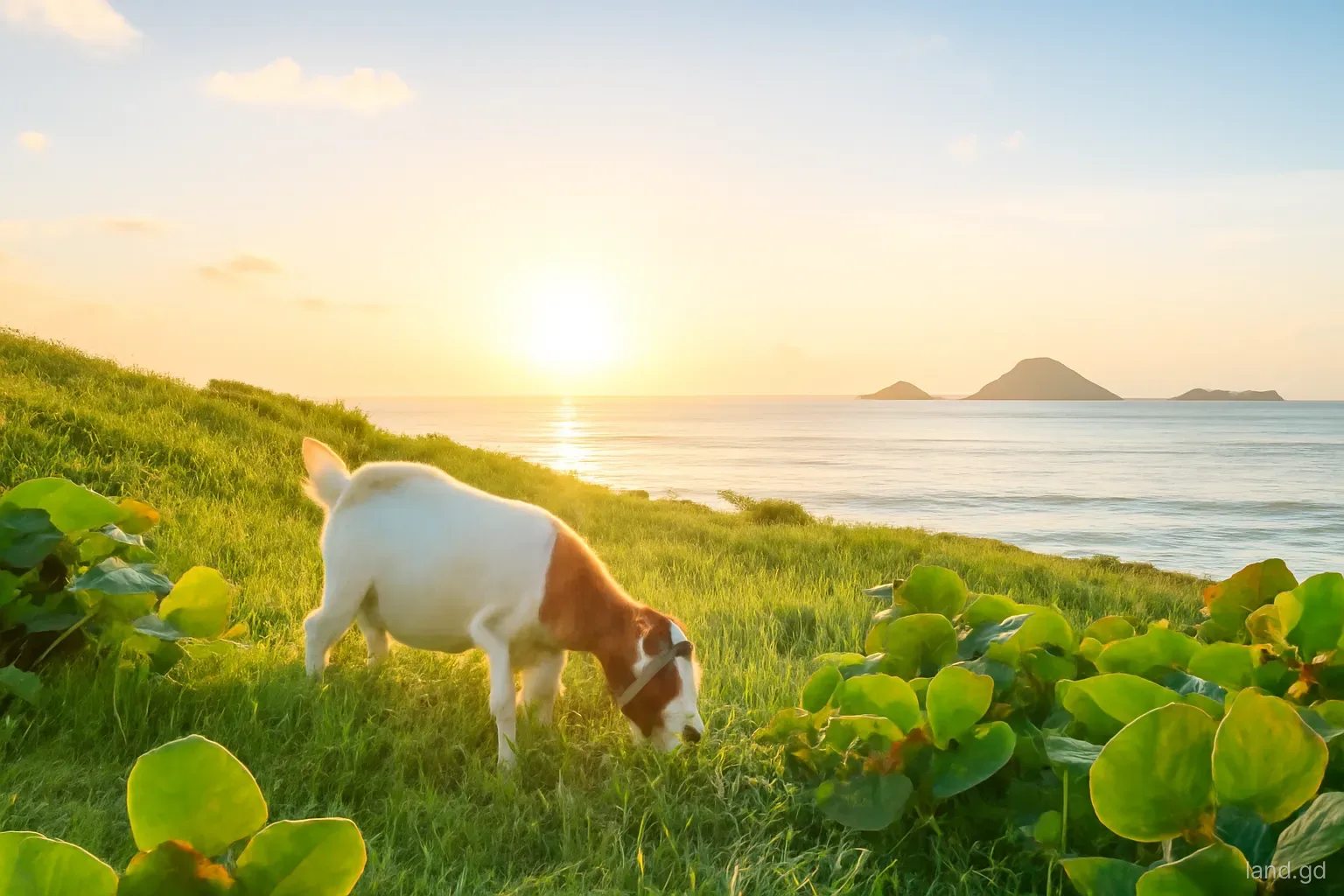
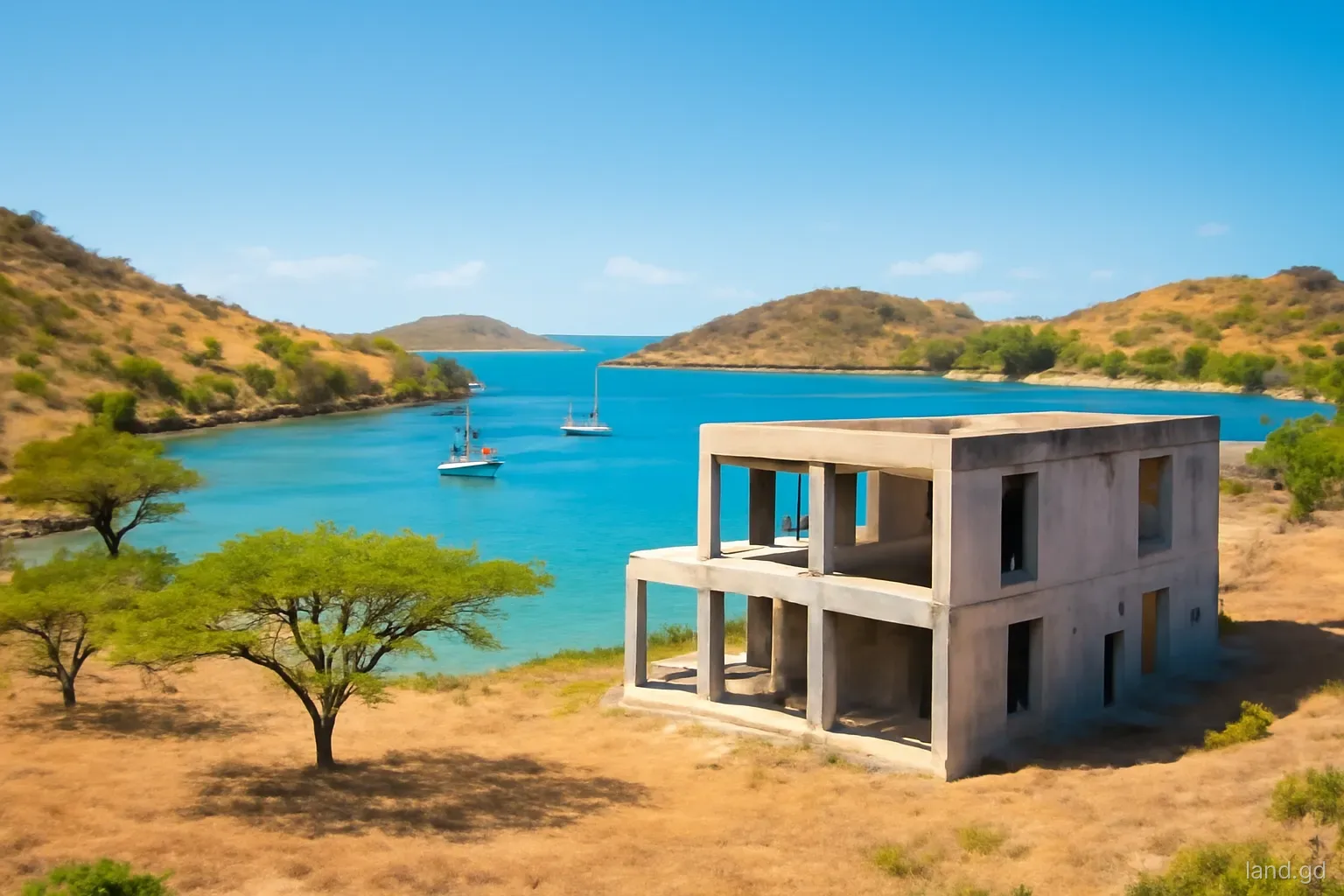
Carriacou is a small island of rolling hills rising to High North in the north, with much of its higher ground covered in dry woodland and scrub. The coastline alternates between sandy bays, mangroves, rocky headlands and sheltered harbours. Tyrrel Bay in the south-west is a well-known yacht anchorage, and the bays near L'Esterre and Paradise Beach face the offshore islets, including Sandy Island.
The climate is markedly drier than mainland Grenada. There are no large rivers, rainfall is lower and the dry season is long and harsh, with vegetation turning brown for months. This affects everything from water supply to landscaping to the kinds of crops that can be grown. Traditional farming here focused on corn, pigeon peas and livestock rather than the tree crops of the mainland.
Petite Martinique is much smaller and steeper, essentially a single hill rising from the sea, with settlement along the lower slopes and the shore. Flat land is scarce and almost entirely built on or used.
Water and utilities
Cisterns are essential. Rainwater collected from roofs and stored in cisterns has long been the backbone of water supply on both islands. Any new house should be designed with generous storage, often larger than would be normal on the mainland, sized to carry through the dry season.
Public water is limited. NAWASA operates services on Carriacou, including desalinated supply, but coverage and reliability vary. Ask what supply is available at a specific plot and what connection would involve.
Electricity. GRENLEC supplies power on Carriacou and Petite Martinique. After Hurricane Beryl, networks needed extensive repair. Confirm the current state of supply in the area and the cost of a new connection before buying.
Solar and storage. Strong sunshine makes rooftop solar attractive, and many owners consider it, especially with battery storage for resilience. Panels and mounts must be engineered for hurricane winds.
Who owns the land
On both islands, the large majority of land is family-owned, often handed down for generations. Some is held under formal titles registered at the Deeds and Land Registry in St George's; some has passed informally between heirs without probate or division. Strong traditions of family land and close community ties mean that land sales to outsiders are less common and often sensitive.
Many owners live abroad, especially in the United States, Canada, the United Kingdom and other Caribbean islands, which can make contacting all the heirs and getting signatures a slow process. Buyers should expect title work to take time and should not be surprised if a parcel is withdrawn because a family member objects.
On Petite Martinique, land rarely comes up for sale at all to people from outside the island. On Carriacou, more plots are offered, particularly in areas such as L'Esterre, Harvey Vale near Tyrrel Bay, Belair and around Hillsborough, but supply is still small compared with the mainland. Foreign buyers will generally also need an Alien Landholding Licence unless an exemption applies.
Building on the sister islands
Construction on Carriacou and Petite Martinique costs more and takes longer than on the mainland for reasons that are worth knowing in advance:
- Most building materials have to be shipped from the mainland or imported, adding freight and handling costs and occasional delays.
- The pool of skilled tradespeople is small, and demand for builders rose sharply during post-Beryl reconstruction.
- Heavy equipment such as cranes, excavators and concrete trucks is limited, which affects what can be built and how quickly.
- Design must assume direct hurricane exposure; Beryl showed how quickly roofs, windows and lightweight structures can fail.
- Planning approval still runs through the Physical Planning Unit; ask how applications from Carriacou are lodged and processed, and allow time for communication between the islands.
- Inspections, surveyors and lawyers may need to travel from the mainland, adding cost and scheduling constraints.
After Hurricane Beryl
Hurricane Beryl struck on 1 July 2024 as a very powerful hurricane, causing catastrophic damage on Carriacou and Petite Martinique. Many homes lost roofs or were destroyed, vegetation was stripped and infrastructure, including power, water and communications, was severely disrupted. Recovery has been a long process involving government, international partners, the diaspora and residents themselves.
For land buyers, the aftermath has several implications. Some damaged properties have come onto the market as owners decide not to rebuild. Building costs and contractor availability have been affected by reconstruction demand. Building standards and enforcement have attracted renewed attention, and buyers should expect, and want, robust hurricane-resistant design.
The status of businesses, guesthouses, services and infrastructure in any given area may have changed since 2024. Before buying, visit if possible, talk to residents and confirm the current state of roads, water and power around the plot. Do not rely on photographs or descriptions from before the hurricane.
Checks specific to the islands
Start with the title. Your attorney should search the Deeds and Land Registry and confirm who holds legal title and whether all heirs agree. Then have a licensed surveyor locate the boundaries, since many island plots were divided informally and marks may be missing, particularly after storm damage.
Check access and coastal constraints. Many plots are reached by unpaved tracks, and coastal land may be affected by setbacks, mangroves and erosion. Mangrove areas on Carriacou are ecologically important and protected, and building close to them can be restricted.
Finally, think about transport. Access to the mainland is by ferry and by small aircraft to Lauriston Airport; schedules and services can change, so confirm current options. For anyone planning to live on the island part-time or build remotely, reliable transport and a trusted local representative are as important as the plot itself.
Choosing an area on Carriacou
Carriacou is small enough that every part of it is within a short drive of Hillsborough, but areas differ. Around Hillsborough, plots are closer to the jetty, shops, the health facilities and government offices, which suits full-time residents. The south-west, around Harvey Vale and Tyrrel Bay, is oriented toward the sailing community, with a sheltered bay, boatyard activity and moorings, while L'Esterre and the Paradise Beach area look out to Sandy Island and the offshore islets.
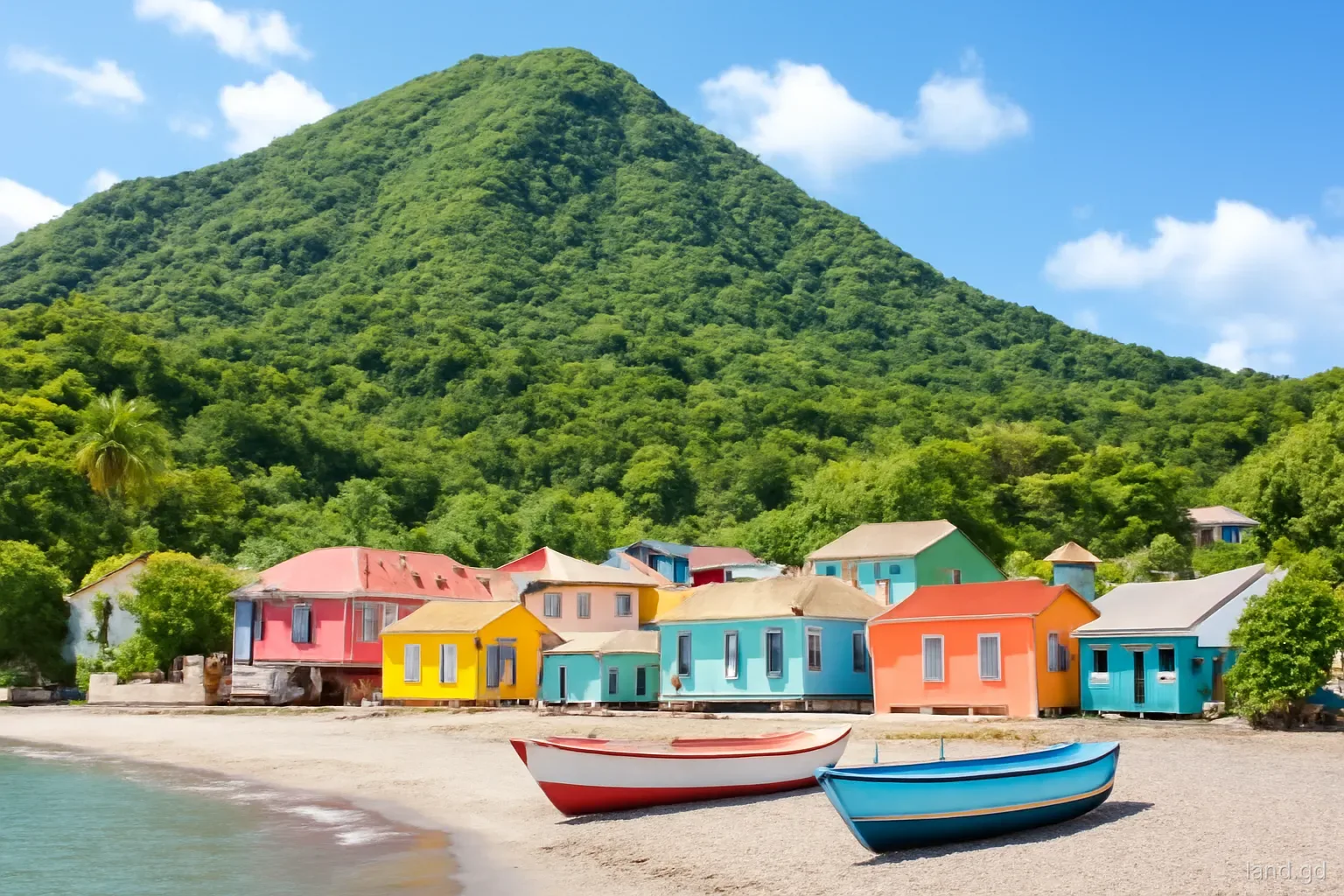
The windward side of the island, around Windward village with its boatbuilding tradition, faces the trade winds and the reef-protected eastern shore; it is breezier and quieter. Higher ground toward High North gives sweeping views but steeper, rougher access, and parts of the north are protected. Each area took Beryl's winds differently depending on exposure, which is a useful prompt to ask neighbours what happened to their buildings and why.
Frequently asked questions
Can foreigners buy land on Carriacou?
Yes, foreigners can buy land on Carriacou, subject to the same rules as on the mainland, including the Alien Landholding Licence unless an exemption applies. Supply is limited because most land is family-owned, and title work can take time when heirs live abroad.
Is there piped water on Carriacou?
NAWASA provides some supply on Carriacou, including desalinated water, but coverage and reliability vary by area. Most homes depend heavily on rainwater stored in cisterns, and new houses should be designed with generous storage to last through the long dry season.
How badly did Hurricane Beryl affect Carriacou?
Beryl caused catastrophic damage on Carriacou and Petite Martinique in July 2024, destroying or damaging a large share of homes and severely disrupting utilities and services. Rebuilding has continued since, so buyers should check current conditions on the ground rather than relying on older descriptions.
Is it more expensive to build on Carriacou?
Usually, yes. Materials must be shipped from the mainland or imported, skilled labour is scarce, and heavy equipment is limited. Reconstruction demand after Beryl added pressure. Budget for higher costs and longer timelines than for a comparable house on the mainland.
Can you buy land on Petite Martinique?
Sales on Petite Martinique are rare, especially to outsiders. The island is small and steep, and almost all land is held by local families with strong ties to it. Interested buyers usually need local connections and patience, and should expect thorough title work.