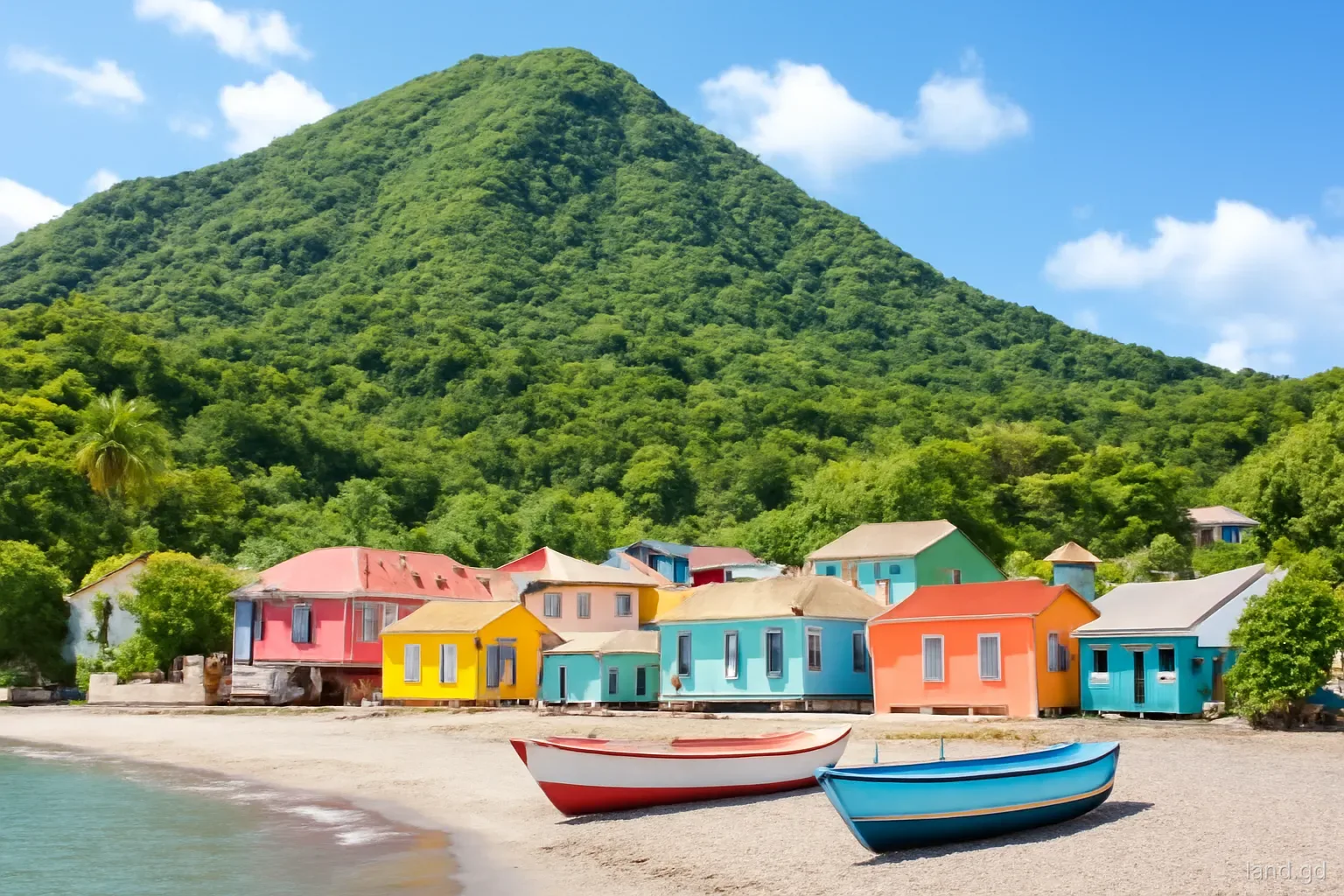

St John lies on the leeward coast between St George and St Mark, and its life revolves around Gouyave, a fishing town known across the island for its Friday night fish street gatherings and as a centre of the nutmeg trade. Behind the town, valleys such as Concord and the land around Dougaldston Estate run inland toward the central mountains, carrying nutmeg, cocoa, fruit and forest.
Land here has a strongly local character. Most buyers are Grenadian families, fishing and farming households and returning nationals with roots in the parish. The coastal road connects St John to the capital, so commuting is possible, but the parish has not seen the scale of development that the south has, and the market remains small and personal.
This page explains how land varies between the coast, the town and the valleys, what drives value, and the particular risks of the leeward coast.
Coast, town and valleys
The coastal strip runs from the St George boundary northward through Grand Roy, Gouyave and on toward Victoria. Much of it is a narrow ledge between steep slopes and the sea, with the main road running close to the water. Villages cluster where valleys open onto the coast, and black or grey sand beaches serve fishing boats.
Gouyave, also known by its older name Charlotte Town, is the parish's commercial centre. It has a dense grid of small lots, shops, churches, schools and the nutmeg receiving and processing station of the Grenada Cooperative Nutmeg Association, one of the most visible symbols of the spice economy. Land in the town is tightly held and rarely available bare.
Inland, valleys such as Concord climb toward the mountains. The Concord Falls attract visitors, and the slopes around them hold farms and family land. Dougaldston Estate, near Gouyave, recalls the parish's history of large spice and cocoa plantations. Further up, land gives way to forest on the central range, where conservation rules apply.
What drives land value in St John
Road frontage on the coastal road. Lots on or near the main road are convenient for homes and small businesses, but traffic noise, limited parking and tight bends reduce their appeal for some uses.
Sea views from the hills. Ridge and slope plots above Gouyave and Grand Roy look west over the Caribbean to the sunset. Views add value even in a parish with modest prices.
Proximity to Gouyave. Being within reach of the town's shops, schools and health services matters to local buyers and supports house lot values on the town's fringes.
Agricultural quality. Valley land with good soil, water and road access sells for farming and family compounds. Overgrown estate land with poor access sells far more cheaply.
Commute to St George's. Southern parts of the parish are within a reasonable drive of the capital, which supports demand from people working in town who want lower prices.
Leeward climate and terrain
The leeward coast sits in the lee of the central mountains, so the shore is drier and calmer than the Atlantic side, with gentler seas. The water is often clear and calm near the beaches, which is one reason fishing thrives here. Inland, rainfall rises quickly with height, and the upper valleys are wet and green for most of the year.
The coastline's main hazard is the combination of steep slopes and heavy rain. Rock falls and landslips onto the coastal road happen after intense downpours, and rivers can surge down valleys toward the sea. Low-lying lots near river mouths and the beach are exposed to flooding and, in storms, to waves and swell.
Most plots inland are sloping, so foundations, retaining walls and drainage must be planned carefully. On the coast, salt spray and occasional swell affect what can be built and how close to the sea; coastal setbacks apply.
Typical land uses across the parish
St John land falls into a few recognisable types, each with different buyers and checks:
- Town lots in Gouyave: small, dense, often with old buildings; used for homes, shops and rental rooms, with complex family title histories.
- Roadside village lots: along the coastal road in Grand Roy and other villages, used for family houses and small businesses.
- Hillside view lots: above the coast, used for homes with sunset views; steep access is common.
- Valley farmland: in Concord and other valleys, with nutmeg, cocoa, bananas and fruit; access and water vary widely.
- Former estate parcels: portions of larger estates sold off over time; boundaries and rights of way need careful checking.
- Forest-edge land: near the central range, where planning and conservation restrictions apply and building may be limited.
Pitfalls to watch for
Family land is the biggest issue. Much land in Gouyave and the villages has passed down without formal probate or division, and a seller may be one of several heirs. Your attorney must establish who holds legal title and whether all necessary parties have agreed to the sale.
Access is the second. Valley parcels are often reached by tracks crossing other land. Make sure the deed grants a right of way or that the road is public, and do not rely on long-standing informal use.
Hazard exposure is the third. Look carefully at any plot near a river or the beach, and ask residents how high water rose in past storms. A slope above the coastal road may be at risk of slips, and so may the road itself.
Finally, beware of assuming that a plot can host a guesthouse or apartment block. Planning rules, road access, parking, water supply and septic capacity all limit intensity, and the Physical Planning Unit will look at them before approving anything beyond a family house.
Living with the nutmeg and fishing economy
St John's economy still rests heavily on fishing and spices, which affects land in quiet ways. Beachfront land at landing sites is used by fishing crews for boats, nets and gear, often by long custom. Buying land near a landing site and expecting exclusive use of the beach in front of it will cause friction; beaches are public, and fishing activity is part of local life.
Nutmeg and cocoa farming shape the inland market. After Hurricane Ivan in 2004 flattened much of the nutmeg crop, replanting was uneven, and some farms were left to bush. A buyer planning to farm should look closely at the real state of trees and talk to the nutmeg association and neighbouring growers about yields and selling.
Community events, especially the Friday fish gatherings in Gouyave and the Fisherman's Birthday celebrations around the end of June, bring crowds and noise to the town. Homeowners near the centre should expect lively weekends and the occasional road closure.
Matching a St John plot to its purpose
A family home is best served by a roadside or near-road lot within reach of Gouyave, with water and power at the boundary and a gentle enough slope to build without major retaining works. Commuters to St George's should favour the southern end of the parish, nearest the boundary with St George.
A sunset-view retreat points to the ridges above the coast, but check the access road carefully: some hillside roads are narrow and steep, and the most dramatic positions are often the hardest to service. A small guesthouse may suit visitors drawn by the fish street gatherings, the waterfalls and the quieter west coast, though demand is far thinner than in the south.
Farming points inland, to the valleys, where the questions are soil depth, slope, the condition of existing trees, reliable vehicle access and a water source. In every case, a licensed surveyor, a careful title search and a conversation with the Physical Planning Unit before purchase remove most of the surprises.
Frequently asked questions
What is Gouyave known for?
Gouyave is the main town of St John, known as a fishing centre, for its weekly Friday fish street gatherings and for the nutmeg receiving and processing station run by the Grenada Cooperative Nutmeg Association. It is also called Charlotte Town, an older name still used formally.
Is the leeward coast of Grenada calmer than the windward side?
Generally, yes. The leeward coast faces the Caribbean Sea and is sheltered by the central mountains, so seas are usually calmer and the coast drier than the Atlantic side. Storms and swell can still affect low-lying shoreline plots.
Can you buy farmland in the Concord valley?
Agricultural parcels in Concord and other St John valleys do come onto the market, usually through private sales or local contacts. Check access, water, soil, the condition of trees and the title carefully. Some land near the forest reserve is restricted.
Is St John within commuting distance of St George's?
Southern parts of the parish are within a manageable drive of the capital, while Gouyave and northern villages take longer. Traffic, the winding coastal road and occasional rock falls after heavy rain affect journey times.
Do beachfront owners in St John own the beach?
No. Beaches in Grenada are generally public, and fishing crews use many beaches in St John as landing sites. Buyers of shoreline land should expect public and fishing activity on the beach and respect established access routes.