Carriacou and Petite Martinique share a government, a currency and a long history with mainland Grenada, but their land tells a different story. These are low, dry islands without the rainforest, rivers or deep volcanic soils of the main island. There was never a nutmeg economy, and the plantations that did exist grew cotton, sugar and limes rather than spices.
What emerged after the plantation period was distinctive too: a society of small landholders, seafarers, boatbuilders and emigrants, with strong family networks stretching from the islands to Trinidad, North America and Britain, and a culture in which land is tied closely to ancestry. For anyone buying, inheriting or simply trying to understand land on the sister islands, that history is a useful starting point.
Hurricane Beryl struck both islands very hard in July 2024. Much of what follows concerns long-term history, but present-day conditions on the ground should be checked locally.
A plantation island without spices
Carriacou was settled by the French in the eighteenth century and passed to Britain with Grenada in 1763. Under both, the island was divided into estates, worked by enslaved Africans. With little rainfall and thin soils, the estates concentrated on cotton, which tolerated dry conditions, together with some sugar, corn and provisions. Estate names such as Belair, Harvey Vale, Dumfries, Mount Pleasant and Craigston, and the town of Hillsborough, reflect British, and particularly Scottish, owners and managers.
Scottish influence was especially strong at Windward on the north-east coast, where the boatbuilding tradition that Carriacou is famous for is often traced to Scottish shipwrights. French names survive too, in places such as L'Esterre and in family names on both islands.
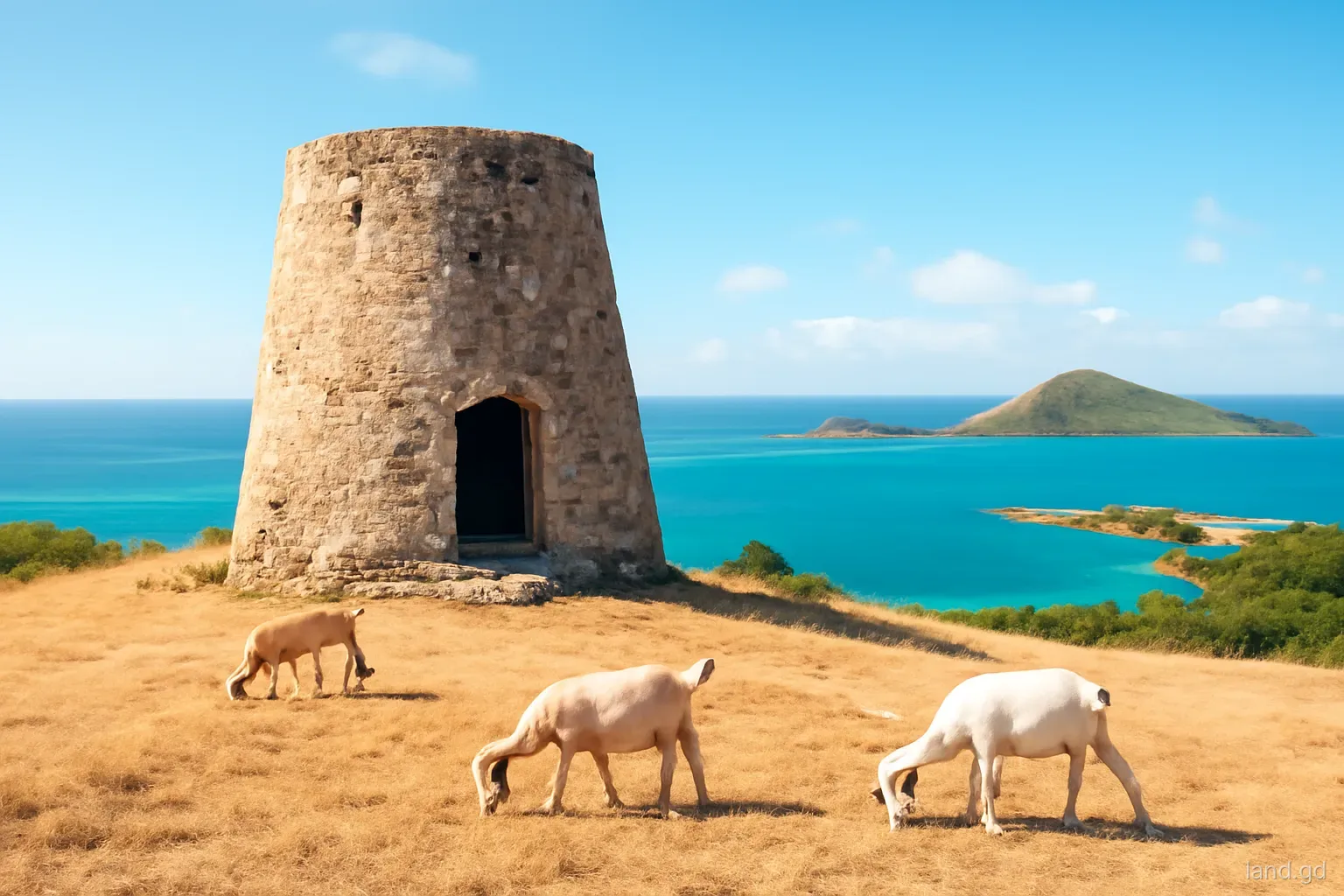
Remnants of the estate period are scattered across Carriacou: stone ruins of great houses and works, old cisterns and, on some hills, the round stone towers of windmills used to crush cane. The ruins at Belair, on high ground in the centre of the island, are among the most visited.
After emancipation: small holdings and the sea
As on the mainland, the end of slavery in 1834 and 1838 undermined the estates. Carriacou's dry climate and modest crops made large-scale plantation farming even less viable than on the main island, and many estates declined, were sold or were broken up. Freed people and their descendants acquired land in small parcels and combined farming with fishing, seafaring, boatbuilding and trading between islands.
In the early twentieth century the colonial government took a more direct role, acquiring estate land in Carriacou and selling or allocating it in small lots to islanders through land settlement arrangements. That policy contributed to the island's pattern of widespread small ownership, with families holding house plots and small fields across the island's villages.
Migration became a constant theme. Carriacouans travelled for work to Trinidad, Aruba, Curaçao, Venezuela, the United Kingdom, Canada and the United States, sending money home and often investing it in land and houses. That link between land, emigration and remittances remains strong.
Petite Martinique: the smallest piece of the story
A tiny island. Petite Martinique lies a few miles east of Carriacou and is the smallest inhabited island of the state. Its steep cone leaves limited flat land, mostly along the western shore where the village sits.
French roots. Its name and many family names point to French settlement, and the island's families have long been known for seafaring, fishing, boatbuilding and inter-island trade.
Land held in families. With so little land, plots are small and passed down within families. Outsiders rarely buy, and when land changes hands it is usually between islanders or relatives.
Beryl. Hurricane Beryl in 2024 caused severe damage to homes and infrastructure. Anyone with land interests there should seek current local information before making plans.
Land, ancestry and the Big Drum
On Carriacou, land is woven into a living culture of ancestry. The Big Drum, or Nation Dance, preserves songs and dances associated with African nations from which islanders' ancestors came, such as the Cromanti, Igbo, Manding and others, and families traditionally know which nation they descend from. Ceremonies such as the "saraca", a feast with food offered to the ancestors, and the Maroon festivals held to pray for rain around planting time, are rooted in the land and the agricultural year.
This shapes how people think about land. Family land is not simply an asset; it is where ancestors lived and are remembered, where relatives abroad expect to return, and where family events take place. Many families are reluctant to sell to outsiders even when relatives no longer live on the island.
For buyers from elsewhere, this means that land on Carriacou is less frequently on the open market than land on the mainland, and that sales of family land need patience and careful attention to who has a share.
Practical issues on Carriacou land today
The islands' history leaves several practical points for buyers, heirs and landowners:
- Many parcels are family land held by multiple heirs, some overseas, which can make sales slow and requires careful confirmation of who must sign.
- Older surveys and deeds may describe boundaries loosely; a modern survey by a licensed surveyor is often needed.
- Water is scarce. Most homes rely on rainwater cisterns, so building plans must include storage.
- Land administration for the sister islands involves offices in Hillsborough as well as St George's; your attorney will know where searches and filings are made.
- After Hurricane Beryl, check the state of roads, utilities, existing buildings and the availability of builders and materials before buying or planning construction.
- Non-citizens buying land on Carriacou or Petite Martinique need an Alien Landholding Licence in the same way as on the mainland, subject to the usual exceptions.
Researching Carriacou land and family history
For families and buyers trying to trace a parcel's history, Carriacou presents particular challenges. Much land passed by inheritance without probate, deeds may be old and brief, and relatives with knowledge of the land may live abroad. Starting with the papers the family holds, then asking an attorney to search the registry records, is the usual route.
Local knowledge is unusually rich. Older residents often know which family held which piece of land, where old estate boundaries ran and which plots were bought under land settlement. Church records of baptisms, marriages and burials can help establish family relationships needed for inheritance. The Carriacou Museum in Hillsborough, run by the island's historical society, holds material on the island's history and archaeology; check whether it is open, particularly since Hurricane Beryl.
Surveys are especially important. Because boundaries were often described by neighbours, walls and trees, a licensed surveyor's plan is usually needed before a sale, a division between heirs or a building application. Agreeing boundaries with neighbours on the ground, before disputes arise, saves a great deal of trouble.
Reading the island's landscape
Travel across Carriacou and the land history is visible in layers. Old estate boundaries can sometimes be traced in stone walls and lines of trees. Windmill towers and ruins stand on hilltops. Villages such as Windward, Harvey Vale, L'Esterre and Mount Royal sit on land once part of estates, now divided into family plots of houses, gardens and grazing land for goats, sheep and cattle. Pigeon peas and corn are planted when the rains arrive, a cycle closely tied to the island's festivals.
The coastline carries its own history. Bays such as Tyrrel Bay, Hillsborough and Windward served the estates as landing places for supplies and for shipping cotton out, and later became the centres of fishing, boatbuilding and trade. Land close to these bays has always been the most valued on the island.
Much land is also visibly unused, held by absent owners and family groups, waiting for a decision or a return. That combination, deep attachment and frequent absence, is perhaps the defining feature of land on the sister islands.
Frequently asked questions
What crops did Carriacou's estates grow?
Carriacou's dry climate and thin soils made it unsuitable for spices, so estates focused on cotton, along with some sugar, corn and provisions. Limes were also grown in later periods. The windmill towers and ruins on the island date from that plantation economy.
Why is so much land on Carriacou family land?
After emancipation, estates declined and were broken up, and the colonial government later sold estate land in small lots. Families acquired small parcels and passed them down, often without formal probate. Combined with high emigration, this left many plots shared among heirs at home and abroad.
Can foreigners buy land on Carriacou?
Yes, subject to the same rules as the mainland, including an Alien Landholding Licence for most purchases by non-citizens. Because much land is family-owned and not openly marketed, finding a suitable plot can take time, and the title checks need particular care.
How did Hurricane Beryl affect land on Carriacou?
Hurricane Beryl in July 2024 caused severe damage to homes, buildings, roads, utilities and vegetation on Carriacou and Petite Martinique. Anyone buying, building or managing land there should check current conditions, infrastructure and the availability of materials and contractors before committing.
What are the ruins at Belair in Carriacou?
Belair, on high ground in central Carriacou, has ruins from the plantation period, including remains of estate buildings and a windmill. It is one of the most visited heritage spots on the island and offers wide views. Check access and conditions locally, particularly since Hurricane Beryl.