Most of Grenada's old estates are private farms, abandoned ruins or land long since divided into house lots. A handful, though, still open their gates to visitors, and between them they tell much of the island's land story: sugar and rum, cocoa and nutmeg, the great house and the works yard, decline and reinvention.
This guide looks at the best-known estates and estate-based sites that welcome visitors, with an eye to what each reveals about how land was worked. It is not a list of attractions ranked by appeal. Opening days, tour arrangements and facilities change, and some sites have been affected by storms or changes of ownership, so check before you go, ideally a day or two ahead.
Belmont Estate, St Patrick
What it is. One of the best-known working estates on the island, near Hermitage in the north-east. Its history goes back to the colonial period, and it has been run in recent decades as a working farm and agro-tourism site, with cocoa at its heart.
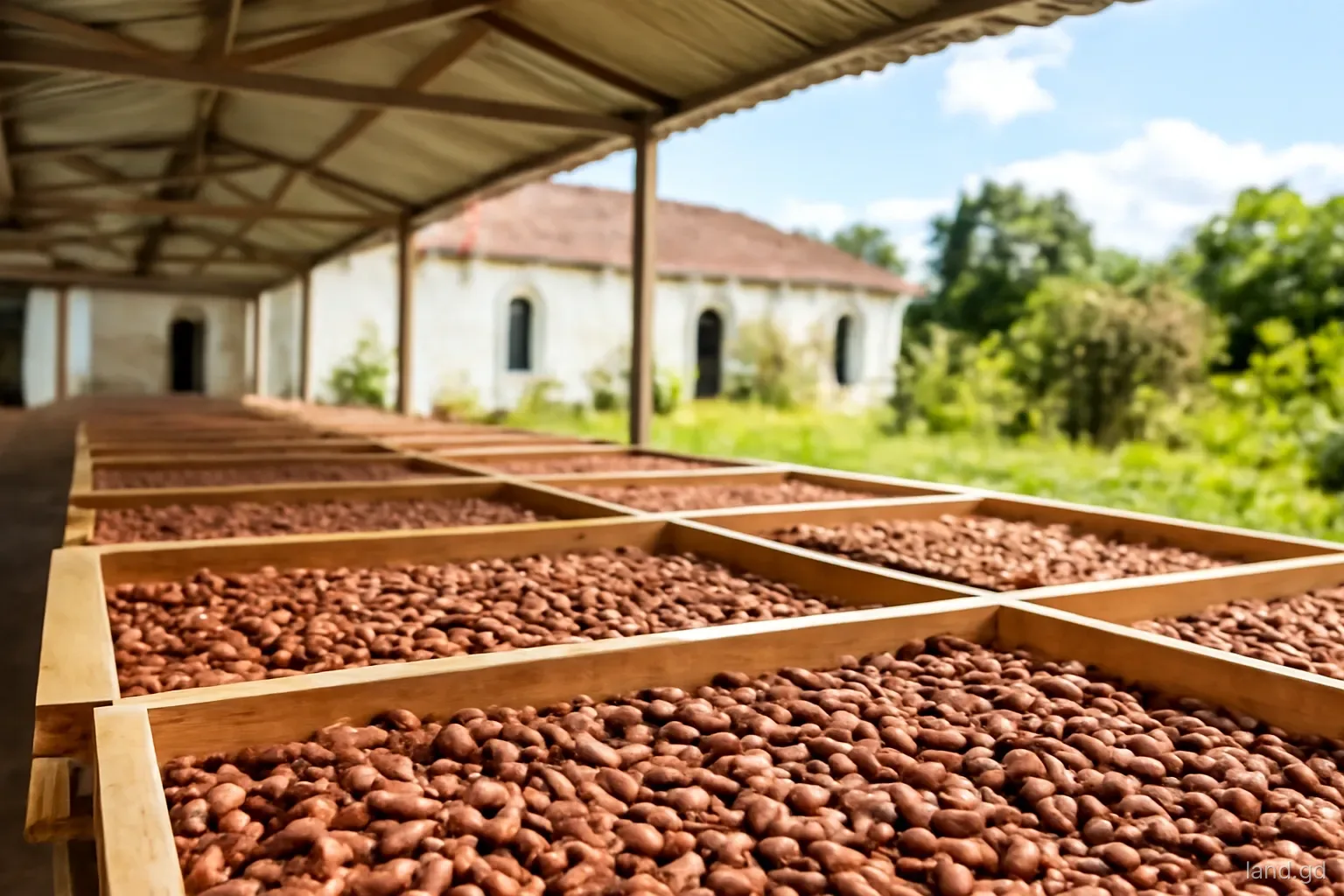
What it shows. Visitors can usually see the cocoa process from fermentation boxes to the traditional drying trays that slide under a roof when rain comes, and learn how cocoa estates were organised. The estate has also been connected with local chocolate making.
Why it matters. Belmont is a rare example of a historic estate that has stayed in production and adapted, showing one route by which old plantations can survive: combining agriculture, processing, food and visitors.
River Antoine Rum Distillery, St Patrick
River Antoine, near Lake Antoine on the north-east coast, is a rum distillery that dates its origins to the eighteenth century and is widely described as one of the oldest functioning water-powered distilleries in the Caribbean. Its large water wheel, fed by an aqueduct from the river, still drives the mill that crushes cane. The cane juice is boiled in open copper pans and the rum distilled in a process that has changed remarkably little.
For anyone interested in land history, River Antoine is the clearest surviving illustration of how a sugar estate's works yard operated: the relationship between water supply, mill, boiling house and still house, and the fields of cane that supply them. Elsewhere on the island these elements survive only as ruins. Here they are in use.
The setting adds to the lesson. Cane fields, the river, the aqueduct and the works sit together in one small valley, so a visitor can follow the whole chain from field to bottle in a short walk, something no ruined estate on the island can offer.
The distillery's rum is famously strong. Visits are typically guided and inexpensive, but confirm current arrangements and remember that production is seasonal, depending on the cane harvest.
Dougaldston Estate, St John
Dougaldston, just outside Gouyave on the west coast, was one of the island's important spice and cocoa estates. Its old buildings, drying trays and processing equipment give a sense of how nutmeg, mace, cocoa, cinnamon and other spices were handled on a large estate before modern processing stations took over much of the work.
The estate has seen better days, and its condition and opening arrangements have varied over the years. Where tours are offered, visitors can expect a simple, informal explanation of spice production rather than a polished attraction. That is part of its value: it shows the aging fabric of the estate system honestly.
Combined with a visit to the Gouyave nutmeg processing station of the Grenada Co-operative Nutmeg Association, Dougaldston helps explain the transition from estate processing to the co-operative system that handles most of the crop today.
Other estate-related sites worth knowing
Several other places link to Grenada's estate history. Their status and opening patterns vary, so treat this as a starting list to check rather than a schedule:
- Westerhall, St David: an estate name long associated with rum. The rum business has been connected with the estate's heritage, and nearby the Westerhall Point area shows how former estate land became residential development.
- Morne Fendue, St Patrick: a plantation house built of local stone in the early twentieth century, known for many years for traditional Grenadian lunches. Check whether it is currently receiving visitors.
- Laura Herb and Spice Garden, St David: a spice garden on former estate land where visitors can see nutmeg, cinnamon, cocoa and many other plants growing together, with guided explanations.
- Grenada Chocolate Company, St Patrick: a bean-to-bar maker founded in the late 1990s in the cocoa country around Hermitage, closely linked to the revival of estate cocoa.
- Former estate villages and ruins along the roads of St Andrew, St Patrick and St John, visible from public roads; remember that most are private property.
- The Grenada National Museum in St George's, which provides context for the plantation period.
The south: estates that became neighbourhoods
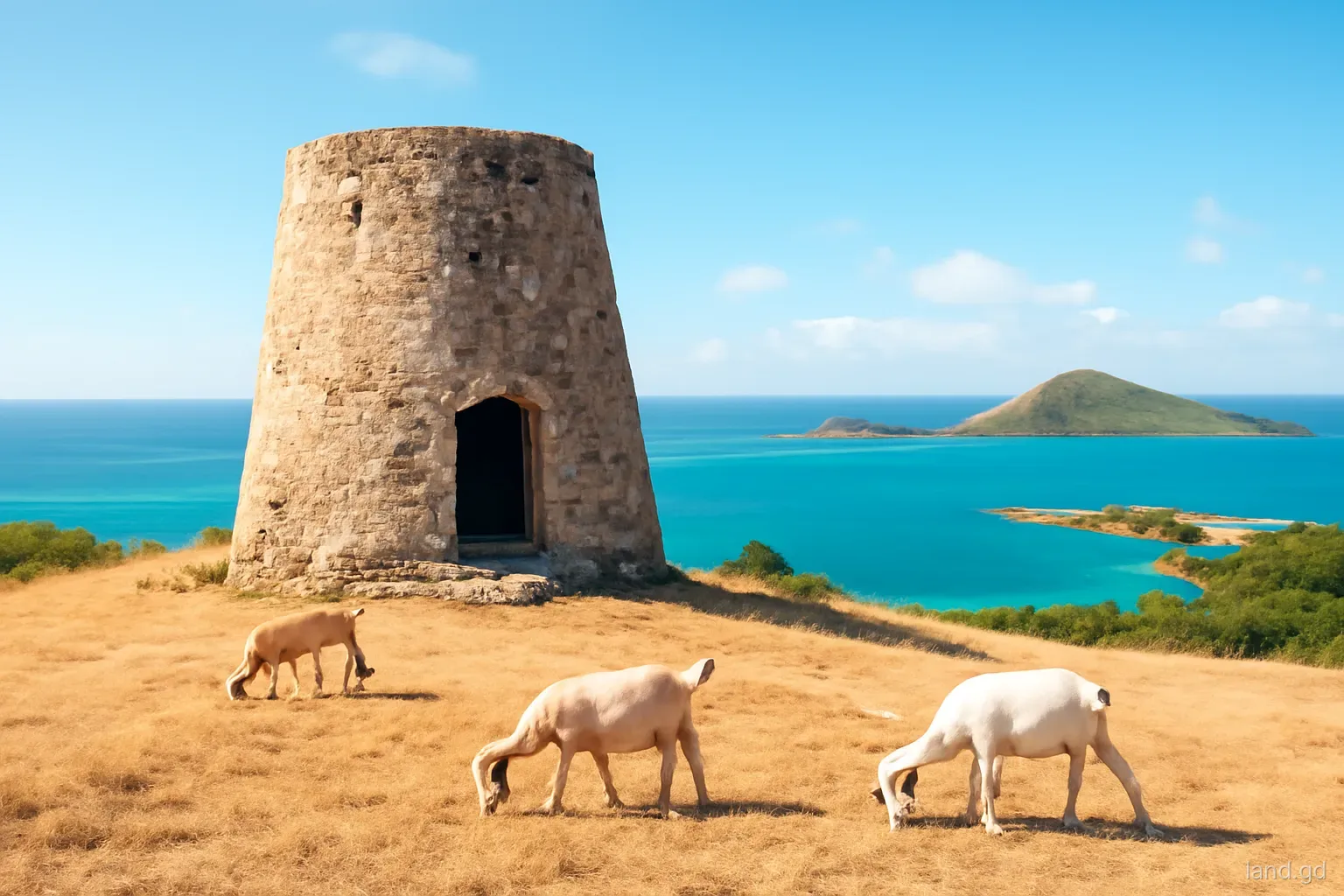
In the south of the island, estate history is less about working farms and more about how plantations became places to live. Much of the land around Lance aux Epines, Calivigny, Westerhall and the St David coast was estate land within living memory. As tourism and the population of the St George's area grew, owners subdivided it into house lots, and today the old estate names survive as the names of residential areas and roads.
A few southern estates keep a visible link to their past. La Sagesse in St David, with its manor house and bay, has been used for accommodation and nature visits on former estate land. Laura in St David shows the spice-growing side of the old estates. Westerhall's name lives on in rum. Driving between them gives a sense of how varied the fates of Grenadian estates have been, from production to tourism to suburbs.
For land buyers, this southern pattern is a reminder that many attractive residential plots sit on old estate land, with title chains that run back through subdivisions to the original plantation.
Seeing estate history responsibly
Estate tourism carries a weight that a visit to a beach or waterfall does not. These places were built and worked by enslaved people, and later by poorly paid labourers, and the comfortable great houses stood on that foundation. The better estate tours acknowledge this directly; visitors should expect and welcome that honesty rather than a romanticised picture of plantation life.
Practical respect matters too. Working estates are farms, with machinery, animals and workers going about their jobs. Follow guides' instructions, stay on paths, ask before photographing people, and do not pick fruit or pods without permission. Buying products made on site, such as chocolate, cocoa tea balls, spices or rum, is the simplest way to support estates that have chosen to remain in production.
Ruins on private land are not open sites. Ask permission before entering, keep away from unstable walls and do not remove stones, tiles or artefacts.
Planning an estate day in the north
The cocoa and rum estates of St Patrick and St Andrew sit relatively close together, which makes a full day in the north practical. Roads are narrow and winding, so allow more time than distances suggest, and consider a local driver or guide who knows which sites are receiving visitors that week:
- Start early from the south, since the drive up either coast takes time on winding roads.
- Visit a working cocoa estate in the morning, when processing activity is most likely.
- Continue to River Antoine and Lake Antoine, a crater lake close by.
- Take lunch at an estate restaurant or in Sauteurs, after confirming it is open that day.
- Stop at Leapers' Hill in Sauteurs, linked to the early colonial period.
- Return down the opposite coast for a different view of the estate landscape, passing Gouyave and its nutmeg station if you take the west coast road.
Frequently asked questions
Which historic estates in Grenada are open to visitors?
Belmont Estate in St Patrick, River Antoine Rum Distillery and, at times, Dougaldston Estate near Gouyave are the best known, along with spice gardens and chocolate makers on former estate land. Opening days and tour arrangements change, so confirm with each site or a local tour operator before you travel.
Is River Antoine really water-powered?
Yes. River Antoine uses a large water wheel, driven by water channelled from the river, to turn the mill that crushes sugar cane. It is often described as one of the oldest functioning water-powered distilleries in the Caribbean. Production depends on the cane season, so check before visiting.
Can you visit estate ruins on private land?
Most estate ruins are on private property, so you need the owner's permission to enter. Many can be seen from public roads. If you do get permission, keep away from unstable walls and wells, and leave stones, bricks and any artefacts where you find them.
How long does an estate tour take?
Most estate tours take from about thirty minutes to a couple of hours, depending on the site and whether a meal is included. A day in the north can combine a cocoa estate, River Antoine, Lake Antoine and Sauteurs comfortably if you start early.
What can be bought at Grenada's estates?
Depending on the site, visitors can often buy chocolate, cocoa tea balls, nutmeg and other spices, rum and locally made foods. Buying on site supports estates that have stayed in production and helps keep the buildings and land in use.