
Grenada's modern political history is bound up with land. The general strike of 1951, which launched Eric Gairy's career, began with estate workers demanding better pay and conditions. Gairy's governments later acquired estates in the name of land for the people. The People's Revolutionary Government of 1979 to 1983 turned some of those estates into state farms and passed laws on idle land. Governments since then have leased, sold and redeveloped much of what the state had accumulated.
For anyone dealing with former estate land today, from a farmer leasing a government parcel to a buyer looking at land in an old estate subdivision, these episodes matter. They explain why the government holds land where it does, why some titles have complicated histories, and why the subject still carries political weight.
This is an overview rather than a full history, and interpretations of these years remain contested in Grenada.
1951: the estates in revolt
By the mid-twentieth century estate workers in Grenada were among the poorest people in the colony. Wages were low, work was seasonal, and housing on many estates was poor. Eric Matthew Gairy, a young man from St Andrew who had worked abroad, returned and organised agricultural workers into a union, the Grenada Manual and Mental Workers' Union.
In early 1951 a dispute over wages escalated into a general strike. It was marked by widespread unrest, including fires on estates, and the period is remembered as "Sky Red". The colonial authorities declared a state of emergency, and Gairy was briefly detained. The strike won wage increases and made Gairy a political force. In the same year, universal adult suffrage brought the first elections in which all adults could vote, and Gairy's party won.
The strike shifted power away from the estate-owning class, though large estates remained a major part of the landscape for years. It also set the terms of politics for a generation, with land and labour at its centre.
Gairy and land for the landless
Gairy dominated Grenadian politics for most of the period from the 1950s to 1979, including as the first Prime Minister after independence on 7 February 1974. Land redistribution was part of his political appeal. His governments acquired a number of estates, in some cases under a programme described as land for the landless, with the stated aim of distributing land to small farmers.
In practice the results were mixed. Some land was distributed or leased to farmers. Some estates remained under government management and were often reported to perform poorly. Critics argued that acquisitions were sometimes directed at political opponents and that farmers who received land lacked the support they needed. Supporters saw the policy as a long-overdue challenge to the estate system.
Whatever the judgment, by the end of the 1970s the government held a significant number of former estates, which became the starting point for the next phase.
The revolution and the state farms, 1979 to 1983
Government estates reorganised. After the revolution of 13 March 1979, the People's Revolutionary Government grouped many government-held estates under a state body, generally referred to as the Grenada Farms Corporation, to run them as state farms.
Idle land. The PRG passed a land development and utilisation law in 1981 aimed at bringing idle land into production, allowing the state to lease large parcels that owners left uncultivated. Its use in practice was limited during the short life of the government.
Co-operatives. The PRG encouraged agricultural co-operatives of young people on unused land, under the slogan "idle lands for idle hands", with support from a national co-operative development agency.
Agro-industry. Investment went into processing, including an agro-industrial plant producing juices, jams and other products from local fruit, and into feeder roads to farming areas.
Abrupt end. The revolution collapsed in October 1983 with the killing of Maurice Bishop and others, followed by the United States-led intervention. Many of its programmes ended or were reorganised.
After 1983: divestment, leases and new uses
Governments after 1983 moved away from state farming. Over the following decades, many government estates were leased to farmers, sold, or redeveloped for other purposes. Some land became housing schemes, as population grew and demand for house lots rose. Some estate land near the coast, particularly in the south, passed into tourism and residential development.
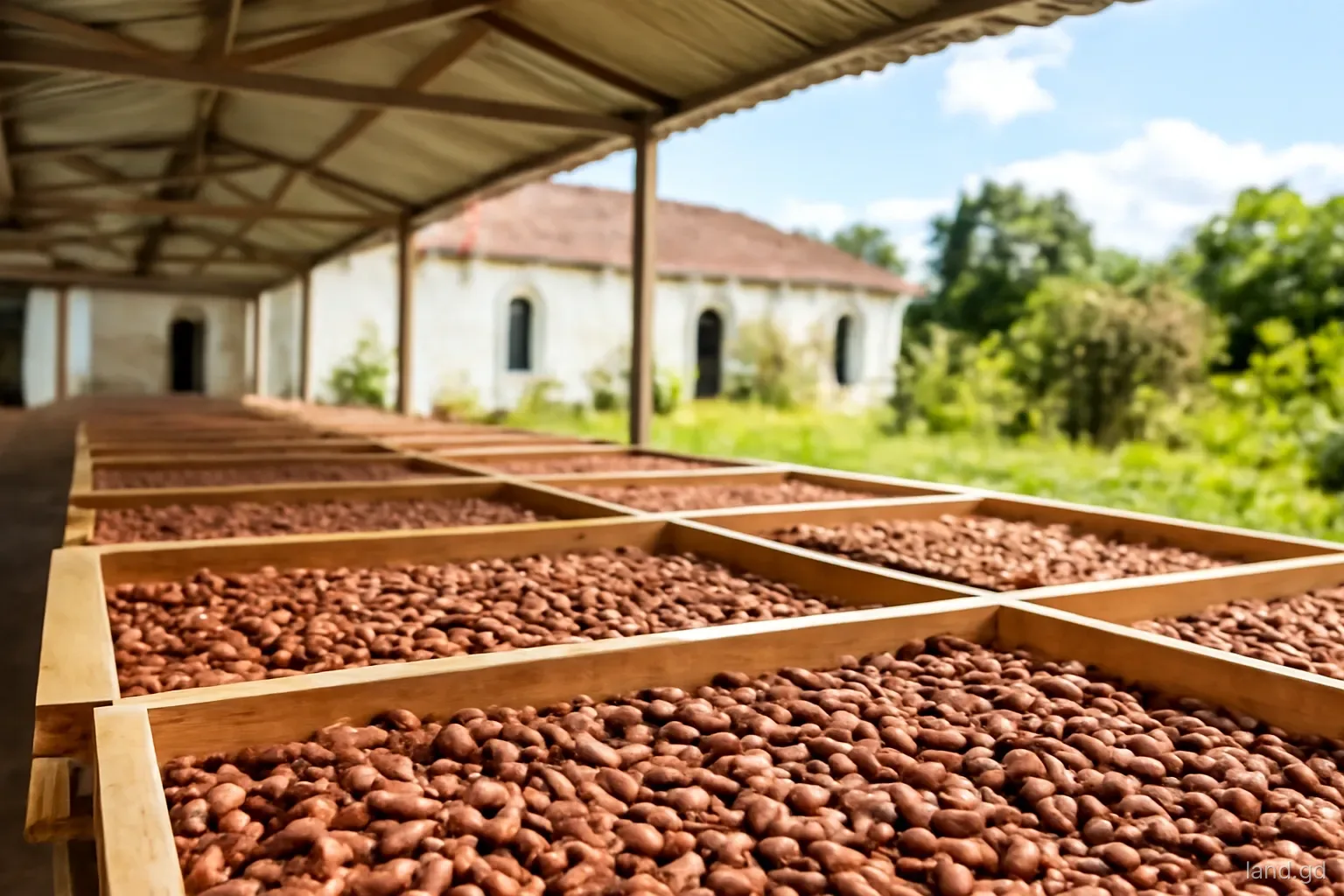
Agriculture itself declined as a share of the economy, with tourism, services and remittances becoming more important. Hurricane Ivan in 2004 dealt a heavy blow to nutmeg and cocoa, and many farms, including remaining large estates, were abandoned or only partly restored. Since then, renewed interest in cocoa from bean-to-bar makers, government food security drives and agro-tourism have brought some estates back into use.
The government remains a significant landholder. The Ministry of Agriculture and the lands office administer agricultural land, and leasing schemes for farmers have operated at various times, usually with conditions on active use.
Housing schemes and the pressure on farmland
One of the clearest legacies of the reform era is the conversion of former estates into housing. As the population grew and families moved out of crowded villages, governments used state land, much of it former estate land, for housing schemes and subdivisions of house lots, sometimes sold to citizens on favourable terms. Private owners of estate land have done the same, subdividing into lots for sale as farming became less profitable than real estate.
The result is that many communities in St George, St David and St Andrew now sit on land that was agricultural within living memory, and the boundary between farmland and suburb keeps moving. For agriculture, this means flatter, more accessible parcels are increasingly scarce. For buyers, it means an attractive subdivision may have a short history as house lots and a long history as estate land, with all the title questions that implies.
Planning approval for subdivision is handled by the Physical Planning Unit, and the rules and process are covered in the subdivision and planning sections of this site.
What this means if you deal with former estate land
For buyers, farmers and families, the reform era leaves some practical points worth keeping in mind:
- Land acquired by the government at various times may now be held by the Crown, a statutory body or private owners after sale. Your attorney's title search should trace that chain carefully.
- Former government estates may have long-standing occupants who farmed under informal permission or expired leases. Their position should be clarified before any purchase or lease.
- Old estate subdivisions, sold off in lots decades ago, sometimes lack proper survey or registration. Check that the lot you are considering was properly surveyed and conveyed.
- Government land offered for lease usually comes with obligations to farm it. Read the conditions carefully.
- Political sensitivities around land persist. Disputes over former estates can involve community history as well as law.
Reading the landscape today
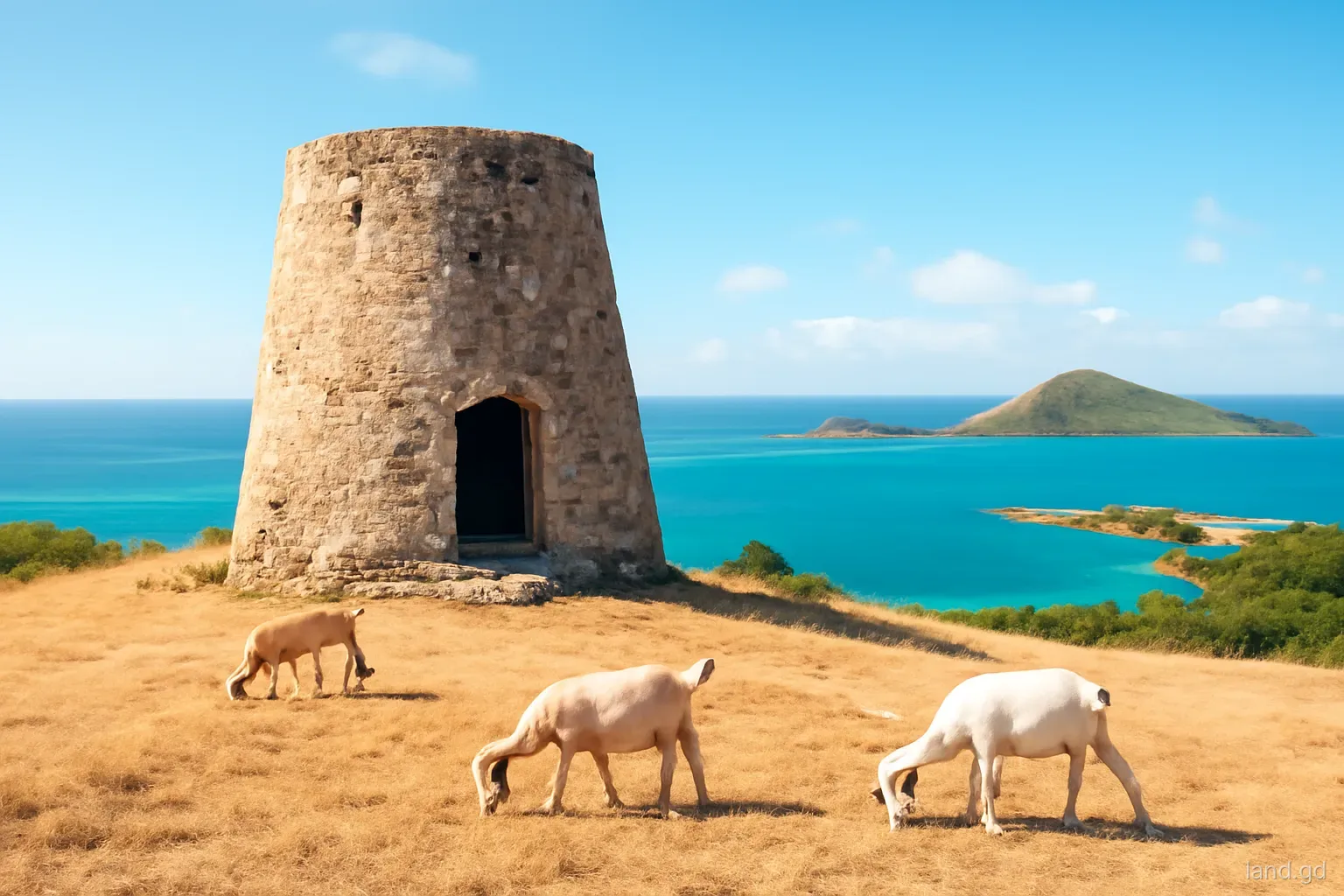
Drive through St Andrew, St Patrick or St John and the layers of this history are visible. Old estate houses stand empty or have been converted. Former estate roads lead to small farms carved from larger holdings. Housing schemes occupy land that was cane or cocoa within living memory. Here and there, a working estate continues, sometimes reinvented around chocolate, rum or agro-tourism.
Look closely and the competing claims on this land are also visible. Old estate fields that once grew cocoa now hold rows of concrete houses, and farmers complain that good agricultural land is being lost to housing, while families argue just as strongly that young people need affordable house lots. Successive governments have tried to balance the two through planning policy and the allocation of state land, with varying success.
The broad direction over seventy years has been the breakup of the large estate as the dominant form of landholding, and the expansion of small private holdings and family land. That brings its own challenges, including fragmentation, absentee ownership and unclear titles on inherited parcels, which are covered in other sections of this site.
Frequently asked questions
What was the 1951 strike in Grenada?
In 1951 agricultural and estate workers, organised by Eric Gairy's union, went on a general strike over wages and conditions. The unrest, remembered as Sky Red, included fires on estates and a state of emergency. It won wage increases and launched Gairy's political career, with universal adult suffrage following the same year.
Did Eric Gairy redistribute land?
Gairy's governments acquired a number of estates, partly under a policy described as land for the landless. Some land was distributed or leased to farmers, while some remained under government management. Results are debated: critics cite poor management and political targeting, supporters a challenge to the estate system.
What did the PRG do with land?
The People's Revolutionary Government of 1979 to 1983 ran many government estates as state farms, encouraged agricultural co-operatives on idle land, and passed a 1981 law aimed at bringing idle land into production. Most of these initiatives ended or changed after the revolution collapsed in 1983.
Does the Grenada government still own estates?
The government remains a significant landholder, including former estates acquired over the decades. Some land is leased to farmers, some has been sold or used for housing and development. The Ministry of Agriculture and the lands office can explain current leasing arrangements.
Why do some former estate titles cause problems?
Estates passed through many hands, including government acquisition, subdivision and sale, sometimes without full surveys or registration. Long-standing informal occupation adds complications. A careful title search by a Grenadian attorney, with a licensed surveyor, is the way to establish who owns a parcel now.