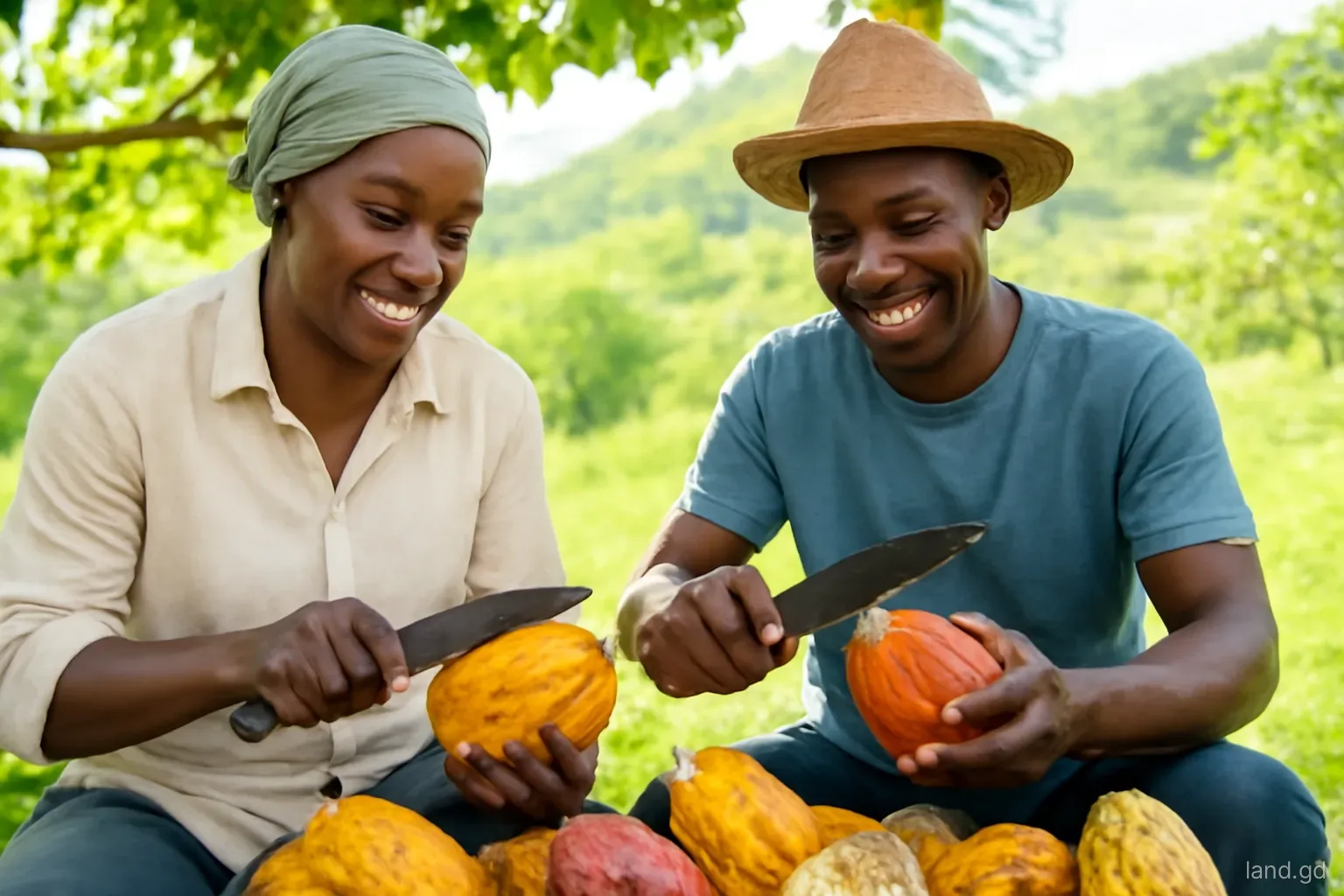
Grenadian cocoa has a reputation far larger than its volume. The island is recognised internationally as a producer of fine or flavour cocoa, the category prized by craft chocolate makers, and several small bean-to-bar businesses have built brands on beans grown within a few miles of their factories. For a landowner with a few acres of wet hillside, that reputation is the main reason cocoa is worth considering.
The flavour, though, is made on the farm as much as in the factory. How trees are shaded and pruned, when pods are picked, and how carefully beans are fermented and dried decide whether a crop sells as premium cocoa or as an ordinary commodity. This piece covers those steps from the grower's side.
What grows in Grenadian cocoa fields
Most cocoa in Grenada is of the Trinitario type, the hybrid of Criollo and Forastero varieties that developed in Trinidad and spread through the southern Caribbean. Old fields often contain a mix of trees of different origins, with pods ranging from deep red and purple to yellow and orange when ripe. That variation is normal and part of what gives estate cocoa its character.
Cocoa was grown by French settlers in the eighteenth century and expanded strongly in the nineteenth, after sugar declined. Many of the large estates in St Patrick, St Andrew, St Mark and St John were cocoa estates, and the drying houses with sliding roofs that survive on several of them were built for this crop. Smallholders took up cocoa too, often alongside nutmeg, bananas and food crops.
Like nutmeg, cocoa suffered heavily in Hurricane Ivan in 2004 and many fields were abandoned for years. Rehabilitating an overgrown cocoa block is a common project for people who inherit or buy old estate land, and it is often quicker than planting from scratch.
Getting the field conditions right
Shade. Cocoa is an understorey tree. Young plants need fairly heavy shade, which bananas and plantains provide in the first years. Mature fields traditionally sit under taller shade trees; the immortelle, with its orange flowers in the dry season, is the classic Caribbean cocoa shade tree. Too much shade lowers yields and encourages disease, too little stresses the trees.
Rainfall and humidity. Cocoa wants regular rain and dislikes long droughts, so it suits the wetter parishes and the lower slopes of the central mountains better than the dry south.
Wind protection. Strong winds strip leaves and break branches. Windbreaks of taller trees on exposed sides protect a field.
Soil. Deep, well-drained soils with plenty of organic matter are ideal. Leaf litter under a healthy cocoa canopy does much of the fertilising work if it is left in place.
Pruning, disease and field hygiene
Cocoa trees left alone grow into tangled clumps with many stems, heavy shade and pods out of reach. Formative pruning of young trees to a single trunk with a few well-spaced main branches makes harvesting easier and lets air move through the field. On older trees, removing dead wood, water shoots and crossing branches each year improves light and reduces disease.
The disease growers mention most is black pod, caused by Phytophthora fungi, which turns pods brown and then black and is worst in long wet spells. Its spread is slowed by regular harvesting, removing and disposing of diseased pods, keeping the canopy open and avoiding damp, crowded conditions. Rats, squirrels and birds also damage pods. Extension officers from the Ministry of Agriculture can identify other problems and advise on current treatments, including whether any chemical control is appropriate.
Hygiene matters at harvest too. Broken pod husks left in heaps under the trees become a source of disease. Many farmers split pods at a central point and spread or compost the husks away from the trees.
From pod to dry bean
Post-harvest handling is where small farms most often lose value. The basic sequence is the same everywhere, though timings vary:
- Harvest only fully ripe pods, cutting the stalk cleanly with a knife or a cocoa hook rather than pulling, which damages the flower cushion that bears next year's crop.
- Open pods within a few days of picking, and separate the wet beans from the placenta and husk.
- Ferment the wet beans in wooden boxes or heaps covered with banana leaves, usually for around five to eight days. The mass heats up as sugars in the pulp break down.
- Turn the beans at intervals during fermentation so they ferment evenly. Under-fermented beans give flat, astringent chocolate.
- Dry the fermented beans in the sun on raised trays, moving them regularly and covering them quickly when rain comes. Drying houses with rolling roofs were built for exactly this.
- Store dry beans in clean sacks off the floor in a dry, well-ventilated place, away from smoke, fuel and strong smells, which cocoa absorbs easily.
Who buys Grenadian cocoa
Smallholders have historically sold cocoa through the Grenada Cocoa Association, which bought beans, in some periods wet beans for central fermentation, and handled export. Selling wet beans to a central fermentary removes the hardest step from the farmer's workload, at a lower price than well-fermented dry beans.
The growth of local chocolate makers has added another outlet. Bean-to-bar businesses in St Patrick, St Andrew and elsewhere buy beans from estates and smallholders, some with quality premiums and longer-term arrangements. They are usually particular about fermentation and drying, and may prefer to buy wet beans and ferment themselves.
Arrangements, prices and registration rules differ by buyer and change over time, so talk to the association, the makers and the Ministry of Agriculture before planting with a particular buyer in mind.
Small quantities also find local uses. Cocoa balls and cocoa tea, made from roasted and ground beans shaped with spice, are a Grenadian staple sold in markets and village shops, and some farmers process part of their crop that way. It adds value to small lots, though it rarely absorbs the output of a working field.
Bringing an overgrown cocoa field back
Many cocoa fields bought or inherited today have been left alone since the early 2000s. They are usually recognisable under the bush: lines of old trunks, some still bearing a few pods, beneath a tangle of vines, shade trees and self-sown growth. Rehabilitation is often faster and cheaper than replanting, because the root systems are already established.
The usual approach is gradual. Cut vines and undergrowth first, so the trees can be seen and reached. Remove dead and badly diseased trees. Reduce the shade canopy in stages over a season or two rather than all at once, since sudden full sun stresses trees that have grown used to deep shade. Then prune the surviving cocoa to open the centre and bring the bearing wood within reach.
Gaps can be filled with new plants, ideally from good planting material recommended by the Ministry of Agriculture, and some growers rejuvenate old trees by encouraging a strong basal shoot and then removing the old trunk. Expect yields to improve over two or three seasons. Keep a simple record of costs and output so you can judge whether further investment is justified.
Common mistakes with cocoa
New cocoa growers tend to repeat the same handful of errors, most of them on the post-harvest side where a season's work can be undone in a week:
- Clearing all shade at once when rehabilitating an old field, which shocks the trees and lets weeds take over.
- Picking unripe pods to beat thieves. Unripe beans ferment badly and spoil the whole batch.
- Rushing drying on a tarpaulin on the ground, where beans pick up moisture and dirt.
- Storing beans in a kitchen or near a fire, so they taste of smoke.
- Planting without checking who will buy and in what form.
- Leaving diseased pods on the trees through the wet season, where they spread black pod to healthy fruit.
- Mixing beans from different fermentation batches, or from different days, so the whole lot ferments unevenly.
Frequently asked questions
How long does a cocoa tree take to bear in Grenada?
Cocoa usually starts producing in its third to fifth year, depending on planting material, shade and care, and reaches good production a few years after that. Rehabilitated old trees can respond within a season or two of pruning and clearing, which is why many people restore existing fields first.
Is Grenada cocoa really fine flavour?
Grenada is recognised by the international cocoa trade as a producer of fine or flavour cocoa, largely because of its Trinitario genetics and traditions of fermentation. That status is a reputation for the origin, though, and individual lots still have to be fermented and dried well to earn premium prices.
Can a smallholder ferment cocoa at home?
Yes. Small batches can be fermented in wooden boxes or covered heaps and dried on raised trays. The difficulty is consistency, because small masses lose heat and ferment unevenly. Some buyers prefer to purchase wet beans and ferment centrally for that reason, so check what your buyer wants.
What shade trees are used with cocoa in Grenada?
Bananas and plantains give temporary shade to young plants, and taller trees provide permanent shade. The immortelle is the traditional choice in the Caribbean, but fruit and timber trees are also used. The aim is moderate, even shade that lets some light reach the cocoa.
What is black pod disease?
Black pod is a fungal disease that rots cocoa pods, turning them brown and black, and spreads fastest in wet, crowded conditions. Regular harvesting, removing infected pods, pruning to let air through and good field hygiene keep it in check. Ask an extension officer about current control advice.