
In March 1795 a planter named Julien Fédon led an uprising that, for more than a year, put most of Grenada outside British control. It began on his own estate, Belvidere, in the mountainous interior of St John, and spread to almost every parish. Estates were burned, their owners killed or driven out, and many of the enslaved people on them joined the rebels in the hope of freedom.
Fédon's Rebellion is usually told as a military and political story. It was also a turning point for Grenada's land. The destruction it caused, the executions and confiscations that followed, and the British response reshaped who owned the estates and how the colony was run. This article focuses on those land consequences, and on the places where the rebellion can still be traced on the ground.
Who Julien Fédon was
Julien Fédon was a free man of mixed French and African descent who owned Belvidere estate in the hills of St John's parish, inland from Gouyave. He belonged to the class of free coloured planters, many of them French-speaking and Catholic, who had held property under French rule and found themselves increasingly excluded and discriminated against under British rule after 1763 and especially after 1783.
Those grievances met a new force in the 1790s. The French Revolution proclaimed liberty and equality, and in 1794 revolutionary France abolished slavery in its colonies. Revolutionary agents in Guadeloupe, led by Victor Hugues, encouraged uprisings in British-held islands. Fédon received commissions and support from them, and his rebellion combined French Republican, anti-British and, for many of its fighters, anti-slavery aims.
Much about Fédon personally remains uncertain, including his fate. Historians draw on a limited set of sources, many written by his opponents, so accounts differ in detail.
How the rebellion unfolded
March 1795. Rebels struck simultaneously at Grenville, then called La Baye, on the east coast, and at Gouyave, then Charlotte Town, on the west. British residents were killed or captured, and the rebels withdrew to Fédon's mountain base.
Hostages. Among those captured was the Lieutenant Governor, Ninian Home, together with other prominent colonists. When British forces attacked the rebel camp in April 1795, most of the hostages were killed.
A year of control. Through 1795 the rebels held most of the countryside while the British clung to St George's and a few posts. Fighting, raids and burning spread across the estates of St John, St Mark, St Patrick, St Andrew and St David.
1796: defeat. Large British reinforcements arrived in 1796, and by June the rebellion had been crushed. Fédon's camp was taken. He was never captured, and what became of him is not known; he may have drowned trying to escape or reached another island.
Fédon's Camp and the landscape of the rebellion
Fédon chose his base well. Belvidere estate lay in steep, forested country near the island's central ridge, and the rebels fortified positions on the heights above it, in the area associated with Mount Qua Qua and the ridges around Grand Etang. From there they could see the coasts and descend on estates below.
The site known as Fédon's Camp can be reached on foot by a demanding hike through the Grand Etang forest reserve, along muddy, steep trails. Little remains to see beyond the terrain itself, but standing on the ridge makes clear why British troops found the position so hard to take. Hikers should go with an experienced local guide, check conditions with the Forestry Department or the Grand Etang visitor centre, and allow for slippery ground after rain.
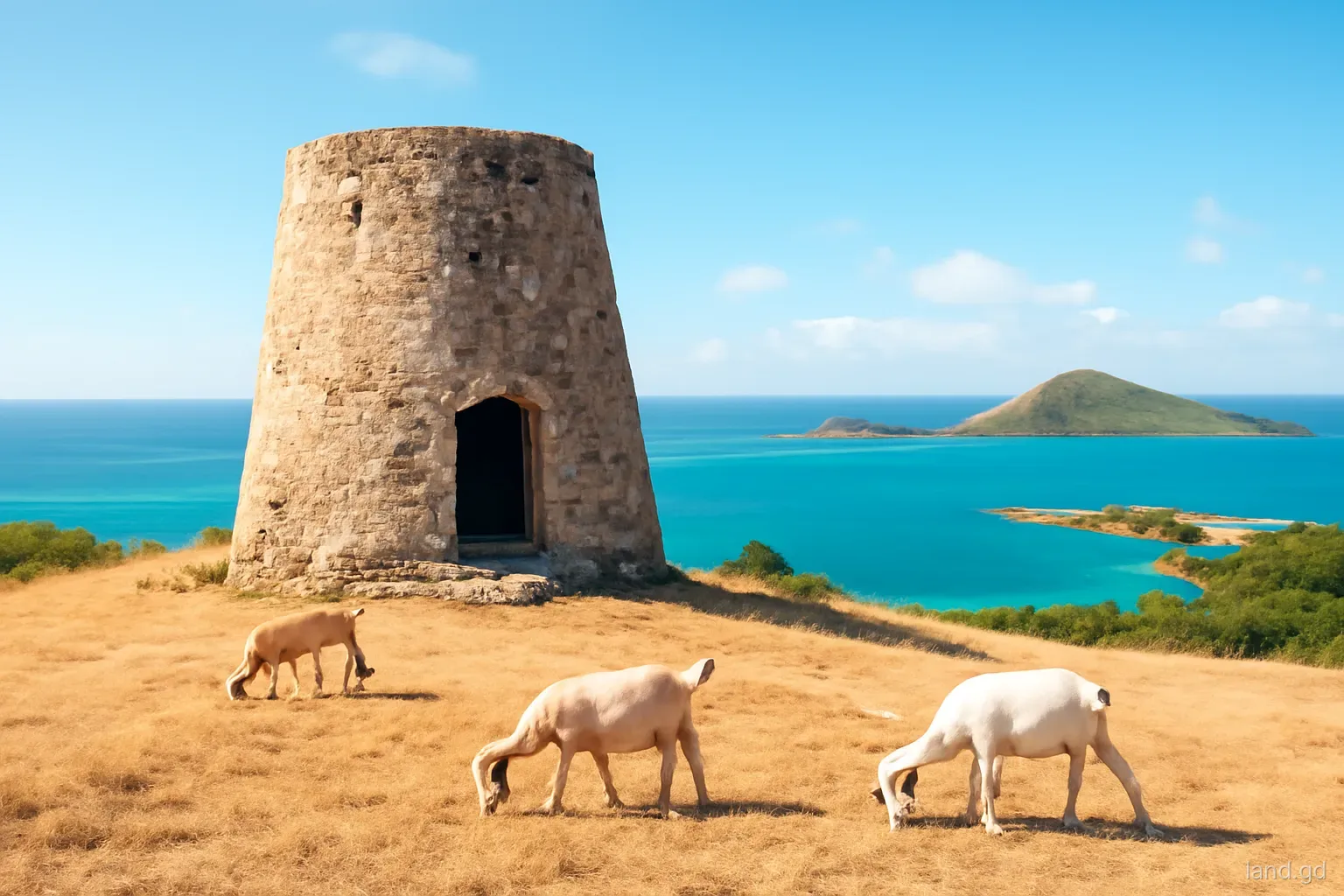
Elsewhere, the rebellion survives mainly in local memory, place names and the ruins of estates burned in 1795 and never fully rebuilt. Belvidere estate itself is still a name on the map in St John.
What happened to the estates
The damage was enormous. Contemporary accounts describe estate after estate burned, works destroyed, crops lost and animals killed. Many enslaved people left the plantations during the rebellion, and some fought alongside Fédon. When the British regained control, the colony's plantation economy had been badly disrupted, and some estates took years to recover, if they recovered at all.
The aftermath was harsh. Rebels who were captured were tried, and many were executed. The estates of those convicted or declared rebels were confiscated by the Crown. Those confiscated estates were later sold or granted, often to British owners, which accelerated the shift of land from French and free coloured proprietors into British hands.
The suppression also hardened British policy. French Catholic and free coloured planters lost influence, the English language and Protestant institutions were favoured, and the plantation system was rebuilt on the same basis of slavery until emancipation four decades later. The rebellion thus changed the ownership of land without changing who worked it.
The enslaved majority and the rebellion
Most of the people in Grenada in 1795 were enslaved, and their part in the rebellion was decisive. Large numbers left the estates and joined Fédon's forces, fighting in the hope that a French Republican victory would bring the freedom France had just proclaimed in its own colonies. Others fled into the forests or tried to keep out of the fighting. For British planters, the prospect of armed enslaved people holding the interior for more than a year was the deepest shock of the whole episode.
When the rebellion was defeated, those who had joined it faced severe punishment, and the survivors were returned to slavery on rebuilt estates. Freedom would not come for nearly forty years. Yet the memory of 1795 fed into later struggles over labour and land, and historians increasingly treat the rebellion as part of the wider wave of resistance across the Caribbean in the age of the Haitian Revolution.
This is also why the rebellion matters to land history: it was a contest over who would control the estates and the people on them, fought across the very fields and hillsides that later became village land.
Tracing the rebellion through land records
For researchers or landowners curious about an estate's history in this period, there are several lines of enquiry, though records are incomplete and scattered:
- Old conveyances and deeds may record the sale of confiscated estates or later transfers from estates broken up in the nineteenth century.
- Colonial records held in the United Kingdom, including government correspondence and slave registers from the early nineteenth century, can help reconstruct estate ownership.
- Published histories of Grenada and studies of the rebellion discuss specific estates attacked and their owners.
- Local knowledge, from older residents, churches and community historians, often preserves stories about particular estates and sites.
- The Grenada National Museum and the Grenada National Trust are starting points for heritage questions on the island.
How the rebellion is remembered
For a long time Fédon was cast in colonial histories as a brigand. Later Grenadian writers and historians have reinterpreted him as a resistance leader and an early figure in the struggle against slavery and colonial rule, while recognising the violence on all sides. His rebellion is now commemorated in Grenada, and his name appears in cultural life, local organisations and school history.
The same contest between Britain and France is written into the fortifications around St George's, which were built and strengthened by both powers during the eighteenth century and still overlook the harbour. Visitors interested in the period can combine those forts, the national museum in the capital and, for the fit, the hike towards Fédon's mountain base for a fuller picture of how the island was fought over.
For landowners in St John and the central parishes, the story is close at hand. Estate ruins, old boundaries and family traditions sometimes connect directly to 1795. Treat any ruins or possible archaeological features on your land with care, avoid removing stonework or artefacts, and contact heritage bodies if something significant comes to light during building or clearing.
Frequently asked questions
Who was Julien Fédon?
Julien Fédon was a free planter of mixed French and African descent who owned Belvidere estate in St John's parish. In 1795, inspired by the French Revolution and supported by French revolutionaries in Guadeloupe, he led a rebellion against British rule that held most of Grenada for over a year.
When did Fédon's Rebellion happen?
The rebellion began in March 1795 with attacks on Grenville and Gouyave and was defeated by British forces in June 1796. In between, the rebels controlled most of the countryside while the British held St George's and a few fortified posts.
What happened to Julien Fédon?
Fédon was never captured. After the fall of his mountain camp in 1796 he disappeared, and his fate is unknown. Some accounts suggest he drowned trying to escape by boat; others that he reached another island. No firm evidence settles the question.
Can you visit Fédon's Camp?
Yes, by a strenuous hike through the forest of the Grand Etang area in the central mountains. Trails are steep and often muddy, and there is little in the way of built remains, so go with an experienced guide and check trail conditions with the Forestry Department before setting out.
How did the rebellion change land ownership?
Many estates were burned during the fighting, and afterwards the British confiscated estates belonging to convicted rebels. These were sold or granted, often to British owners, which shifted land away from French and free coloured planters and reinforced British control of the plantation economy.