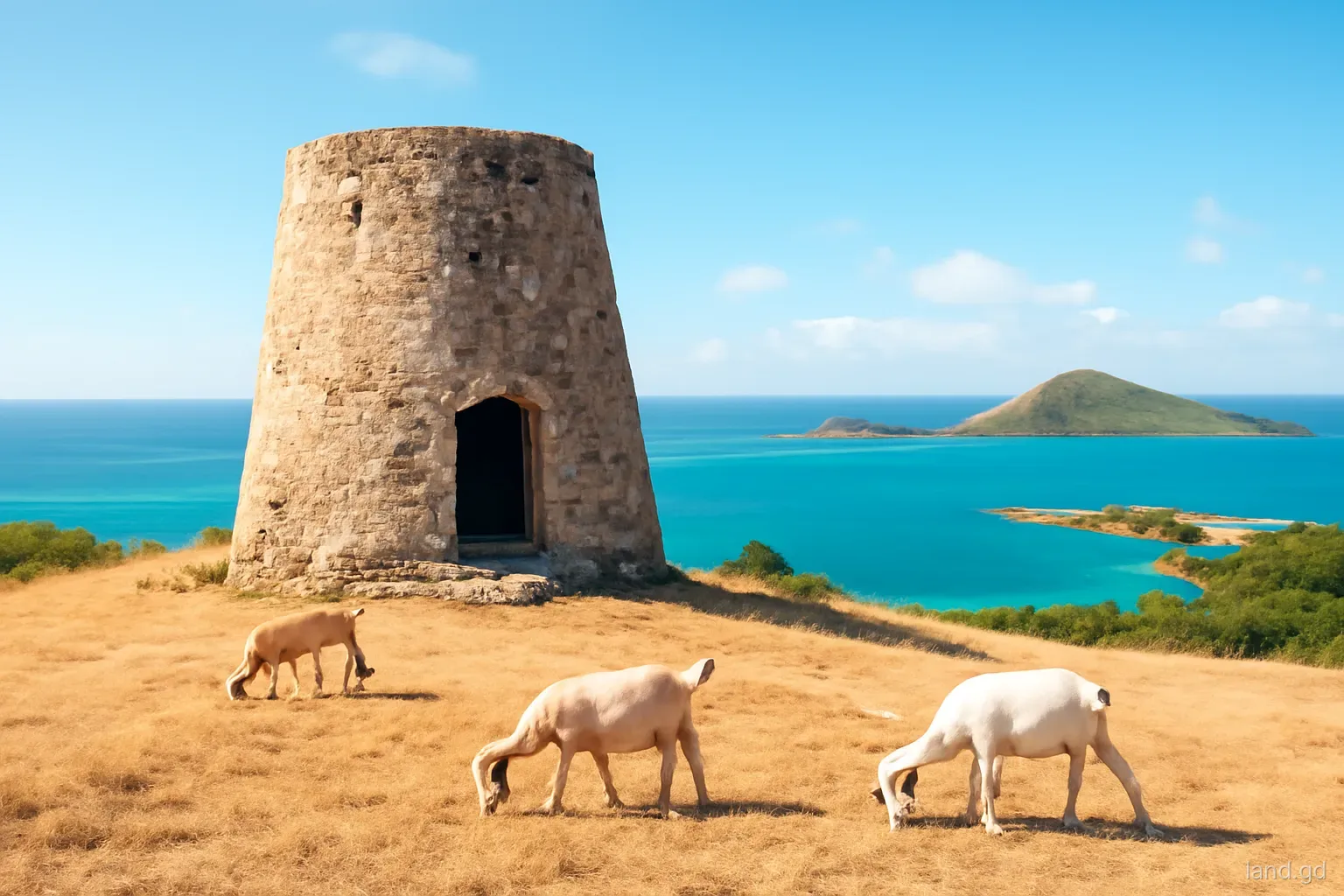
When full freedom came in 1838, almost all agricultural land in Grenada belonged to estates, and almost all the people who worked it owned none. A century later the picture looked very different. Sugar had largely disappeared, cocoa and nutmeg had become the island's main exports, and a large share of production came from small farmers working their own plots.
That transformation, from a sugar colony to a "Spice Isle" with a strong peasantry, is one of the most important stories in Grenada's land history. It explains why so much rural land today is held in small family parcels, why villages look the way they do, and why tree crops dominate the hills. It also explains the deep attachment many families feel to land that an ancestor worked for and bought in the generations after slavery.
Freedom and the struggle for land
After 1838, freed people wanted independence above all: their own land, their own time and freedom from the estate's control. Planters wanted them to keep working for low wages. Many estates tried to tie labour to the plantation through tenancy of houses and gardens, charging rent that could be raised or used as a threat.
Where they could, freed people bought small plots, sometimes pooling money, sometimes buying from struggling estates willing to sell marginal land. Others squatted on unoccupied land, including Crown land in the interior. Gradually, villages of freeholders grew up alongside the old estate villages. Churches played a role in some areas, and the names of many villages date from this period.
Planters and colonial officials did not make it easy. Across the British Caribbean, planters were often reluctant to sell small lots that might draw workers away, and authorities used the price of Crown land, rules against squatting and taxes to push people back towards estate work. Grenada saw versions of the same pressures. That freed people acquired land at all, against those obstacles, says a great deal about how much it mattered to them.
The process was slow and uneven, and estates remained powerful for generations. But the direction was set: a growing class of small farmers who grew food for themselves and for local markets, and increasingly crops for export.
Why sugar declined
Labour shortages. With freedom, many workers left the estates or worked for them only part-time. Planters found it hard and costly to keep sugar going.
The end of protection. British legislation in the 1840s, notably the Sugar Duties Act of 1846, removed the preferential treatment that West Indian sugar had enjoyed in the British market, exposing Grenadian estates to competition from larger producers.
Terrain. Much of Grenada is steep, and sugar demanded flat land and heavy processing. Estates on hills were the first to give up.
Competition for workers. Higher wages in Trinidad and elsewhere drew Grenadian workers away in the decades after emancipation, deepening the labour shortage on Grenada's estates and starting a pattern of migration that continues today.
Debt. Many estates were heavily mortgaged, and falling prices pushed owners into bankruptcy and forced sales, which in turn made land available to others.
Cocoa and nutmeg take over
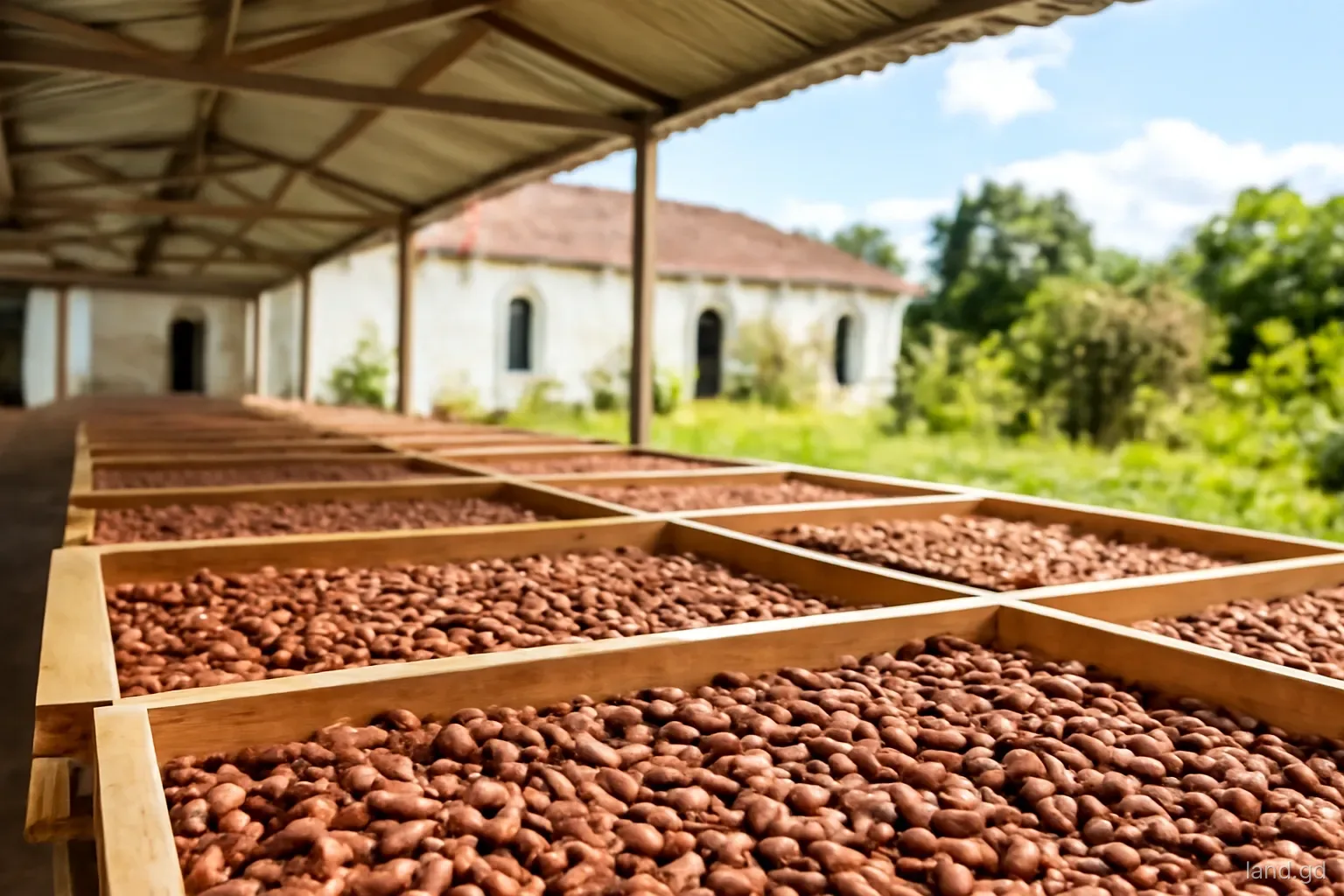
As sugar retreated, cocoa expanded. It suited Grenada's wetter hills, required less capital than sugar and could be grown by both estates and smallholders. Through the second half of the nineteenth century cocoa became the leading export, and drying houses with sliding roofs spread across the countryside.
Nutmeg arrived in the nineteenth century; the date usually given is 1843, when trees were introduced from the East Indies. It took time to become established, but it grew alongside cocoa and in time became Grenada's signature crop. Mace and nutmeg suited small farms well, because the trees, once established, needed relatively little labour and produced over many years.
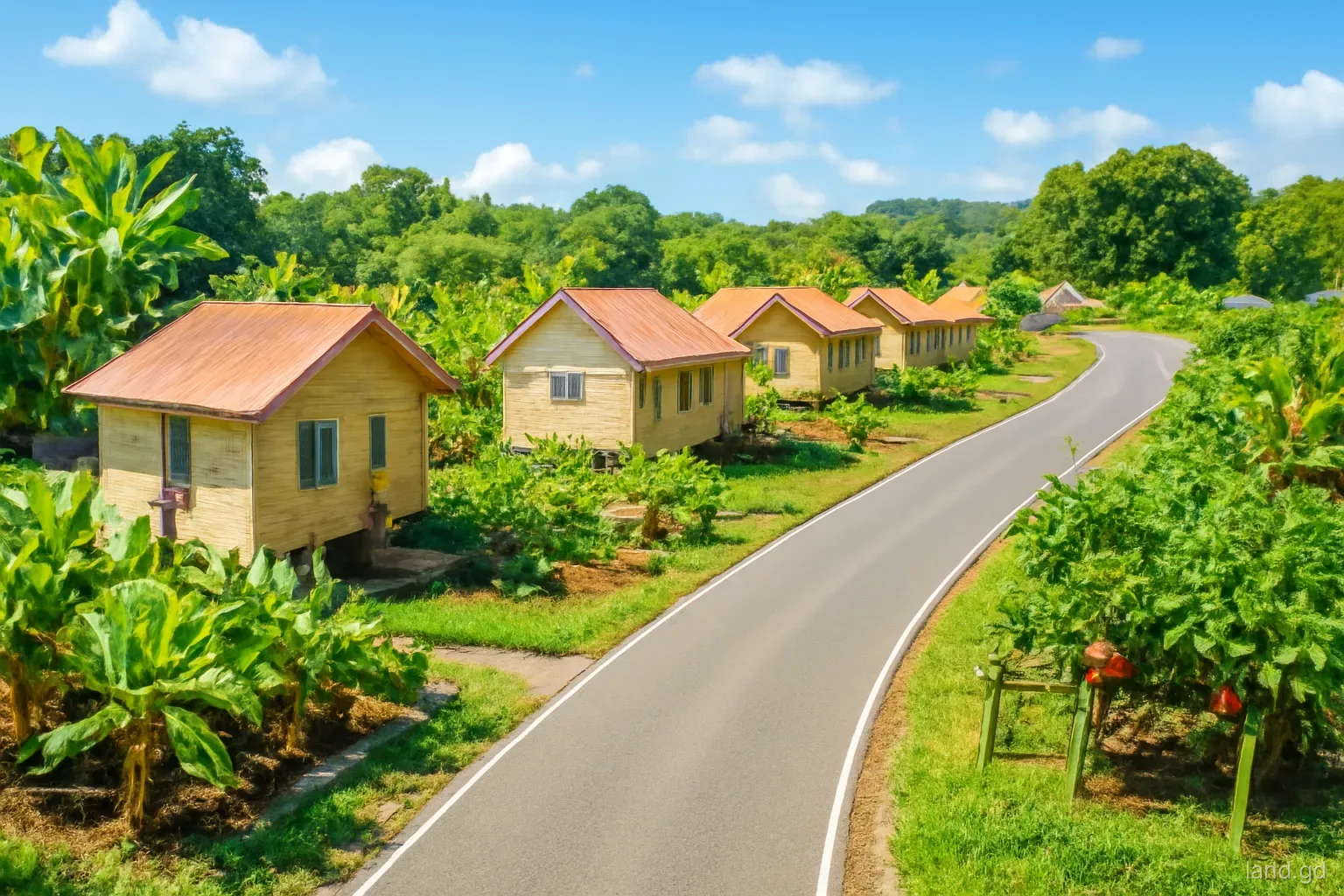
Tree crops also changed how land looked and how it was valued. Hillsides that had been cleared for sugar or left as provision grounds became mixed agroforests of cocoa, nutmeg, bananas and fruit trees, a pattern that still dominates rural Grenada.
Métayage: sharing the crop
One of the arrangements that eased the transition was métayage, a form of sharecropping used in Grenada and some neighbouring islands in the nineteenth century. Under it, a farmer, the métayer, worked a portion of estate land and divided the crop with the owner. The owner typically provided the land and sometimes the processing facilities, and the métayer provided labour.
For estate owners short of cash to pay wages, métayage kept land in production. For farmers without the money to buy land, it offered a measure of independence and a share in the harvest. It also had problems: disputes over shares, short or insecure terms, and little incentive for tenants to invest in long-term improvements on land they did not own.
Echoes of métayage survive in the informal crop-sharing arrangements that are still common on family land and absentee-owned estates today.
New arrivals and new villages
The labour shortages of the post-emancipation period also brought new people to the land. Planters and the colonial government looked abroad for workers who could be tied to estates by contract, and these arrivals added to Grenada's rural population and village life:
- Liberated Africans, freed from slave ships intercepted by the Royal Navy, were brought to Grenada in the mid-nineteenth century and settled mostly on estates.
- Indentured labourers from India began arriving in 1857 and worked on estates under contracts; many stayed after their indentures ended and acquired land, particularly in St Patrick and St Andrew.
- Smaller numbers of Portuguese labourers from Madeira also came in the 1840s.
- Each group added to the village communities that formed around and between estates, and their descendants are part of today's landowning families.
Where family land comes from
The small plots bought, settled or granted in the century after emancipation were usually passed down within families, often without wills or formal probate. A parcel bought by a grandparent in the 1880s might be farmed by several children, then by their children, each with a recognised share in practice but no separate title on paper. This is the origin of much of what Grenadians call family land.
Family land carries strong cultural meaning. It represents security and belonging, the place where relatives abroad can return, and a link to ancestors who worked hard to own something after slavery. Many families are reluctant to sell it to outsiders for exactly that reason.
It also creates practical difficulties today. When dozens of heirs share an interest, some living overseas, agreeing to sell, lease, mortgage or build becomes complicated, and titles may need to be regularised through probate, deeds of gift or court proceedings. These questions are covered in the family land and inheritance section of this site.
Land settlement and the colonial state
In the late nineteenth and early twentieth centuries the colonial government became more involved in land. Concern about poverty, emigration and the decline of estates led to land settlement schemes, under which government acquired estates or Crown land and sold or leased small lots to farmers, sometimes on instalment terms. Such schemes operated on the mainland and in Carriacou.
At the same time, the export associations that still dominate Grenadian agriculture took shape. The Grenada Co-operative Nutmeg Association was founded in 1947, giving growers, large and small, collective processing and marketing. Hurricane Janet in 1955 then devastated tree crops, and the recovery programmes that followed shaped agriculture for a generation.
By the middle of the twentieth century, Grenada had a mixed land pattern: surviving large estates, many in decline, alongside thousands of small farms. Tensions between estate owners and workers led to the upheaval of 1951 and to the land reforms of later decades, covered in the next article in this series.
Frequently asked questions
What happened to plantation land after emancipation in Grenada?
Many estates struggled after 1838 as workers left, sugar prices fell and debts mounted. Some were sold or subdivided, freed people bought small plots and founded villages, and estates that survived often switched from sugar to cocoa and nutmeg. Sharecropping known as métayage was used on many estates.
When did nutmeg come to Grenada?
Nutmeg is generally said to have been introduced in 1843, from the East Indies. It spread slowly at first, then became a major crop alongside cocoa. By the twentieth century nutmeg and mace were central to Grenada's economy, which is why the nutmeg appears on the national flag.
What was métayage?
Métayage was a sharecropping system used in Grenada and nearby islands after emancipation. A farmer worked estate land and split the crop with the owner, who supplied land and sometimes processing. It kept estates producing without cash wages but often gave farmers insecure terms and little incentive to invest.
When did Indian indentured workers arrive in Grenada?
The first indentured labourers from India arrived in 1857 to work on estates. Many stayed after their contracts ended, acquired land and settled in rural communities, particularly in St Patrick and St Andrew. Their descendants are an established part of Grenadian society today.
Why did sugar decline in Grenada?
Labour shortages after emancipation, the removal of British tariff protection in the 1840s, steep terrain unsuited to sugar and heavy estate debts all played a part. Cocoa and nutmeg, which suited the hills and small farms better, gradually replaced sugar as the main export crops.