St George is the parish where most of Grenada's money, jobs and visitors are concentrated. The capital, the main port, the international airport at Point Salines, St George's University at True Blue, the Grand Anse hotel strip and most government offices all sit inside its boundary. That concentration shapes every piece of land in the parish: it is the most expensive, the most built-up and the most contested ground in the country.
It is also more varied than visitors assume. Within a short drive you move from dry, cactus-studded headlands on the south coast to a dense old town on steep hills, then up into green valleys where people still keep provision gardens and a few nutmeg trees. Each band has its own buyers, its own problems and its own price logic.
This page walks through the parish band by band, explains what drives demand, and sets out the checks that matter most here, where a small detail about access or drainage can move the value of a lot more than its size does.
Three bands of land in one parish
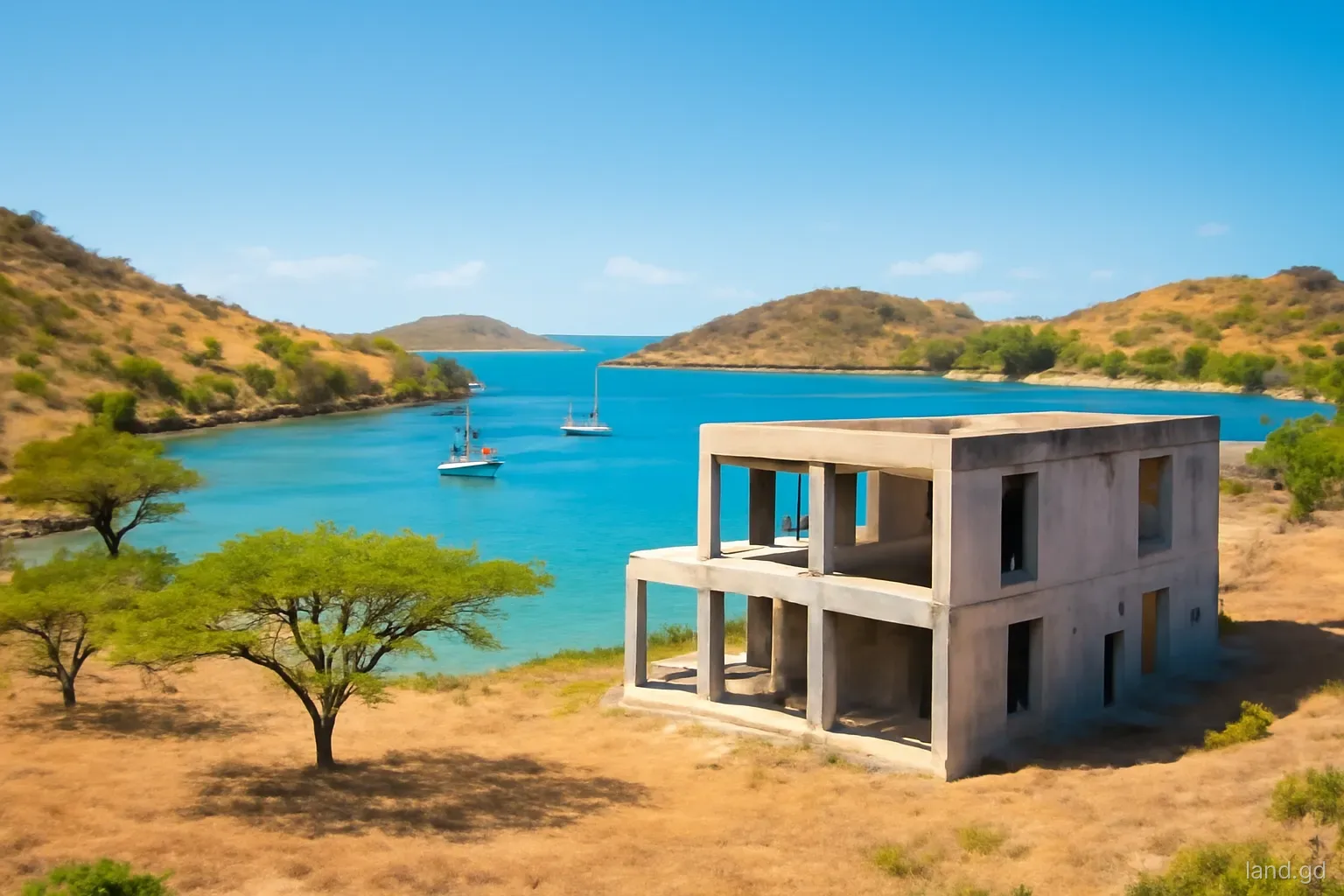
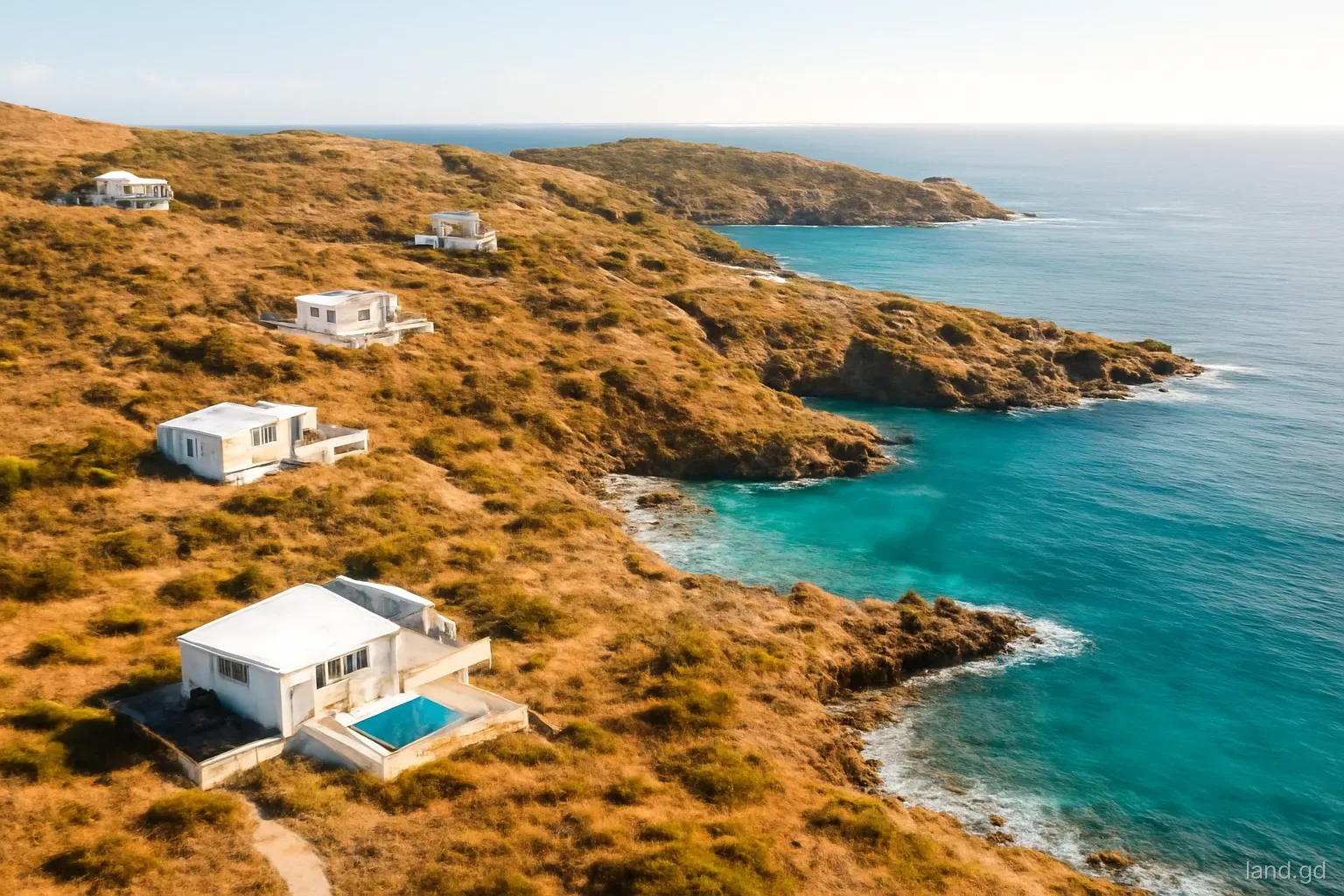
The south coast runs from Point Salines east through Grand Anse, Morne Rouge, True Blue, Lance aux Epines, Mount Hartman and on towards Woburn and Calivigny. This is a sequence of low headlands and bays with thin soils and scrub vegetation. Land here is valued for sea views, proximity to the airport and the university, and access to beaches. Bare plots are scarce and are often small infill lots between existing houses or remnants of older subdivisions.
The town and its fringes cover St George's itself and the communities that climb the hills behind it: Tanteen, Belmont, Tempe, Mount Moritz, Happy Hill, St Paul's and Morne Jaloux. Lots are smaller, slopes are steeper and many parcels have been divided and redivided across generations. Access is usually by narrow public roads with tight bends.
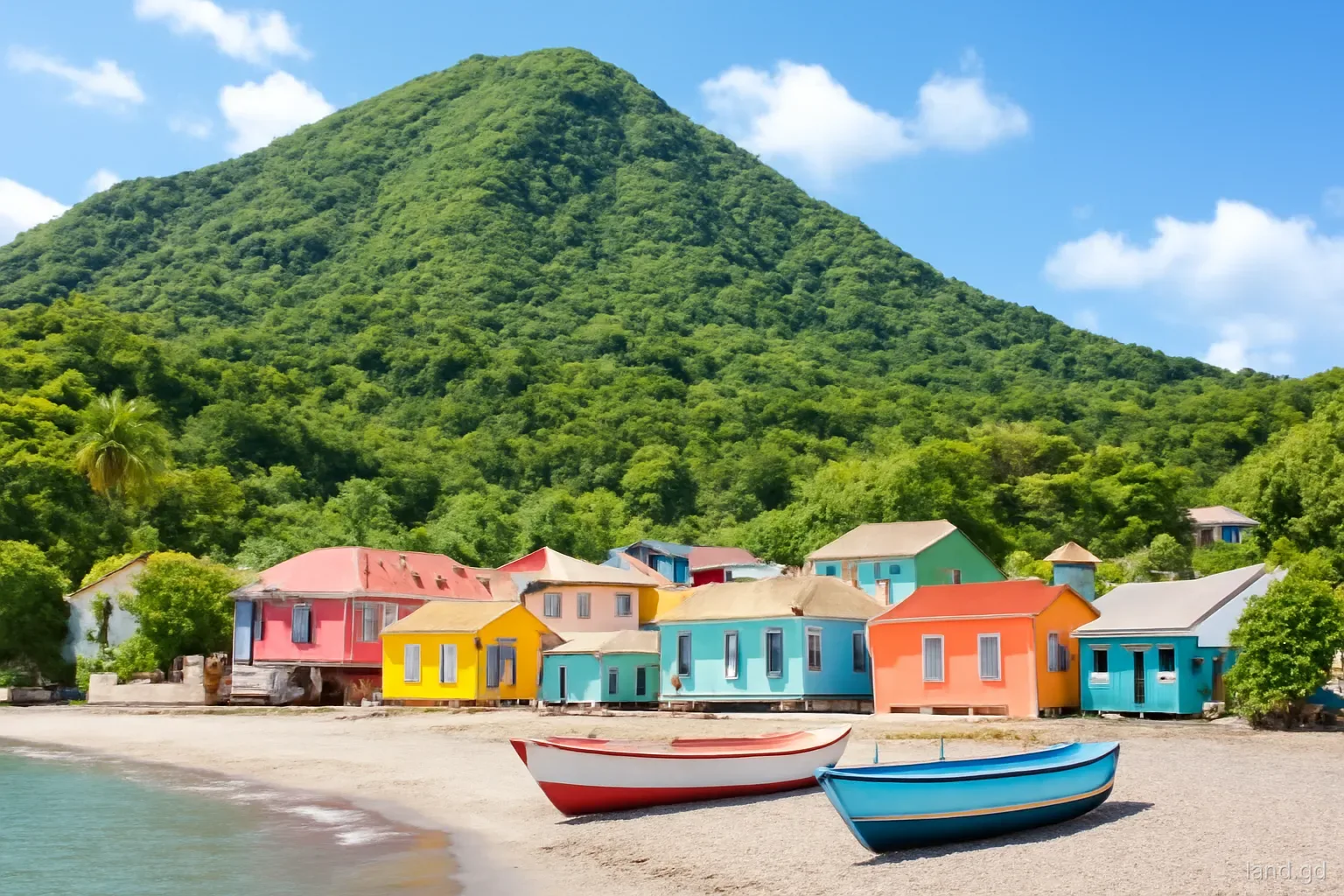
The interior and northern edge of the parish, rising towards the central range and running up the leeward side towards Grand Mal and Beausejour, is greener and wetter. Here you still find agricultural parcels, family land with fruit trees and small farms, and lots priced well below anything with a south-coast view. The trade-off is longer drives into town and, in places, rougher roads.
What drives demand, and therefore value
St George's University. Thousands of students and staff need housing within reach of True Blue. That demand supports apartment buildings and rental houses across Calliste, Grand Anse, Lance aux Epines and nearby areas, and it means land in walking or short-drive distance of the campus is priced partly on rental income potential.
The airport and the hotel strip. Hotels, restaurants and the airport create jobs and keep traffic heavy along the south. Commercial and mixed-use land near main roads trades at a premium, and resort-related projects compete with homebuyers for the best coastal parcels.
Foreign and returning buyers. Overseas buyers, including citizenship-by-investment investors and Grenadians returning from abroad, focus heavily on the south coast. Agencies price for that market, which pulls asking prices up even for lots without exceptional features.
Government and services. Offices, schools, hospitals and banks are mostly here, so local families also want to be in the parish. That keeps demand steady for modest village lots in places like Morne Jaloux, Calliste and the hills above town, not just for luxury plots.
Terrain, soil and water in the south
The southern peninsulas are among the driest places on mainland Grenada. Rainfall is markedly lower than in the mountains, the dry season can leave the scrub brown for months, and soils over the volcanic rock are often thin and stony. Gardens need watering and landscaping costs more than buyers expect. Many homes here combine a NAWASA connection with a rooftop catchment and a cistern, because pressure can drop in dry spells and supply interruptions happen.
Drainage is the other side of the same coin. When heavy rain does come, it arrives fast and runs off thin soils and paved surfaces into gullies that cross the south coast towards the sea. Low-lying land near the mouths of those gullies, or behind beaches, can flood or take sediment during storms. A plot that looks flat and convenient may sit exactly where water wants to go.
On the hills behind St George's the problem is slope. Many lots fall away steeply from the road, which means retaining walls, stepped foundations and careful handling of runoff, all of which add cost and need the attention of an engineer during the planning application.
Typical uses, area by area
Land use in the parish is already well established, and it pays to buy in line with what surrounds a plot rather than against it. Broadly:
- Point Salines and Grand Anse: hotels, villas, commercial frontage and higher-density residential close to the airport and beach.
- True Blue and Calliste: rental apartments and houses aimed at students and university staff, with steady but competitive demand.
- Lance aux Epines and Mount Hartman area: larger private homes and villas, marinas nearby, quiet roads and high land values.
- St George's town and Tanteen: commercial buildings, older residential stock, very little bare land and complex title histories on old town lots.
- Morne Jaloux, St Paul's and Mount Moritz: family homes on village-sized lots, cooler air and views, with steep access in places.
- Interior and northern villages: house lots for local families, small farms and fruit trees, often cheaper per square foot but further from services.
Pitfalls specific to St George
The first is assuming that a south-coast view will stay a view. Land in front of a plot may already be subdivided or approved for buildings that will block the outlook. Ask the Physical Planning Unit what is permitted on neighbouring land and walk the area to see what is under construction.
The second is underestimating traffic and access. Roads around Grand Anse, the university and the town are congested at peak times, and some lots are reached only along private roads with unclear maintenance arrangements. Confirm whether the road to the plot is public or private, and who repairs it.
The third is aviation and noise. Land on the approach paths of Maurice Bishop International Airport can face height limits and aircraft noise; confirm with the planning authority whether any restriction applies before designing a multi-storey building.
The fourth is title on old town and village parcels. Lots around St George's have often passed through several generations with informal divisions. A thorough search at the Deeds and Land Registry and a fresh boundary survey are essential before any deposit is paid.
Infill lots, older houses and rebuilding
Because bare land in the south of the parish is scarce, many buyers end up choosing between a small infill lot and an older house on a larger parcel. The older house is often the better land deal. Homes built decades ago in places like Lance aux Epines, Morne Jaloux or the hills above town frequently sit on generous lots by current standards, and the building itself may be priced as little more than the land.
That route has its own checks. An older house may have been extended without approval, may straddle a boundary that was never surveyed properly, or may sit closer to the road or a neighbour than current setback rules allow. If the plan is to demolish and rebuild, the new building must meet current planning requirements, which can mean a smaller footprint than the one being replaced. Ask the Physical Planning Unit early what a replacement building could look like on that specific lot.
Infill lots, meanwhile, are often irregular in shape, squeezed between existing houses, with limited room for a cistern, septic system and parking. Have an architect sketch a realistic house on the lot before agreeing a price. A cheap lot that only fits a cramped building is not cheap once construction costs and resale value are counted.
Frequently asked questions
Is land in St George parish more expensive than the rest of Grenada?
Generally yes. The south coast and areas near the university and airport carry the highest prices per square foot in the country, because jobs, services and foreign buyers are concentrated there. Inland and northern parts of the parish are cheaper, though still usually above rural parishes such as St Andrew or St Patrick.
Can bare beachfront land still be bought in St George?
Very little bare beachfront land remains on the south coast, and what does come up is usually priced for resort or luxury use. Coastal setbacks and beach access rules also limit what can be built close to the shore, so check planning rules before assuming a waterfront plot can take a full house.
Is buying land near St George's University a good rental investment?
Student demand is real, but so is competition from the many apartments already built. Returns depend on the build cost, distance to campus, quality and management. Treat rental projections cautiously, talk to local property managers and allow for vacant months during breaks in the academic calendar.
Do homes in the south of St George need a cistern?
Most owners consider a cistern sensible even with a NAWASA connection. The south is dry, supply pressure can fall during long dry spells, and storms can interrupt service. Collecting roof water into storage gives a buffer for garden watering and outages.
Which parts of St George are cooler and greener?
The hills above the town, such as Morne Jaloux, St Paul's and Mount Moritz, and the interior villages toward the central range get more rain and breeze than the southern peninsulas. They suit buyers who prefer gardens and cooler nights over beach proximity.