St Andrew covers more ground than any other parish in Grenada, stretching from the central mountains around Grand Etang down to the Atlantic coast and wrapping around Grenville, the country's second town. It is the agricultural heart of the mainland: wetter than the south, cut by rivers and valleys, and still dotted with estates, smallholdings and farm villages.
For buyers, St Andrew offers more land for the money than the south, and a working landscape rather than a resort one. Land here is bought for farms, family homes, small businesses in Grenville and long-term holdings. Foreign buyers are fewer, which keeps prices closer to what local families pay, but it also means fewer agents, fewer developed subdivisions and more reliance on careful legal checks.
This page looks at the parish zone by zone, what the climate means for building and farming, and the specific risks of buying on the windward side.
From the mountains to the Atlantic
The western edge of St Andrew climbs into the forested central range, including land around Grand Etang and its forest reserve. Much of the high ground is protected or Crown land, and private parcels on the fringe are steep, very wet and often only suitable for forestry, tree crops or occasional cultivation.
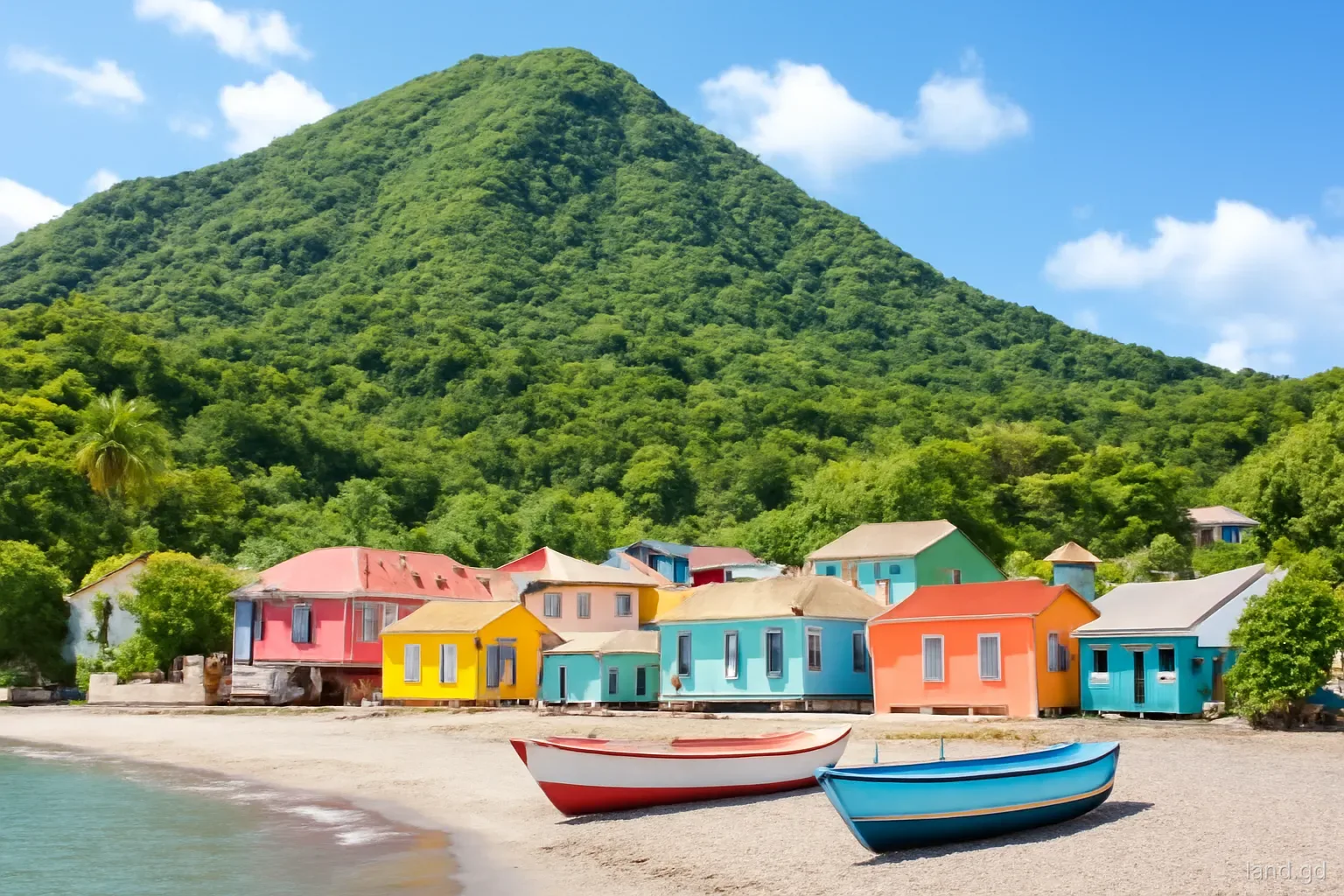
Below the mountains lies a broad belt of valleys and rolling hills where most of the farming happens. Villages such as Paradise, Birch Grove, Grand Bras, Mount Horne and Paraclete sit among nutmeg, cocoa, banana and fruit trees, with provision grounds on the slopes. Government's Mirabeau agricultural station lies in this belt, a reminder of its farming role.
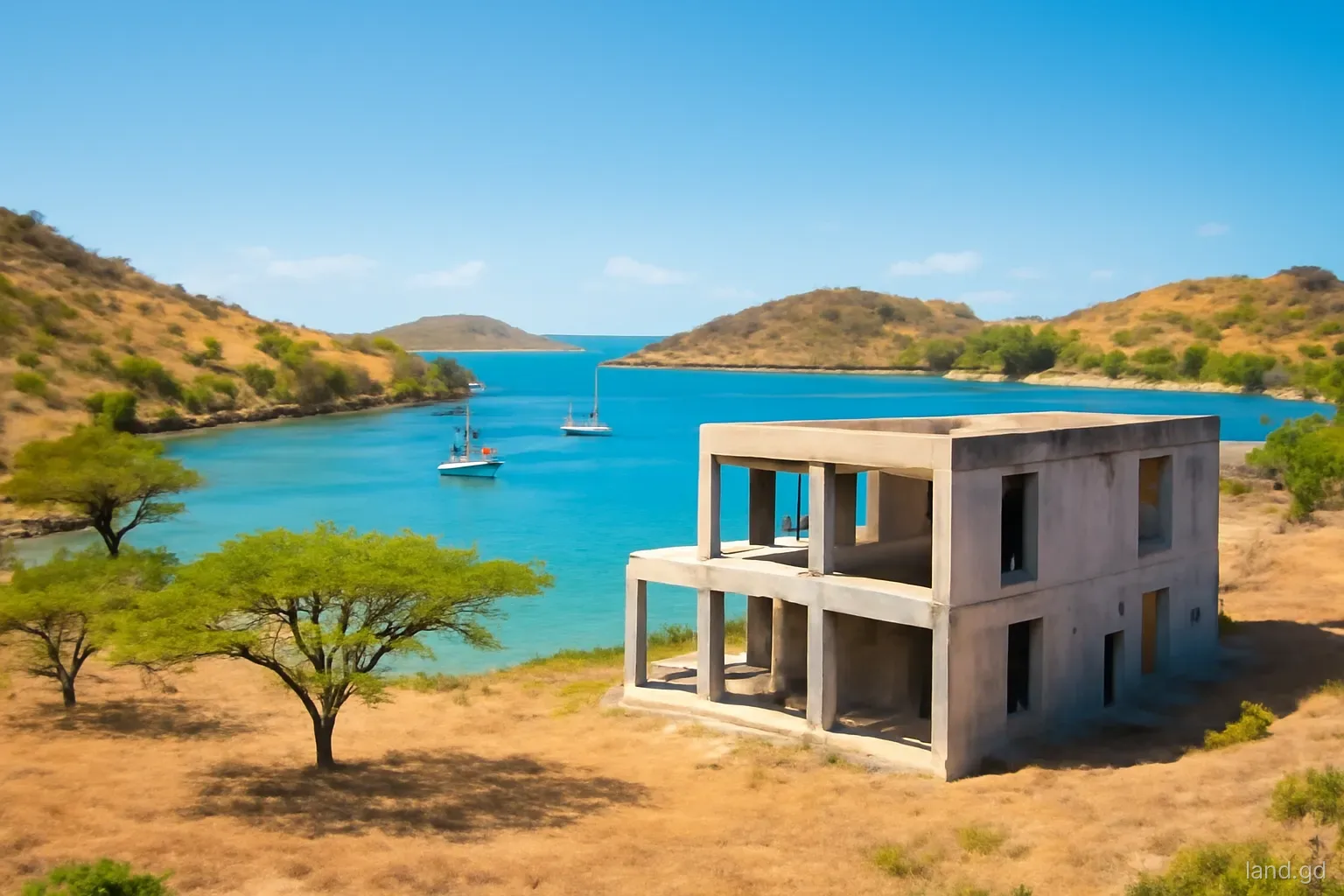
The coast is the Atlantic, or windward, side. It is more exposed than the Caribbean coast, with stronger surf, reefs offshore and a string of bays and points from the north of the parish down past Grenville and Marquis. The former Pearls airport, closed when the international airport opened at Point Salines in the 1980s, sits on a flat coastal stretch north of Grenville.
What the wetter climate means for land
Good for tree crops, hard on buildings. Higher rainfall supports nutmeg, cocoa and fruit, and keeps the landscape green through most of the year. It also means damp, mould and faster deterioration of timber and paint. House design should prioritise ventilation, roof overhangs and drainage.
Rivers and flood plains. Several rivers drain the central range through St Andrew to the Atlantic. Land on valley floors and near river mouths can flood in heavy rain, and riverbanks are prone to erosion. Ask locals where water has reached in past storms before buying low land.
Landslips on slopes. Saturated soils on steep slopes can slip, especially after cutting for roads or house platforms. Ridge and slope plots need engineering attention at planning stage, and a geotechnical opinion is wise for anything ambitious.
Water supply is easier. Rainwater collection is reliable here, and some rural parcels have springs or streams. Even so, the right to use a stream that crosses several properties should be checked, and water for drinking should be treated or tested.
Grenville and the coastal strip
Grenville is the commercial centre for the eastern side of the island: a market town with shops, banks, a bus terminus, a fish market and government offices. Land in and around the town is used for commerce, rental housing and family homes. Plots in the centre are small, densely built and often have long, complicated title histories, while the outskirts offer house lots at prices well below equivalents in St George.
North and south of Grenville, the coastal road links fishing and farming villages. Seafront land on this side is cheaper than on the Caribbean coast, partly because the sea is rougher and swimming beaches are fewer. That makes it attractive to buyers who value the breeze and the view more than calm water. The exposure is real, though: salt spray, strong winds in storms and coastal erosion all need to be factored into siting a house.
The flat land around Pearls has long attracted ideas for development. Before buying anywhere near it, ask the planning authority about current land-use plans for the area and whether any public projects are proposed.
Checking a St Andrew parcel before you buy
Agricultural and rural parcels on the windward side need a slightly different checklist from a south-coast house lot. Work through these in order:
- Have your attorney search title at the Deeds and Land Registry, paying particular attention to estates that were broken up and sold in portions over the decades.
- Commission a licensed surveyor to locate the boundaries on the ground, since old estate parcels often have marks that have vanished under bush.
- Confirm the legal access route to the land, not just the path people currently use, and whether it crosses anyone else's parcel.
- Ask the Physical Planning Unit whether the land lies near a forest reserve, river reserve or other protected area, and what development it would allow.
- Find out where the nearest NAWASA main and GRENLEC line are, and what connection would cost.
- Walk the land after heavy rain to see where water collects and whether any slope shows signs of slipping.
- If buying for farming, assess the existing trees honestly: age, disease and how much clearing or replanting is needed.
Mistakes buyers make on the windward side
The most common is buying an attractive acreage sight unseen or after a single dry-season visit. Land that looks gentle in March can be a muddy, slipping slope in October. Visit in the rainy season if at all possible.
The second is assuming that farmland can easily be turned into house lots. Agricultural land may face restrictions on subdivision, and turning it into residential lots needs planning approval, roads and services, which can cost far more than the land.
The third is overlooking the people already on the land. Rural parcels may have tenants, caretakers or relatives cultivating them informally, sometimes for many years. Long occupation can raise legal claims, so ask directly who is using the land and on what terms, and have your attorney address it before completion.
Another trap is relying on old estate names. Deeds may describe land as part of a named estate whose boundaries changed many times; the name proves little on its own, and only a current survey tied to the registered plans shows what is being sold.
Finally, buyers sometimes underestimate distance. St Andrew is large, and some villages are well over an hour from the airport and the capital by road. Factor that into plans for regular commuting, building supervision and access to health care.
Buying working farmland: what comes with it
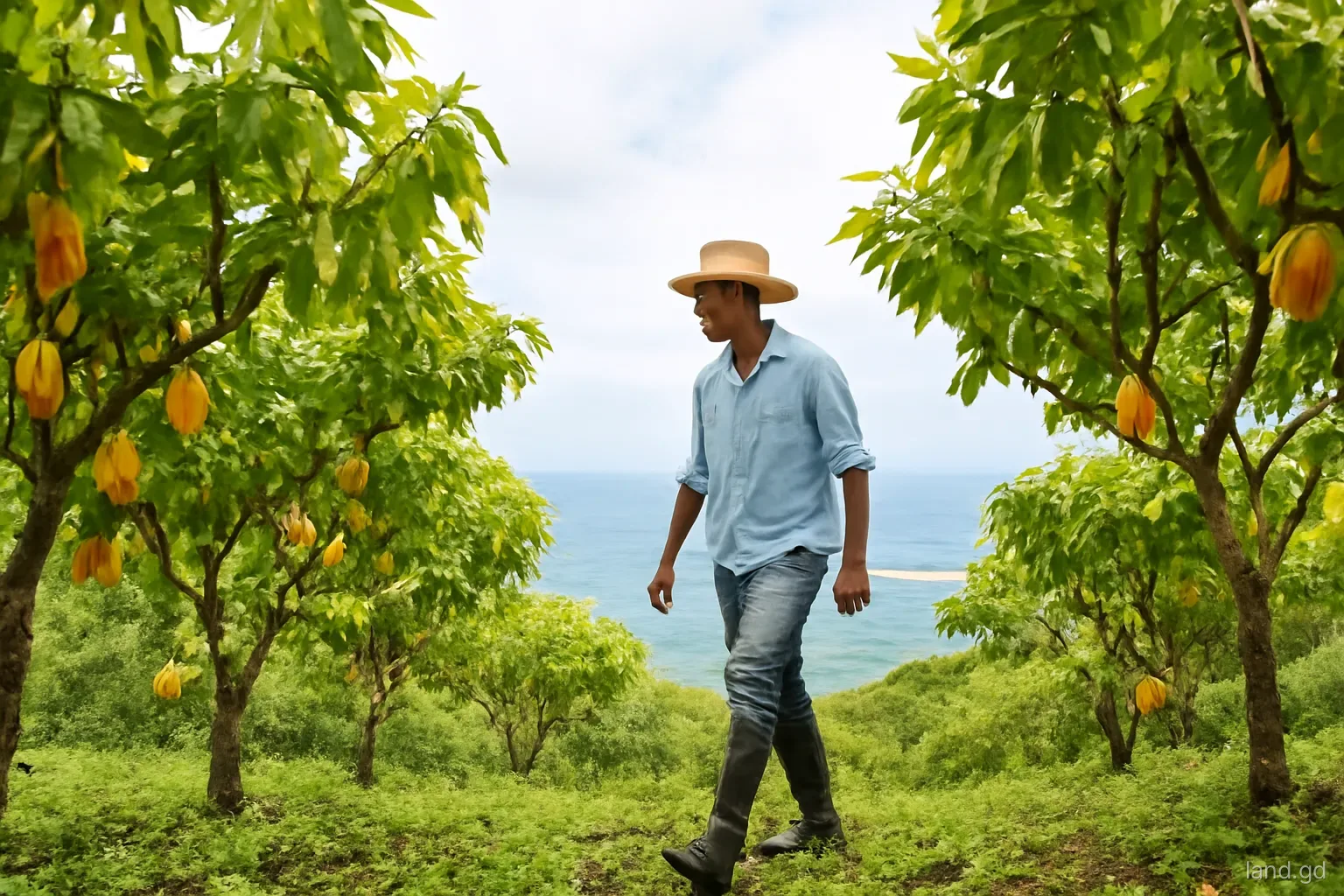
A great deal of land sold in St Andrew is agricultural, and buyers should understand what they are taking on. Many nutmeg orchards were flattened by Hurricane Ivan in 2004, and nutmeg trees take years to come into full bearing, so an apparently established orchard may be a mix of old survivors, young replants and bush. Cocoa is quicker to establish but needs regular pruning, shade management and labour at harvest.
Marketing channels matter as much as the trees. Nutmeg in Grenada has traditionally been sold through the Grenada Cooperative Nutmeg Association, which runs receiving and processing stations, and cocoa through established buyers and, increasingly, chocolate makers who pay for quality beans. A buyer planning to farm commercially should find out how produce from that area is collected and sold before relying on any income.
Labour is a real constraint. Rural workforces have shrunk as young people move to town or abroad, and absentee owners often find that land reverts to bush within a few seasons. If the land will be farmed by a caretaker or tenant, put the arrangement in writing, define who keeps what share of the crop and avoid open-ended occupation that could later complicate ownership.
Frequently asked questions
Is St Andrew the largest parish in Grenada?
Yes. St Andrew is the largest parish by area, covering much of the east of the mainland from the central mountains to the Atlantic coast. It includes Grenville, the second largest town, and a large share of the island's farmland.
Is land in St Andrew cheaper than in St George?
Generally, yes. Prices per square foot are usually well below the south coast of St George because demand from foreign buyers and the university is lower. Commercial land in Grenville and good roadside lots can still be relatively expensive, so compare like with like.
Can you swim on St Andrew's Atlantic coast?
Some sheltered bays are swimmable, but much of the windward coast has strong surf, currents and reefs. Buyers who want calm swimming at their doorstep usually look at the Caribbean side. Ask locals about safe spots before assuming a nearby beach is suitable.
Does St Andrew get a lot of rain?
It is noticeably wetter than the south, especially toward the central mountains. That benefits tree crops and rainwater collection, but it raises the importance of drainage, ventilation and building materials that resist damp and mould.
Is there still estate land for sale in St Andrew?
Portions of former estates do come onto the market, often as subdivided parcels sold by heirs or companies. They need careful title and boundary checks, because estate land may have been divided many times and some boundaries are poorly marked on the ground.